LICHEN PLANUS PIGMENTOSUS
Key features
Variant of lichen planus most commonly described in adults with skin phototypes III–V
Gray–brown to dark brown macules and patches either in a photo- distribution or in an inverse (intertriginous) pattern
Lichen planus pigmentosus (LPP) is an uncommon variant of lichen planus that most often affects young to middle-aged adults with skin phototypes III–V, including those from India, Latin America, and the Middle East. It presents as irregularly shaped or oval, brown to gray– brown macules and patches that favor sun-exposed areas (especially the forehead, temples, and neck) as well as intertriginous zones (Fig. 67.4). It is usually asymptomatic, but some patients experience mild pruritus or burning. In contrast to EDP, early lesions with an erythematous border are not a feature of LPP.
Diffuse, reticulated, blotchy, and follicular patterns of LPP have all been described. While the distribution is typically symmetric, a unilateral linear variant has also been reported. The palms, soles, nails, and oral mucosa are usually not involved. Other lichen planus variants, including frontal fibrosing alopecia, can be observed in ~15%–20% of patients with LPP. Histologic findings include a flattened, often atrophic epidermis with basal cell degeneration and a variably dense, band-like, or perivascular lymphoid infiltrate in the upper dermis admixed with melanophages.
The etiology of LPP is unknown. The photodistribution in some patients suggests that UV exposure may play a pathogenic role. Possible associations with hepatitis C viral infection and the use of mustard oil, amla oil, henna, or hair dyes has also been reported. The differential diagnosis includes other forms of acquired dermal macular hyperpigmentation (e.g. EDP, pigmented contact dermatitis) and PIH, especially that due to actinic and inverse variants of lichen planus or a lichenoid drug eruption (see Ch. 11). When there is facial involvement, melasma and the entities listed in Table 67.3 also need to be considered.
LPP is a chronic disorder with exacerbations and remissions. Treatment is often ineffective, although some patients may respond to topical tacrolimus, oral dapsone, and low-dose isotretinoin. Depending upon the distribution, photoprotection is recommended.
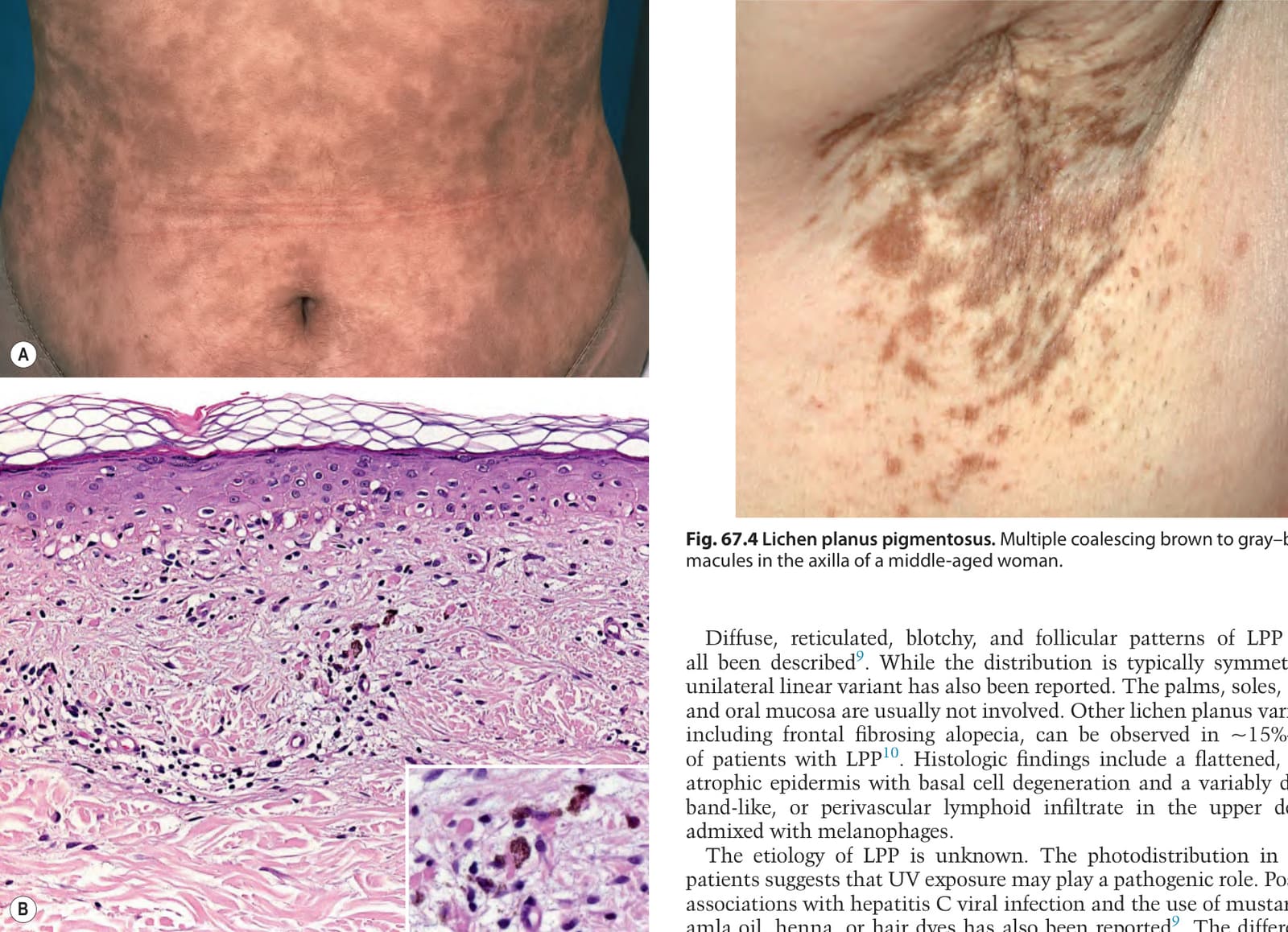
Fig. 67.4 Lichen planus pigmentosus. Multiple coalescing brown to gray–brown macules in the axilla of a middle-aged woman.
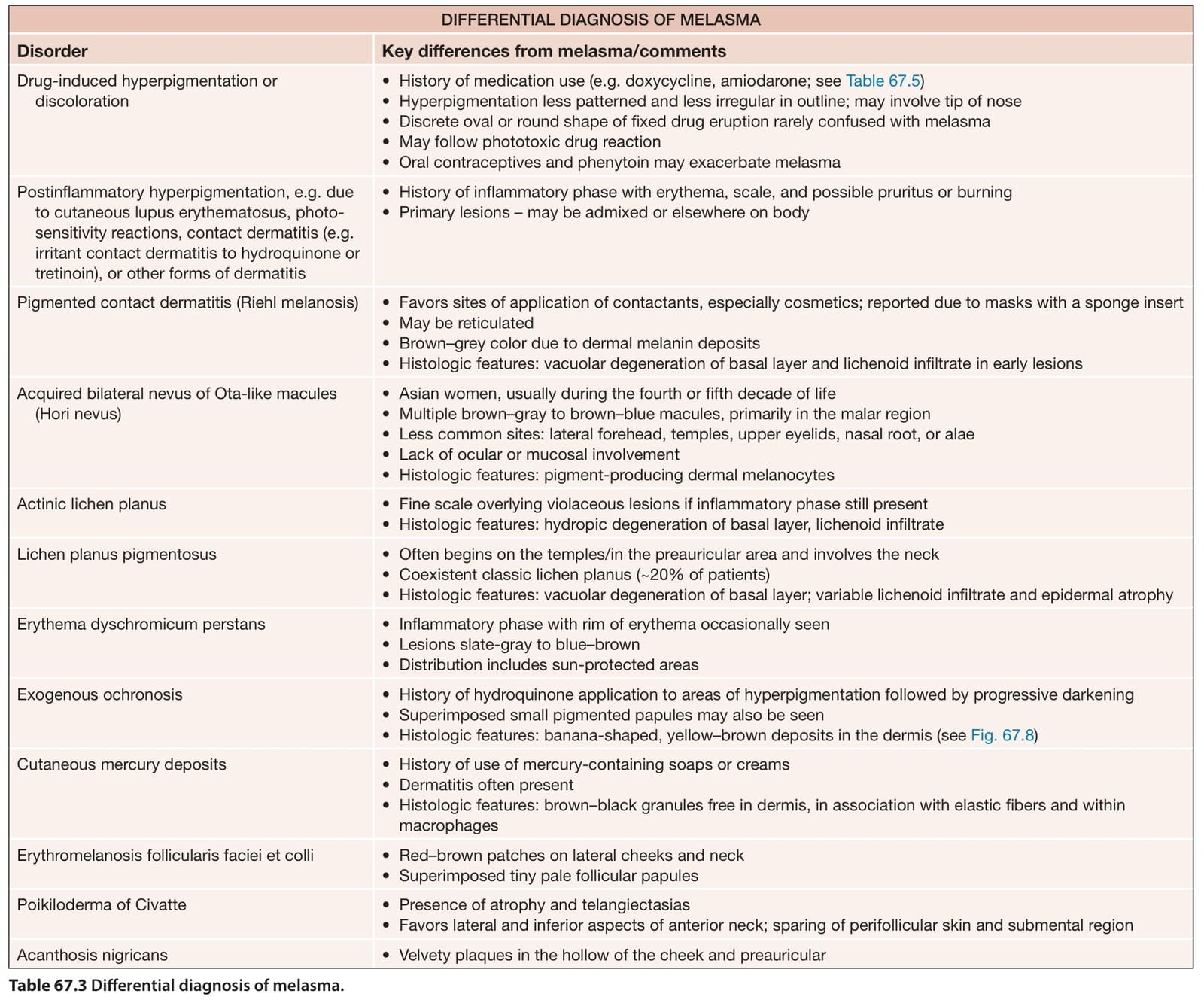
Table 67.3 Differential diagnosis of melasma.