DYSCHROMATOSIS UNIVERSALIS HEREDITARIA
Key features
Hyperpigmented and hypopigmented macules in a generalized distribution, with onset in early childhood
Most reported patients have been Japanese
Introduction and Pathogenesis
Dyschromatosis universalis hereditaria (DUH) is a rare disorder characterized by hypo- and hyperpigmented macules in a generalized distribution. Initially described in 1933, this condition is most common in Japan but has also been reported in patients from other parts of Asia and Europe. One autosomal dominant form of DUH is caused by heterozygous mutations in ABCB6, which encodes an ATP-binding cassette transporter protein that is expressed in keratinocytes and melanocytes. Heterozygous mutations in SASH1, which encodes a SAM and SH3 domain-containing protein with several purported roles in melanogenesis, can result in either DUH or an autosomal dominant lentiginosis favoring sun-exposed sites. In addition, biallelic SASH1 mutations may produce a constellation of findings including palmoplantar keratoderma, alopecia, and cutaneous SCC as well as dyschromatosis (see Table 67.11). An autosomal recessive form of DUH has also been mapped to 12q21–q23.
Clinical Features
Over 80% of DUH patients develop dyschromia by 6 years of age, and ~20% have dyspigmentation at birth. Numerous hyperpigmented and hypopigmented macules of various sizes develop on the head, neck, extremities, and trunk (see Fig. 67.29). Hyperpigmented macules on the face can resemble ephelides or lentigines. The dyschromia may be accentuated in sun-exposed sites, especially in SASH1-related DUH; it can also involve the palms and soles as well as the dorsal aspects of the hands and feet, but spares the mucous membranes. There is no seasonal change or spontaneous regression with age. Extracutaneous abnormalities reported in isolated cases of DUH include short stature and high-frequency deafness; abnormalities in erythrocytes, platelets and tryptophan metabolism; bilateral glaucoma and unilateral cataract; and seizures.
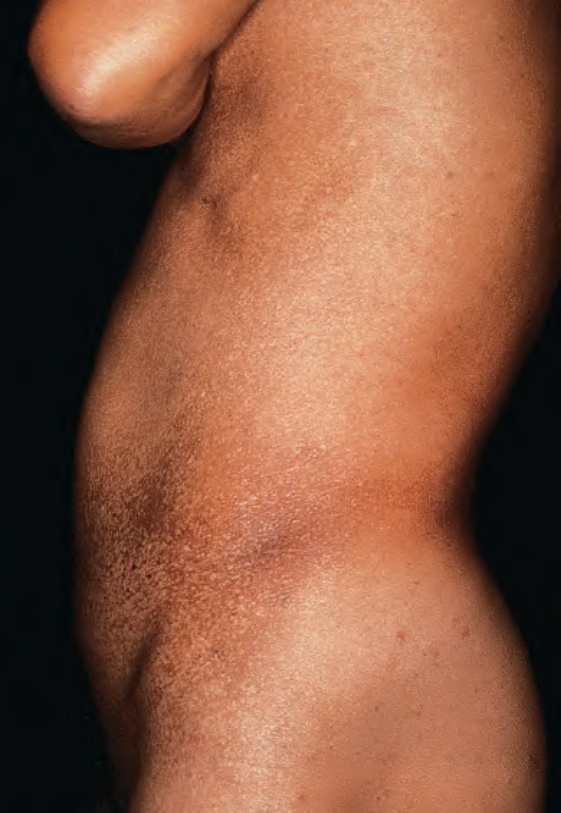
Fig. 67.29 Dyschromatosis univer- salis hereditaria. Both hypo- and hyperpigmentation were present in a widespread distribution. With permission from Urabe K, Hori Y. Dyschromatosis. Semin Cutan Med Surg 1997;16:81–5.
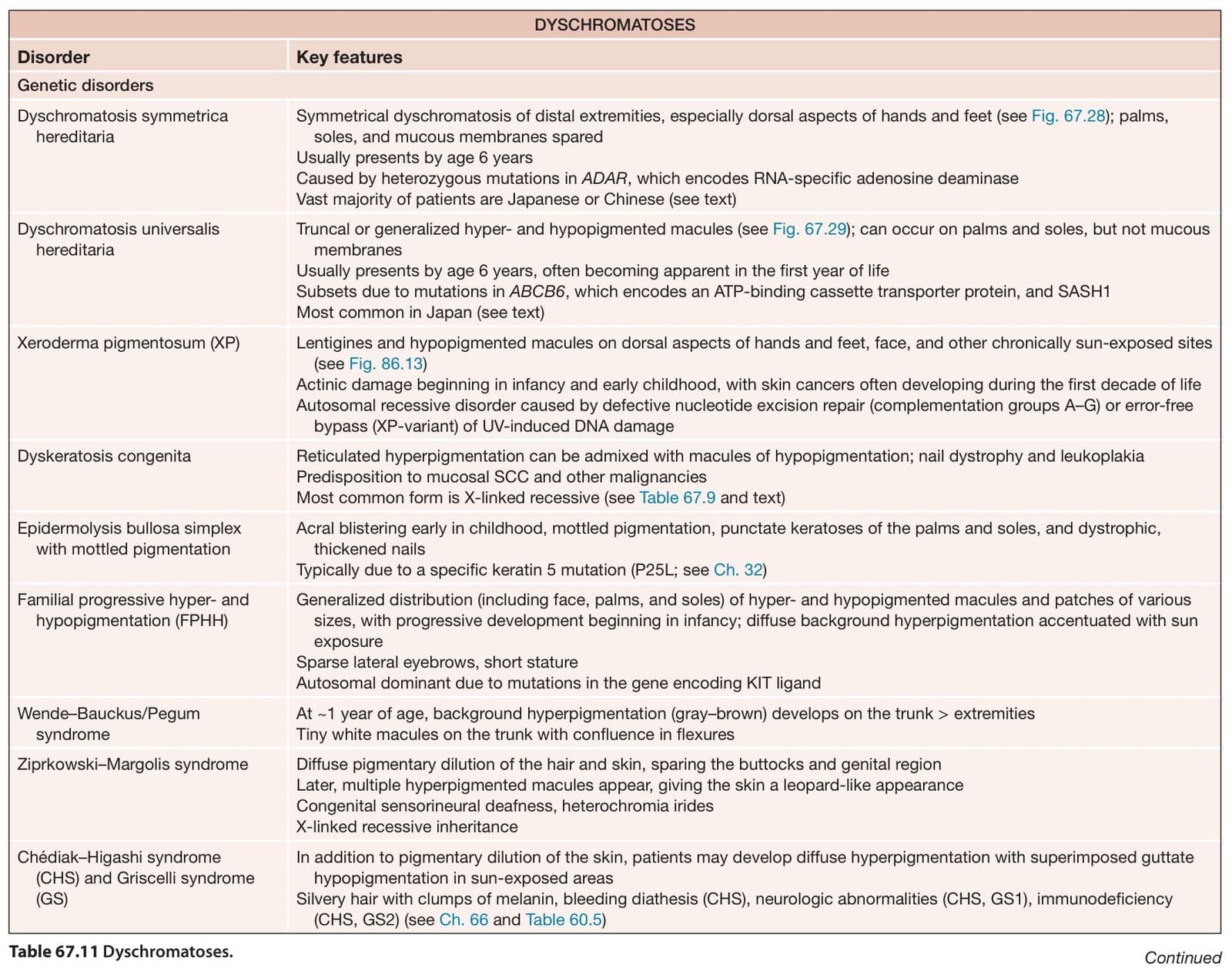
Table 67.11 Dyschromatoses. Continued