Anagen Effluvium
Anagen effluvium develops when there is an abrupt and simultaneous inhibition of the mitotic activity of follicular matrix cells. Anagen follicles with the highest mitotic activity are most affected while those with less mitotic activity enter telogen phase. Within a few days to weeks, there is loss of actively growing anagen hairs. Of note, hair follicles in telogen
phase are not affected. Chemotherapy is the most common cause but exposure to thallium, other heavy metals (e.g. arsenic, lead, bismuth), ionizing radiation, and severe nutritional deficiencies can lead to anagen effluvium. Systemic medications used to treat skin diseases, such as methotrexate, azathioprine, and retinoids, are a rare cause of anagen effluvium. Anagen effluvium may be related to other hair disorders, e.g. alopecia areata.
The diagnosis is based on history and clinical appearance, with the abrupt loss of up to 90% of hair shafts a distinct finding. By trichoscopy, there are multiple black dots, terminal hairs with proximal hair thinning, and exclamation point hairs. Some patients, especially those who receive taxanes and anthracyclines, can develop persistent chemotherapy-induced alopecia, which may improve with topical or low-dose oral minoxidil.
Treatment of anagen effluvium consists of discontinuation or avoidance of the causative factor. Scalp cooling during administration
of chemotherapy via cold caps or cooling systems has shown benefit in up 50% of patients, depending upon the chemotherapeutic regimen. To date, scalp cooling has been used primarily in breast cancer patients rather than in those with malignancies (e.g. hematologic) where there could be a theoretical reduction in chemotherapy efficacy.
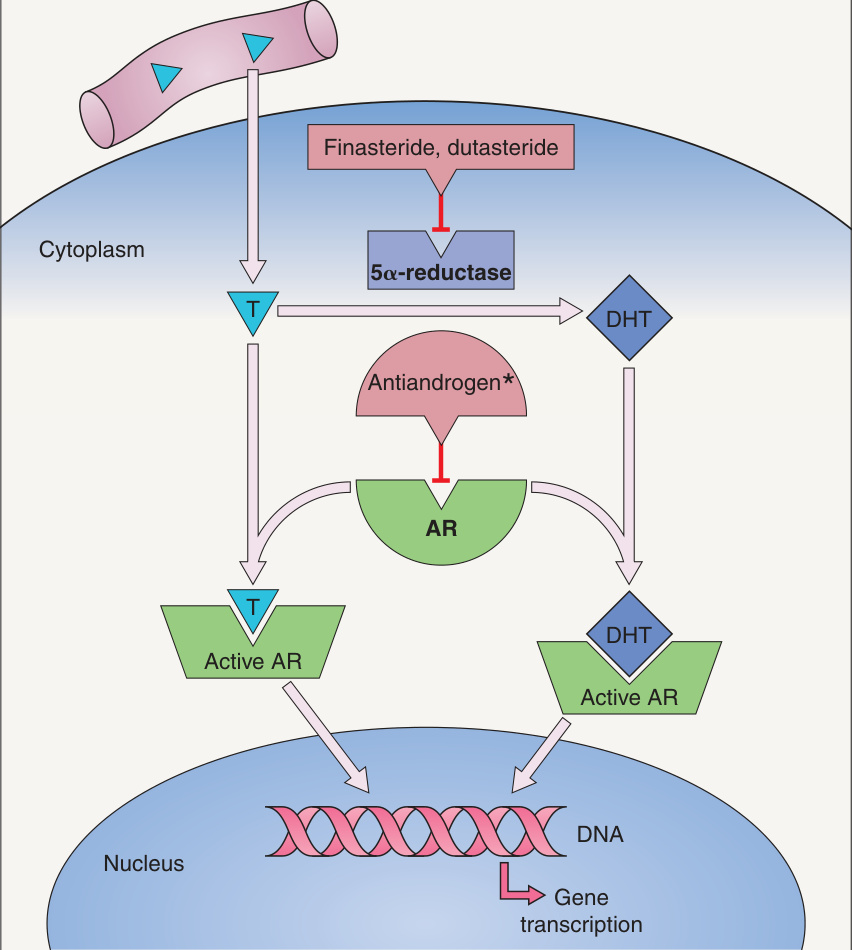
Fig. 69.10 Mechanism of action of antiandrogens and 5α-reductase inhibitors in androgenetic alopecia.
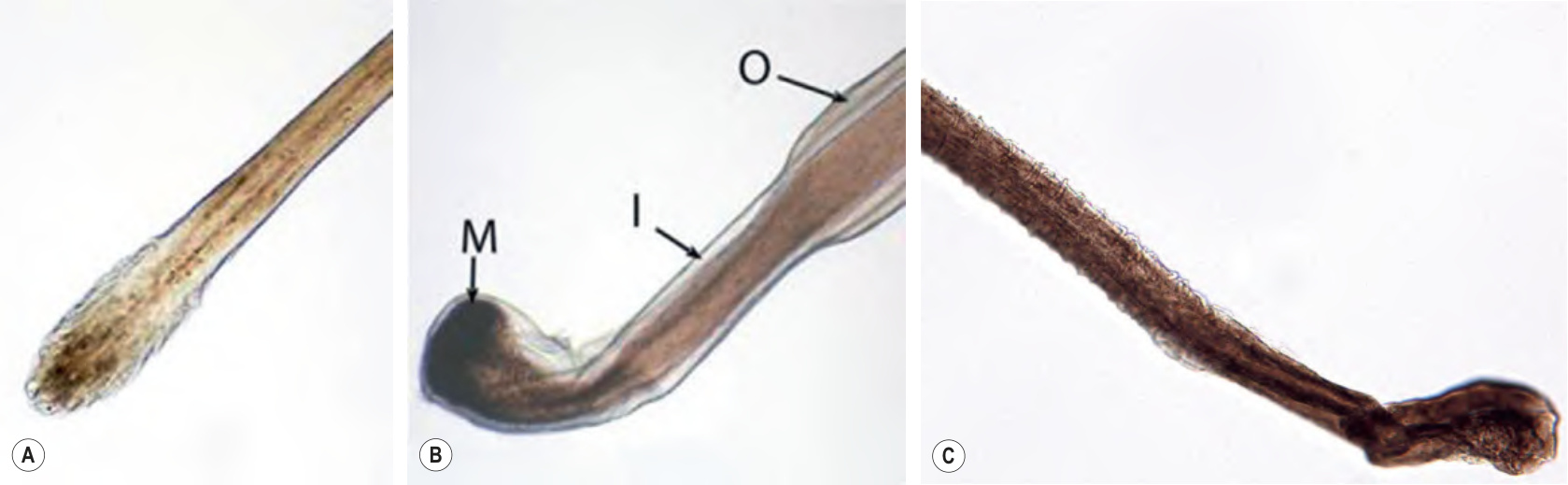
Fig. 69.11 Microscopic features of anagen and telogen hairs.A Telogen shaft showing a club-shaped bulb. B Anagen shaft with attached root sheaths, demonstrating a pigmented and distorted bulb. M, matrix; I, inner root sheath; O, outer root sheath. C Ruffled cuticle of loose anagen hair. C, Courtesy Julie V. Schaffer, MD.
Table 69.4 Triggers of telogen effluvium. There is also a chronic form of telogen effluvium for which there is no attributable cause or illness.