Trichotillomania
Key features
A body-focused repetitive behavior disorder characterized by hair pulling
Varying lengths of hair are typically seen within areas of alopecia
The most specific trichoscopic features are coiled hairs, flame hairs, and the v-sign
A related disorder is trichotemnomania in which hairs are compul- sively cut or shaved
Pathogenesis
Trichotillomania is defined by the American Psychiatric Association as one of the “obsessive–compulsive and related disorders” (see Ch. 7 for clinical criteria). However, individuals with trichotillomania represent a very heterogeneous group, varying from those with a mild habit to others who have an impulse-control disorder, personality disorder, or intellectual disability. Notably, many of the patients who have alopecia due to pulling their hair out do not fulfill the diagnostic criteria for psychiatric disorders.
Clinical features
Individuals with trichotillomania usually pluck scalp hair, resulting in patchy or full alopecia of the scalp (Fig. 69.14A). Some patients may also pluck from other hair-bearing regions such as the eyebrows, eyelashes, extremities, or pubic region. Patches of alopecia may have irregular shapes as well as erosions, crusts, and hairs of varying lengths. The clinical diagnosis can be supported by shaving a small area of involved scalp to demonstrate normal, dense regrowth as very short hair shafts are usually not plucked by the patient. The seven trichoscopy features with highest specificity for trichotillomania are: hook hairs; coiled hairs; the v-sign (two hairs broken at the same level in one follicle); hair powder; flame hairs (semi-transparent, wavy, cone-shaped hair residues); tulip hairs (short hairs with tulip flower-like ends); and trichoptilosis (Fig. 69.14B). Broken hairs and black dots are common, but nonspecific trichoscopic features. The histopathologic findings in trichotillomania are outlined in Table 69.3.
Treatment
No specific treatment approach has been established as effective in any large controlled study. Hypnosis, behavioral modification therapy, insight-oriented psychotherapy, and pharmacologic therapy have all been tried, but success rates are low. Habit reversal training is often used as a first-line non-pharmacologic treatment. If pharmacologic
therapy is considered, N-acetylcysteine, clomipramine, or olanzapine can be tried. In preschool children, the hair pulling often resolves with no treatment.
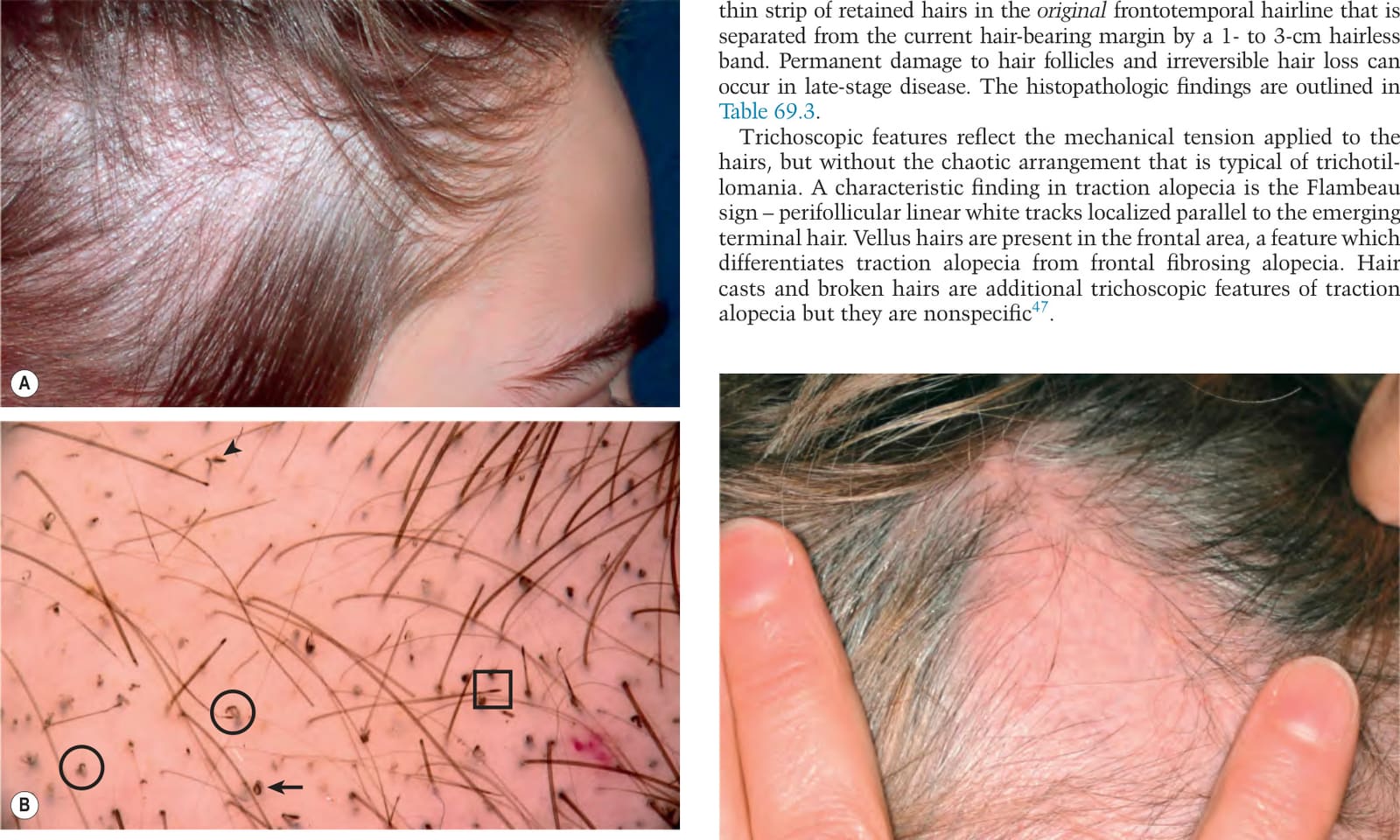
Fig. 69.14 Trichotillomania in a 14-year-old girl.A Decreased hair density in an irregularly shaped patch. B Trichoscopy shows multiple broken hairs of varying lengths (“irregularly irregular”) and black dots. In addition, there are hook (circles), tulip (square), and coiled (arrow) hairs as well as the v-sign (arrowhead).
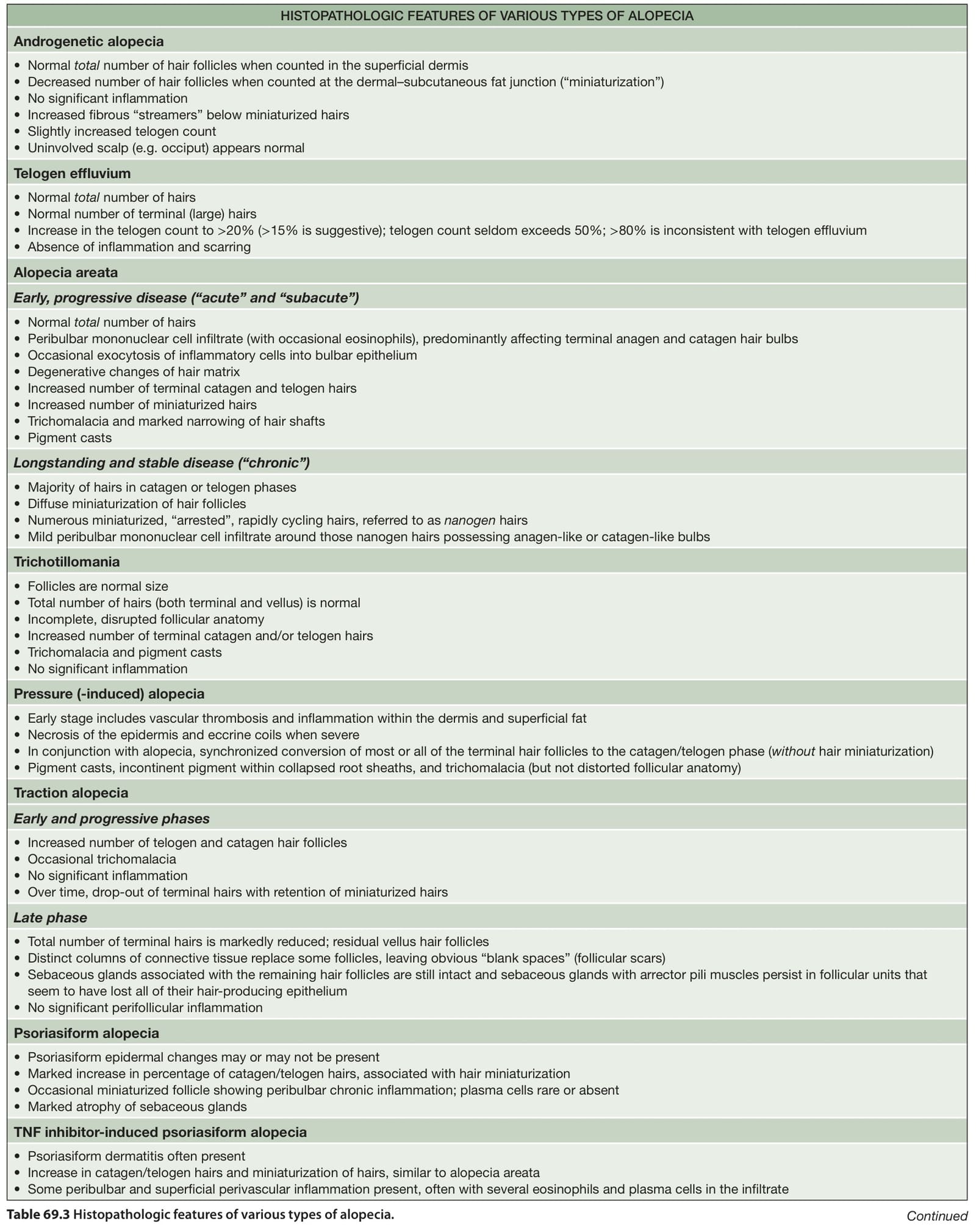
Table 69.3 Histopathologic features of various types of alopecia. Continued