Traction Alopecia
Traction alopecia results from repetitive and prolonged tension on scalp hairs. It usually develops from styling hair in cornrows, braids, dreadlocks, ponytails, or chignons. It may also be associated with other forms of tension, e.g. from hair extensions, and occasionally from wearing turbans. The hair loss is accentuated in areas with the greatest tension and is most commonly observed in the frontal and temporal areas (Fig. 69.16). In advanced traction alopecia, a “fringe sign” may be seen, i.e. a thin strip of retained hairs in the original frontotemporal hairline that is separated from the current hair-bearing margin by a 1- to 3-cm hairless band. Permanent damage to hair follicles and irreversible hair loss can occur in late-stage disease. The histopathologic findings are outlined in Table 69.3.
Trichoscopic features reflect the mechanical tension applied to the hairs, but without the chaotic arrangement that is typical of trichotillomania. A characteristic finding in traction alopecia is the Flambeau sign – perifollicular linear white tracks localized parallel to the emerging terminal hair. Vellus hairs are present in the frontal area, a feature which differentiates traction alopecia from frontal fibrosing alopecia. Hair casts and broken hairs are additional trichoscopic features of traction alopecia but they are nonspecific.
In traction alopecia, the major therapeutic intervention is a switch to a looser hair style with less tension and avoidance of hair styles such as tight cornrows and heavy sewn-in extensions (see Table 69.6). Hair regrowth may be stimulated with topical or low-dose oral minoxidil; topical or intralesional corticosteroids as well as antibiotics (e.g. topical clindamycin, oral doxycycline) may have some efficacy. For late-stage disease with irreversible hair loss, hair restoration may be considered (see Ch. 157).
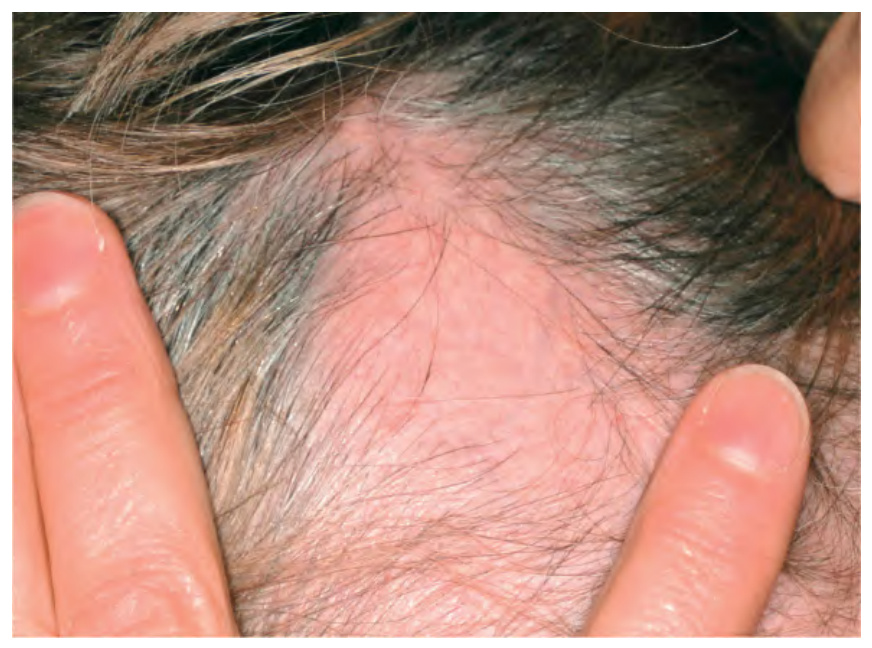
Fig. 69.15 Temporal triangular alopecia. The tip of the “lancet” points superiorly. Courtesy Jean L. Bolognia, MD.
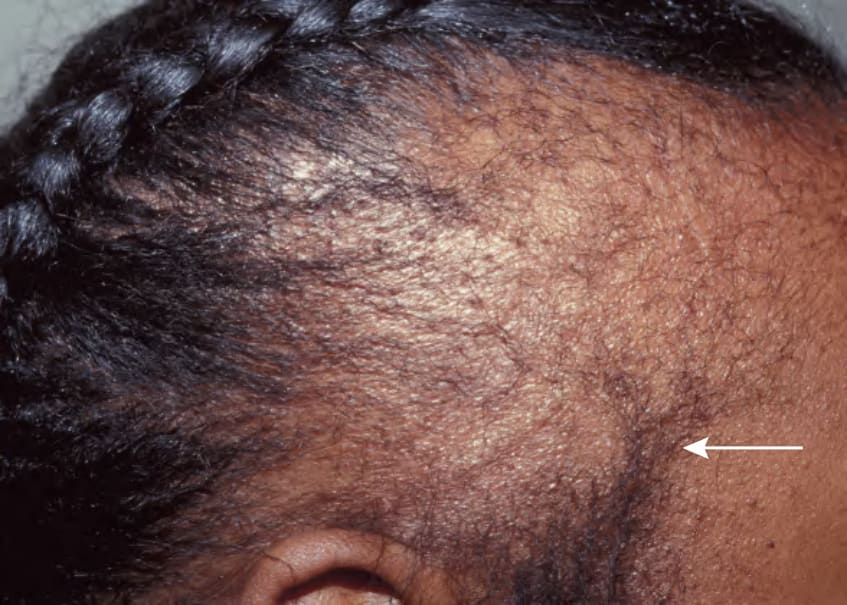
Fig. 69.16 Traction alopecia. Favors the frontotemporal area in African- American women and is due to traumatic types of hair styling. The arrow points to the “fringe sign”. Courtesy Leonard C. Sperling, MD.
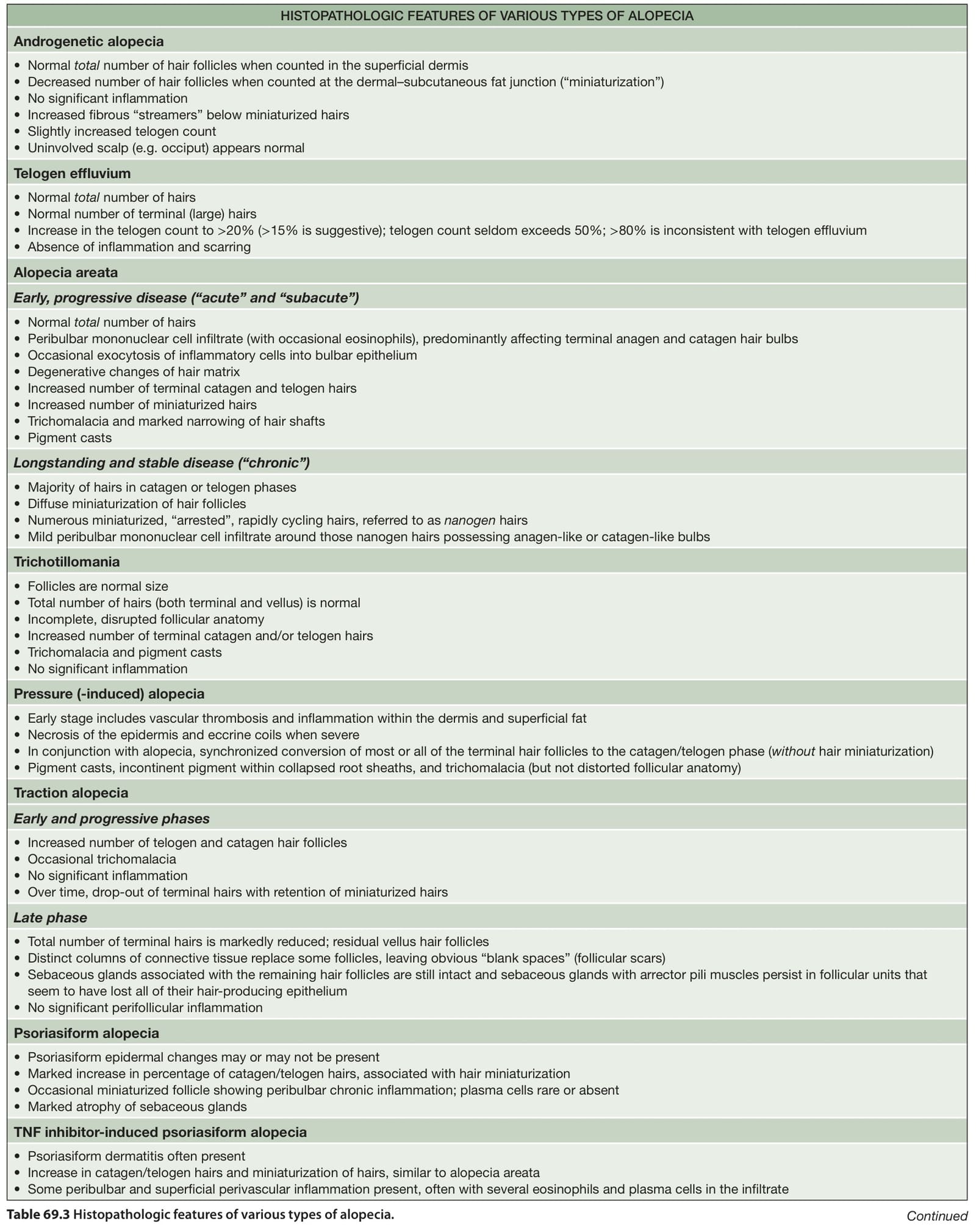
Table 69.3 Histopathologic features of various types of alopecia. Continued
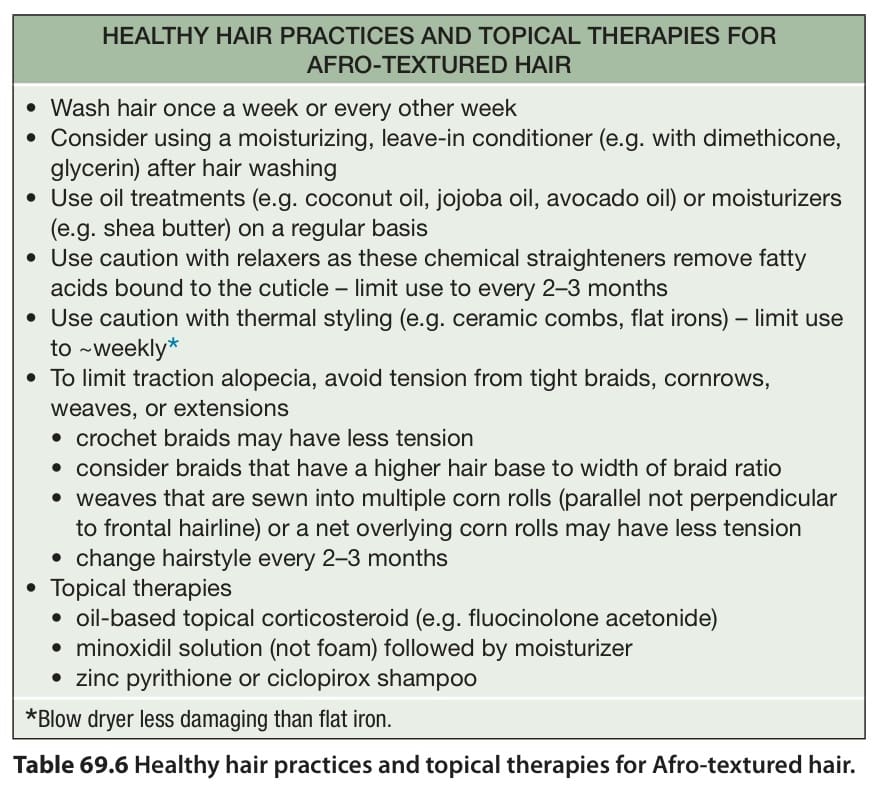
Table 69.6 Healthy hair practices and topical therapies for Afro-textured hair.