INTRODUCTION
The diagnosis and management of skin diseases in the anogenital region may be complex. The juxtaposition of urinary, genital, and alimentary tracts gives rise to special considerations at this site (Fig. 73.1), and disease of any of these major systems may present with cutaneous manifestations. A number of systemic diseases such as Crohn disease and zinc deficiency preferentially affect the anogenital area. Local factors, including warmth, moisture, irritants, friction, and the effects of body fluids, are important in this region, contributing to skin problems.
Skin conditions may be more difficult to diagnose in the anogenital region than at other cutaneous sites, as the typical appearance of a particular skin disease may be lacking and there may be a hesitation to perform biopsies. Examination of the scalp, nails, mouth, and extragenital skin frequently assists in diagnosis. Special considerations apply to treatment, as the natural occlusion of this area may increase the percutaneous absorption of topical corticosteroids, with the potential for cutaneous atrophy and/or hypothalamic–pituitary–adrenal axis suppression. Warmth and moisture increase the risk of bacterial and yeast infections.
Only a limited number of symptoms in the anogenital area are possible, and pruritus and genital pain may be the presenting feature of a wide variety of diseases.
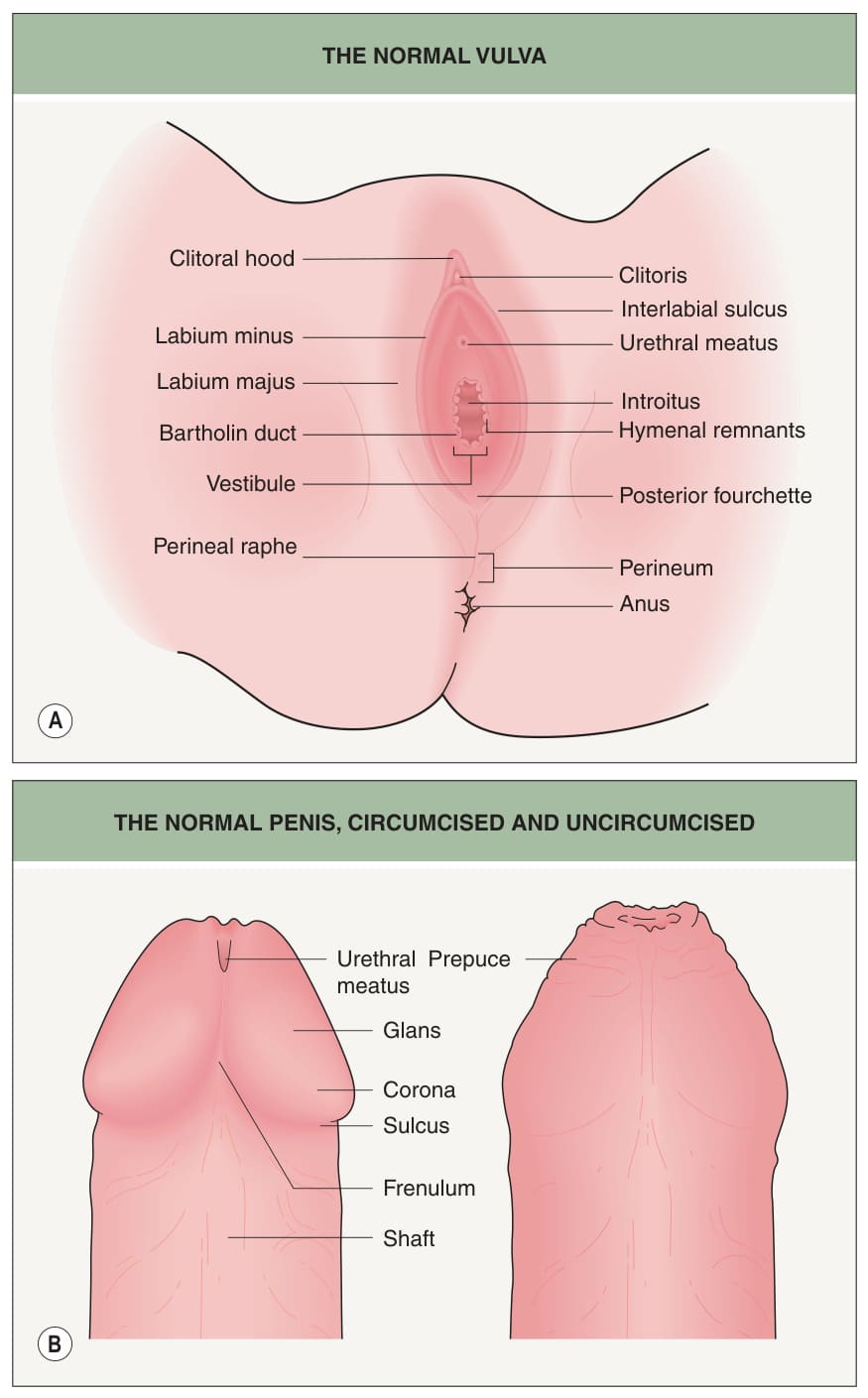
Fig. 73.1 Genital anatomy.A The normal vulva. B The normal penis, circumcised and uncircumcised.