INTRODUCTION
Members of the order Rickettsiales are small, obligately intracellular, Gram-negative bacteria that reside within an arthropod host for at least part of their life cycle. At least 30 bacterial species belonging to six genera (Rickettsia, Orientia, Ehrlichia, Anaplasma, Neorickettsia, and Neoehrlichia) as well as the related Coxiella genus in the order Legionellales are known agents of human diseases (Table 76.1). Cutaneous manifestations vary from nearly always present in some spotted fevers and typhus to rare in others, such as human granulocytic anaplasmosis and Q fever (Table 76.2). Clinical recognition of a rash is frequently the event that leads to appropriate antimicrobial treatment for life-threatening Rocky Mountain spotted fever (RMSF) and other rickettsioses.
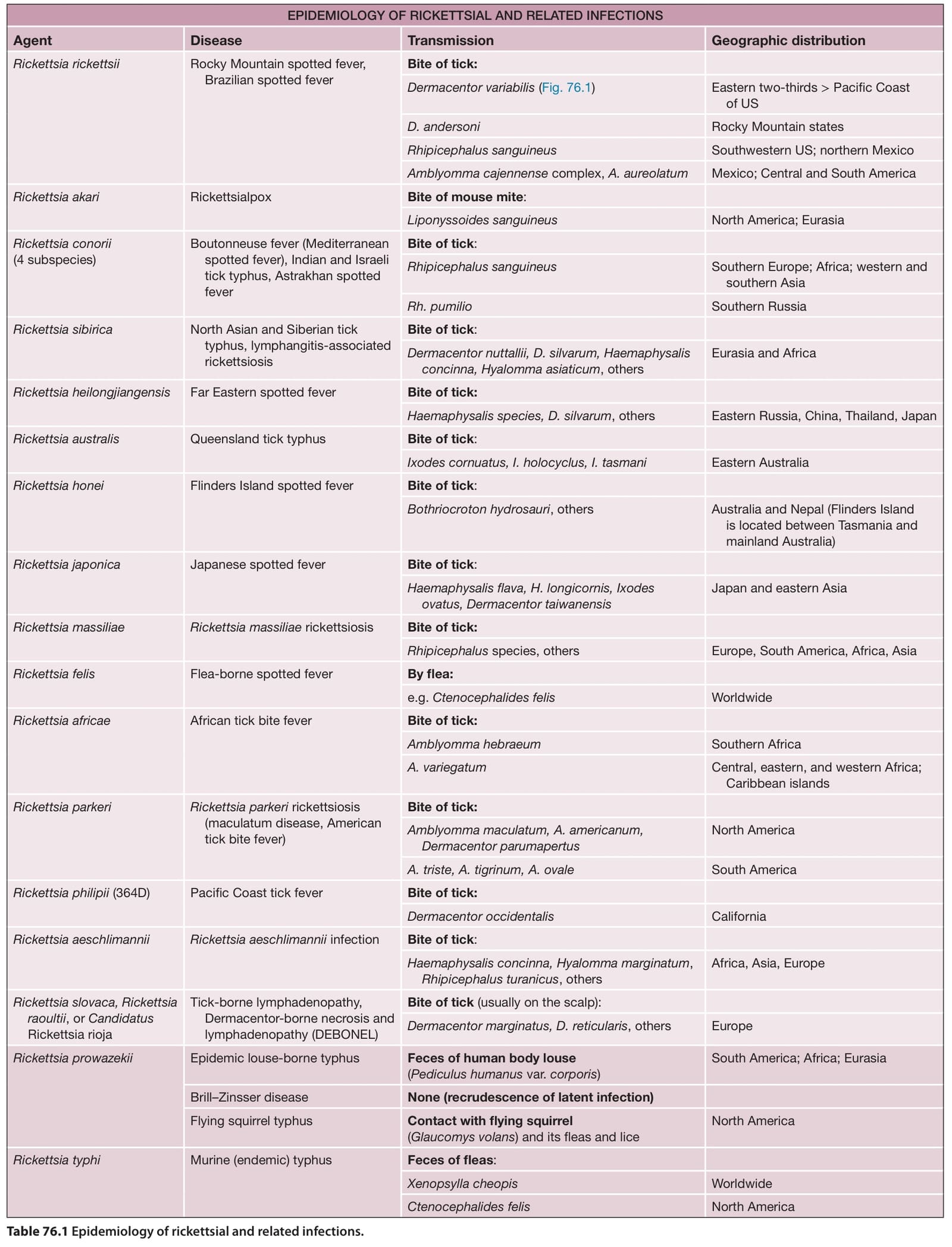
Table 76.1 Epidemiology of rickettsial and related infections.
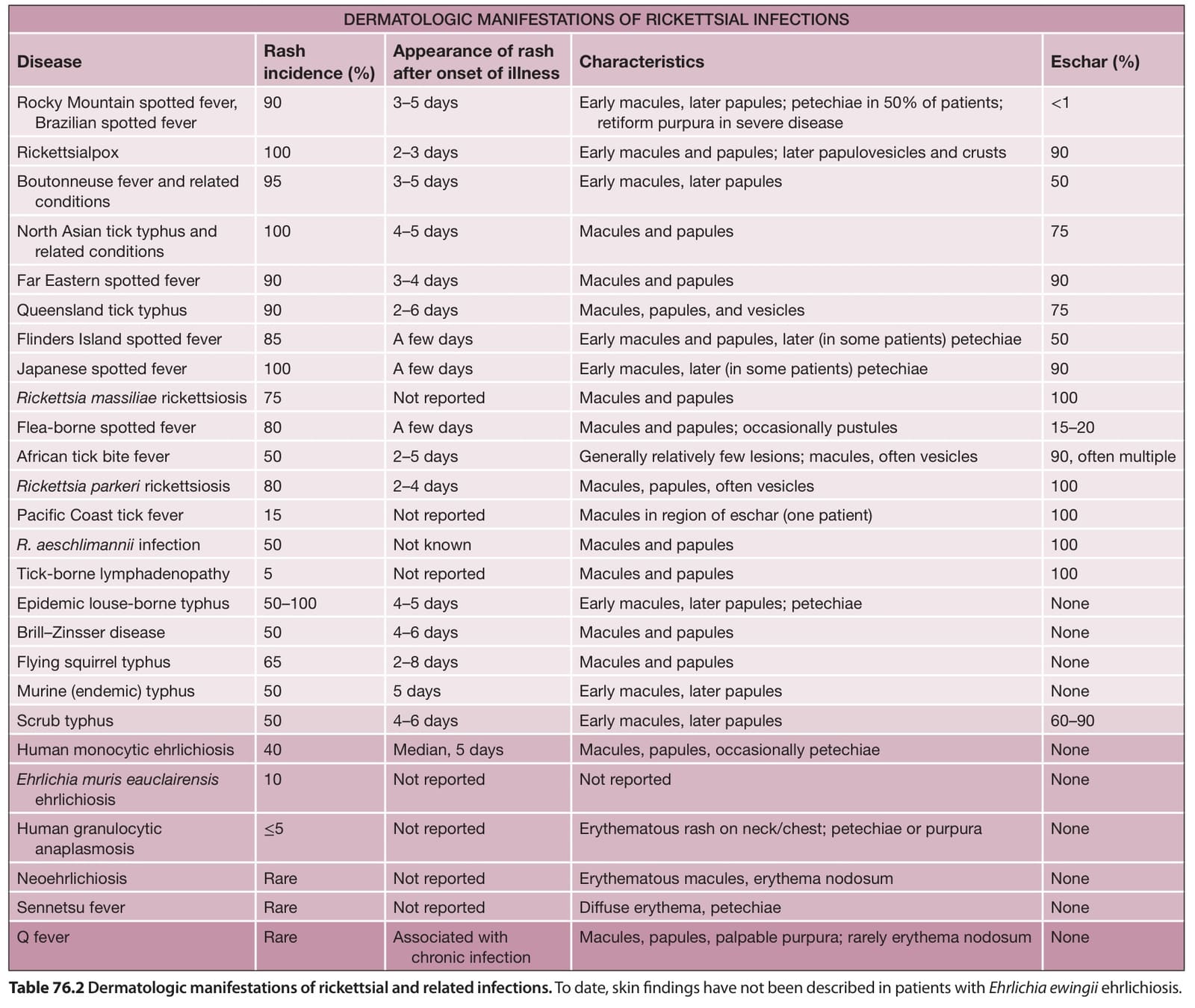
Table 76.2 Dermatologic manifestations of rickettsial and related infections. To date, skin findings have not been described in patients with Ehrlichia ewingii ehrlichiosis.