SCRUB TYPHUS
Scrub typhus was described in association with red mites in China in CE 313. Orientia tsutsugamushi was discovered in Japan by Nagayo and Ogata in the 1920s and early 1930s. There are >70 strains of O. tsutsugamushi, which differs from Rickettsia spp. in its cell wall proteins and ultrastructure as well as by lacking lipopolysaccharide. O. tsutsugamushi is maintained in nature via transovarial transmission by its vector, trombiculid mites (see Table 76.1). Eggs laid by infected mites hatch with the emergence of infected larvae (chiggers) that feed on rats.
Approximately one million cases of scrub typhus occur annually, primarily affecting rural populations in Asia (from Afghanistan to Japan) and northern Australia. In addition, novel Orientia spp. have been implicated in scrub typhus occurring in Dubai and Africa (O. chuto) as well as Chile (Candidatus O. chiloensis). Immunity is strain-specific and transient, resulting in reinfections. The severity of the illness is age-dependent and varies geographically.
Organisms within the endothelium of a dermal blood vessel are highlighted by brown staining.
A cutaneous eschar forms at the site of chigger feeding in 60%–90% of primary infections. This is followed by regional lymphadenopathy, fever, and headache; generalized lymphadenopathy, conjunctival hyperemia, and hearing loss may also develop. A rash occurs in approximately half of patients, usually appearing as erythematous macules on the trunk 4–6 days after disease onset. Lesions then become papular, with subsequent centrifugal spread. Interstitial pneumonia occurs frequently, presenting with cough, tachypnea, and radiographic infiltrates; meningoencephalitis is a less common manifestation. In severe cases, ARDS, acute kidney injury, and hypotensive shock may develop.
Tetracyclines, particularly doxycycline, are generally the firstline treatment for scrub typhus. Azithromycin has similar efficacy and represents an option for pregnant women and children, whereas chloramphenicol is less effective. However, reduced responsiveness of O. tsutsugamushi infections to doxycycline and chloramphenicol treatment has been reported in northern Thailand, and patients there have been treated successfully with azithromycin or rifampin.
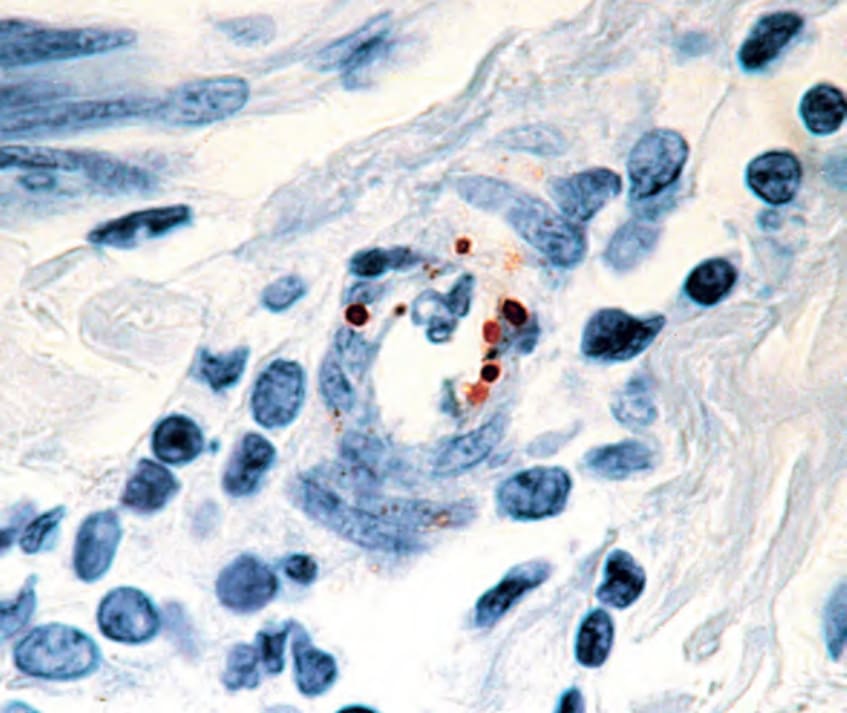
Fig. 76.11 Immunohistochemical detection of spotted fever rickettsiae.
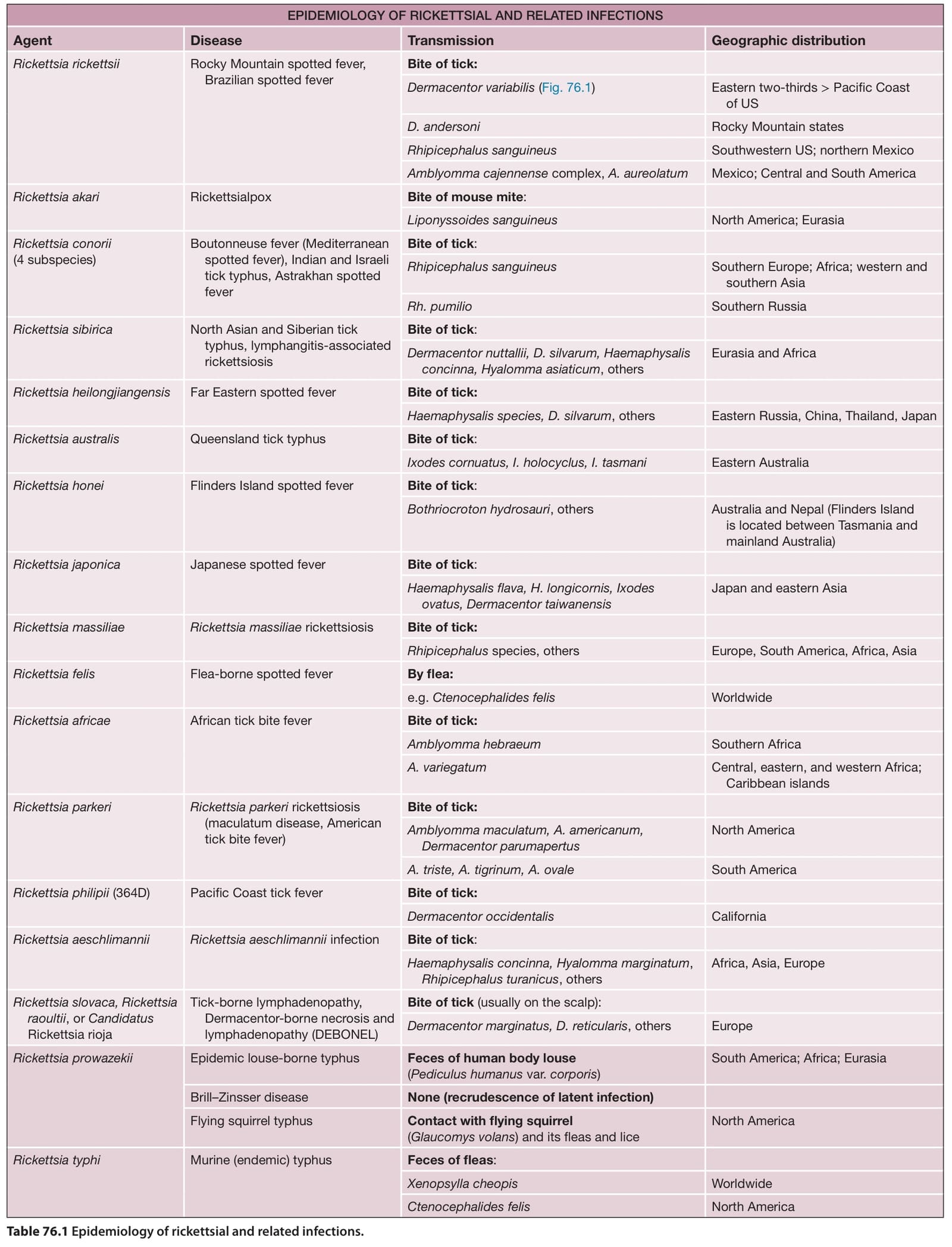
Table 76.1 Epidemiology of rickettsial and related infections.