HUMAN EHRLICHIOSES
Ehrlichial infections have been well known to veterinarians for >75 years, but human infection was not recognized until 1987, when an organism eventually identified as Ehrlichia chaffeensis was implicated as the etiologic agent of human monocytic ehrlichiosis (HME). In 1999, E. ewingii was found to cause human infections (most often in immunosuppressed patients) with clinical manifestations similar to HME. Ehrlichia spp. are obligately intracellular, Gram-negative bacteria that target monocytes/macrophages (E. chaffeensis) or neutrophils (E. ewingii), within which they reside as a cytoplasmic microcolony that is occasionally visible in a peripheral blood smear. Both agents are maintained in a zoonotic cycle involving persistently infected white-tailed deer as the major reservoir and Amblyomma americanum as the primary vector (see Table 76.1). These ticks were originally found primarily in the south central and southeastern US, but their geographic distribution has expanded into the upper midwestern and northeastern states, overlapping with that of Ixodes scapularis (Fig. 76.12A). Trends of increasing temperatures with climate change are predicted to continue to shift the ranges of tick species northward. Ehrlichia muris eauclairensis, transmitted by Ixodes scapularis, causes a human infection similar to HME in the upper midwestern US.
HME is a serious infectious disease with a ~3% case fatality rate. Its incidence is likely underestimated due to the lack of specific clinical findings. Patients with HME and Ehrlichia ewingii ehrlichiosis typically present with fever, headache, and myalgias; common laboratory abnormalities include thrombocytopenia, leukopenia, and elevated transaminases. Progression to ARDS, meningoencephalitis, and toxic shock syndrome-like manifestations can occur. In addition, overwhelming ehrlichial infection may develop in immunocompromised hosts, such as those with HIV infection and organ transplant recipients.
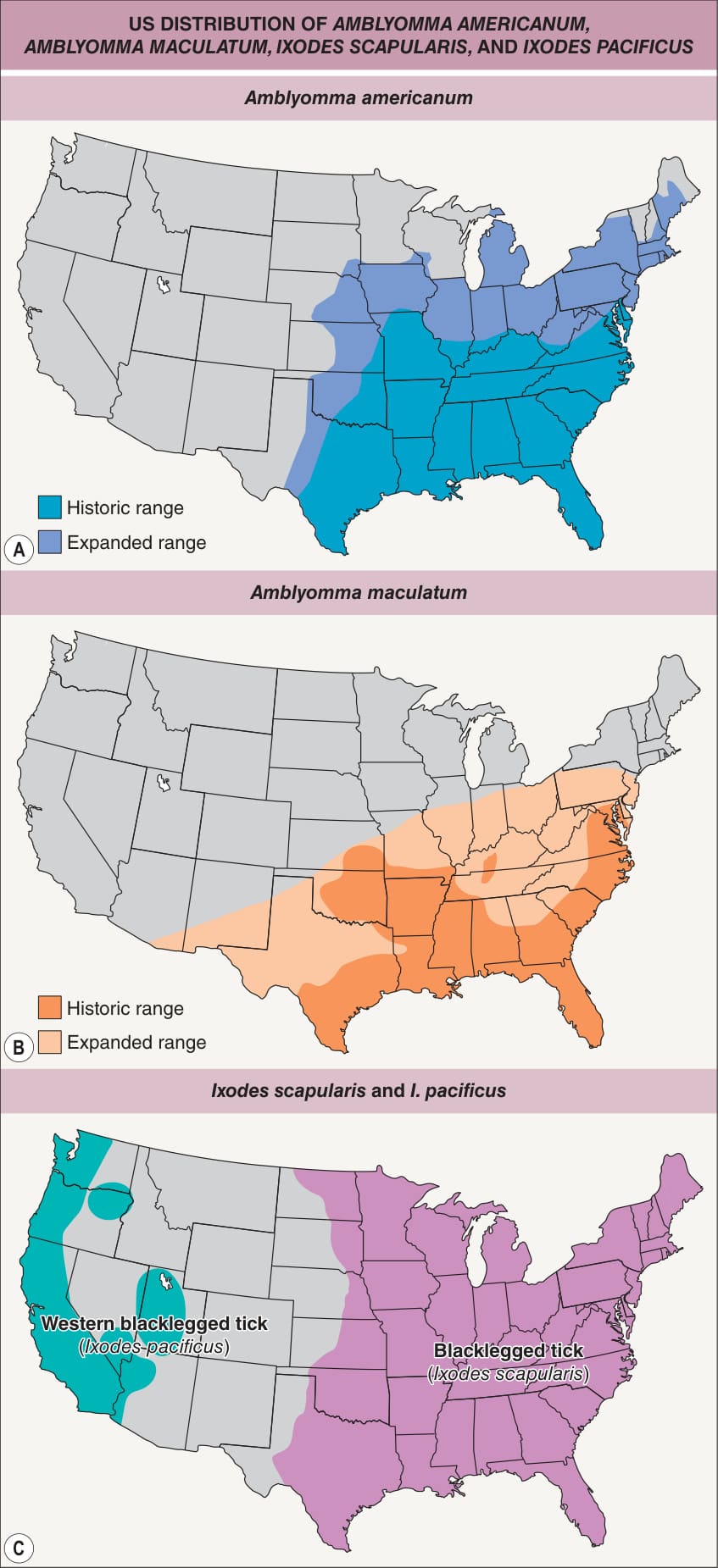
Fig. 76.12 US distribution of Amblyomma americanum, A. maculatum, Ixodes scapularis, and I. pacificus. Amblyomma americanum (A) and A. maculatum (Gulf Coast tick; B); both have original as well as extended distributions, with the latter in a second shade. CIxodes scapularis and I. pacificus.
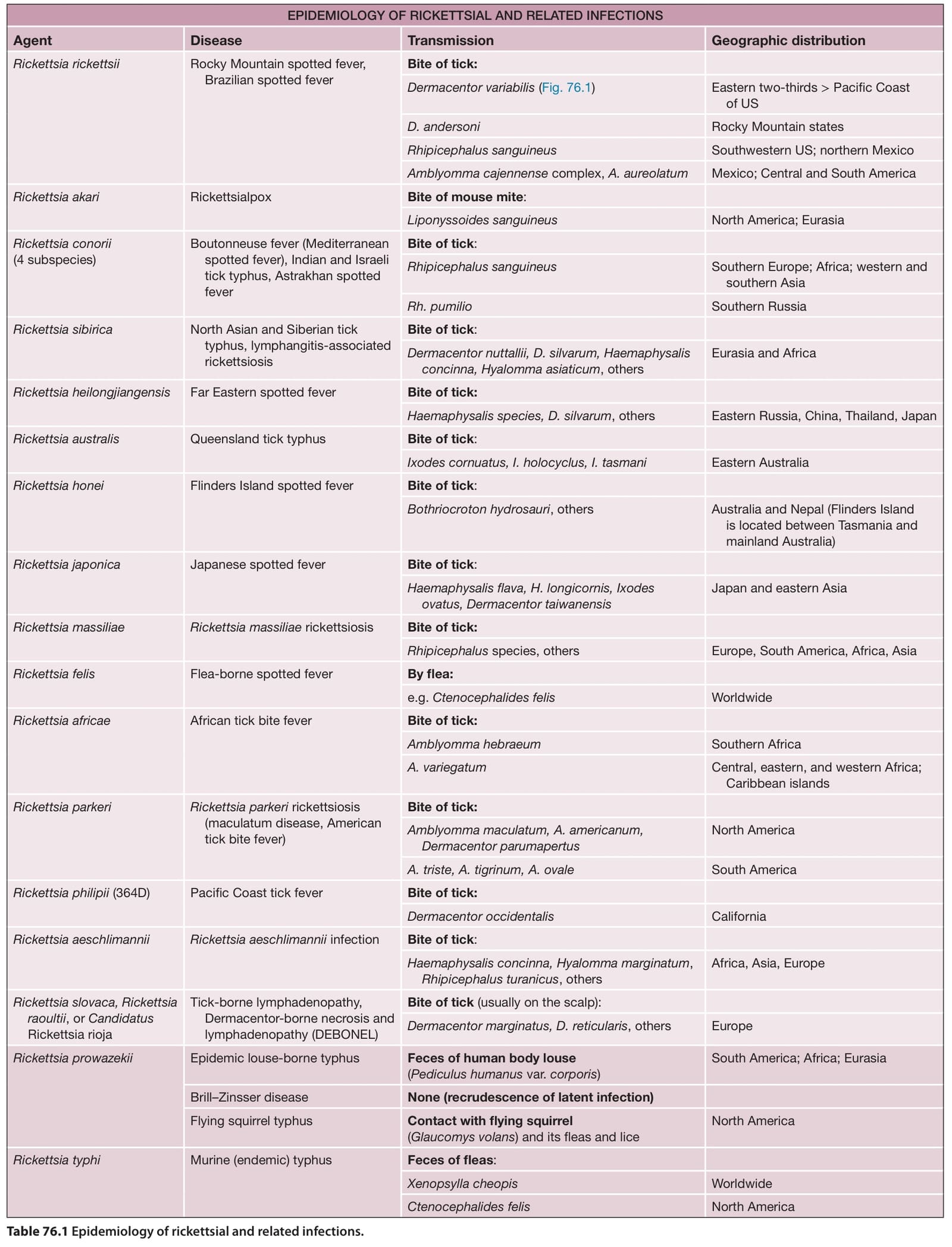
Table 76.1 Epidemiology of rickettsial and related infections.
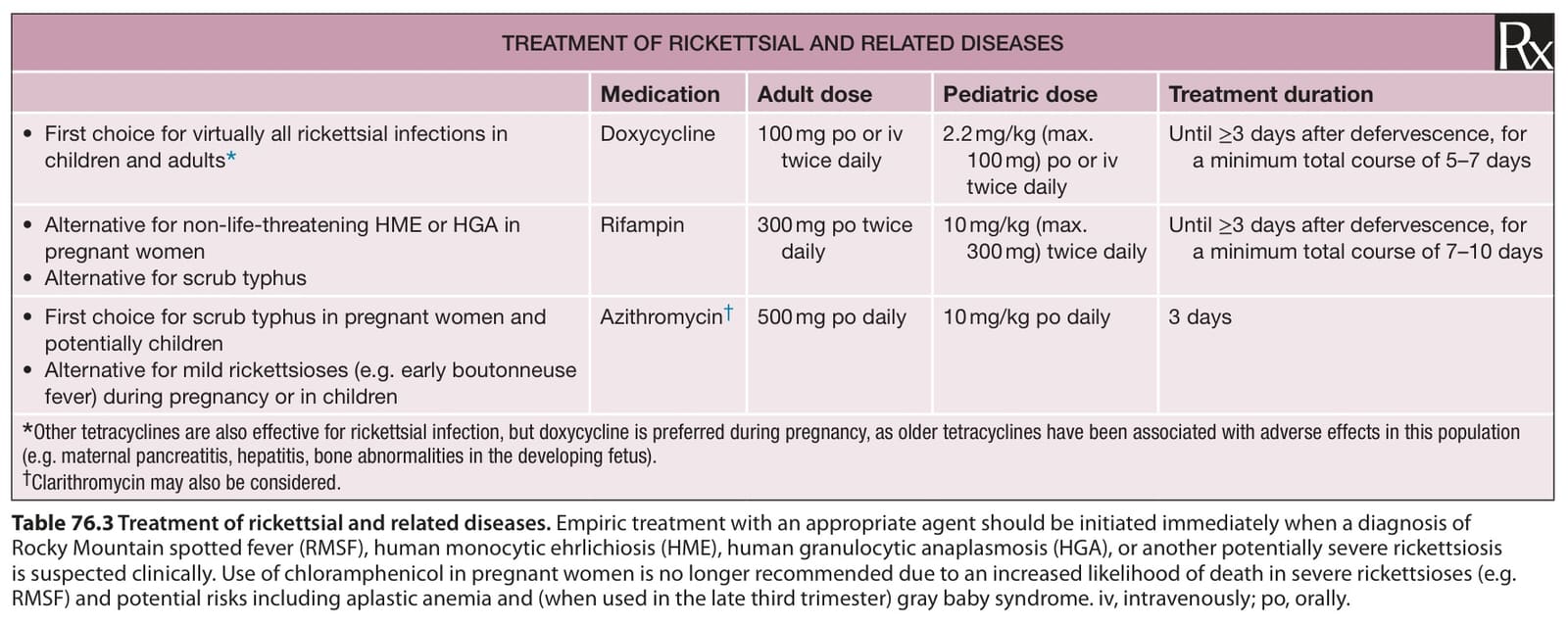
Table 76.3 Treatment of rickettsial and related diseases. Empiric treatment with an appropriate agent should be initiated immediately when a diagnosis of Rocky Mountain spotted fever (RMSF), human monocytic ehrlichiosis (HME), human granulocytic anaplasmosis (HGA), or another potentially severe rickettsiosis is suspected clinically. Use of chloramphenicol in pregnant women is no longer recommended due to an increased likelihood of death in severe rickettsioses (e.g. RMSF) and potential risks including aplastic anemia and (when used in the late third trimester) gray baby syndrome. iv, intravenously; po, orally.