INTRODUCTION
Mucocutaneous disorders not only provide important clues to the diagnosis of HIV disease and significantly impact quality of life, but they also serve as markers of progression and possible associated systemic disease. In addition, relapse of skin diseases can be associated with failure or discontinuation of antiretroviral therapy (ART). The World Health Organization (WHO) clinical staging of HIV-related disease is shown in Table 78.1, and conditions that typically develop at different CD4+ T cell counts are presented in Table 78.2. Effective ART has transformed HIV disease from a progressive, fatal disorder to a chronic condition requiring maintenance therapy. As a result, cutaneous disorders associated with severe immunosuppression, such as Kaposi sarcoma and serious opportunistic infections, are observed less frequently. However, with longer survival, other diseases have become more common (e.g. anal intraepithelial neoplasia), and ART itself has led to dermatologic challenges, including drug reactions, lipodystrophy, and immune reconstitution inflammatory syndrome (IRIS). In low-income countries where ART may not be readily available, opportunistic infections are still a common cause of morbidity and mortality. Approximately 80%–95% of people living with HIV develop at least one skin disorder, and dermatologists worldwide continue to play important roles in their care.
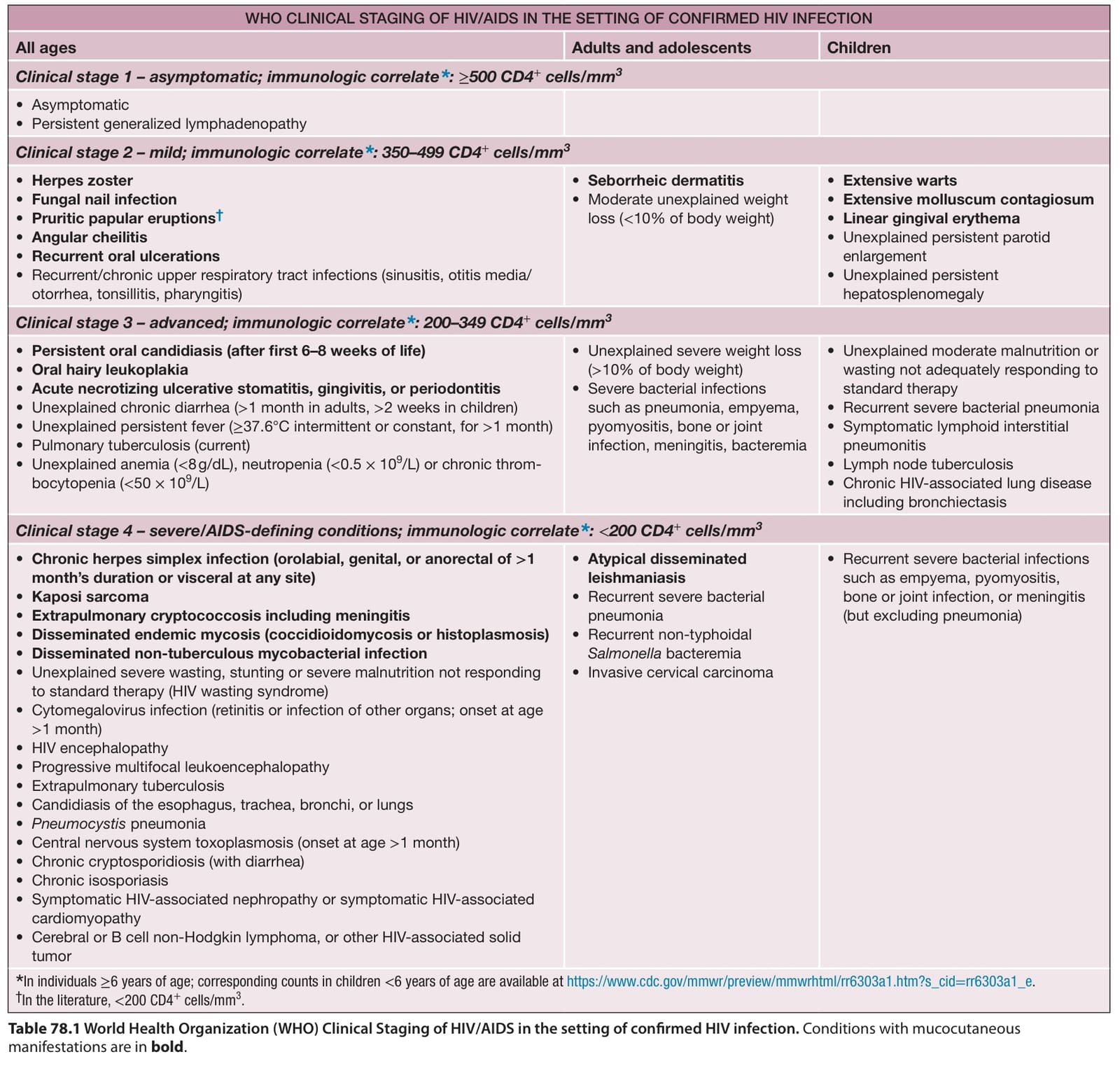
Table 78.1 World Health Organization (WHO) Clinical Staging of HIV/AIDS in the setting of confirmed HIV infection. Conditions with mucocutaneous manifestations are in bold.
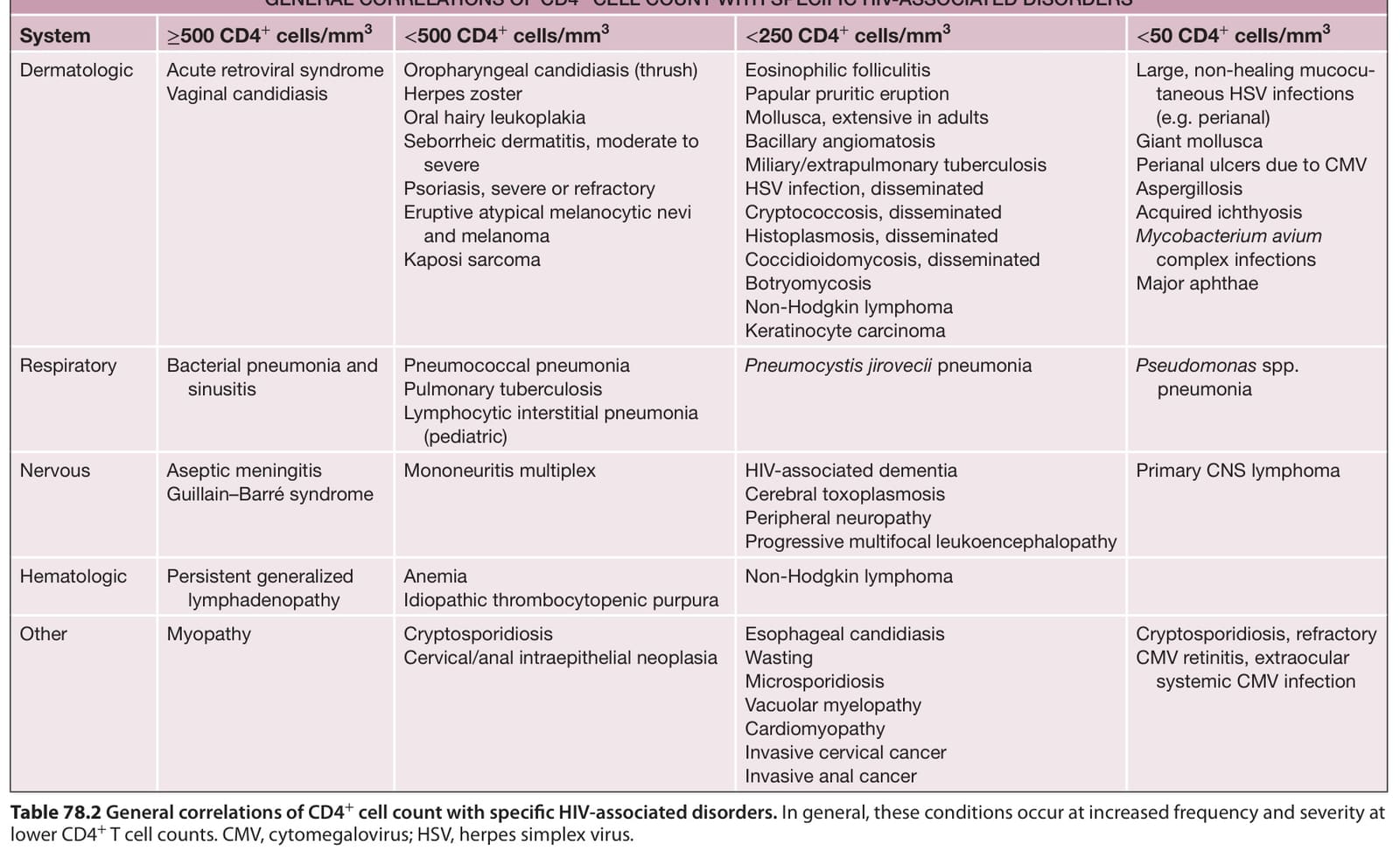
Table 78.2 General correlations of CD4+ cell count with specific HIV-associated disorders. In general, these conditions occur at increased frequency and severity at lower CD4+ T cell counts. CMV, cytomegalovirus; HSV, herpes simplex virus.