Photosensitivity Reactions
UV light hypersensitivity
People living with HIV may develop photosensitive dermatoses including chronic actinic dermatitis, porphyria cutanea tarda, photosensitive granuloma annulare, and photodistributed hyperpigmentation or depigmentation. Photolichenoid eruptions can result from commonly prescribed medications such as TMP-SMX, dapsone, and NSAIDs (Fig. 78.16). Photosensitization is also a potential side effect of antiretroviral medications, e.g. efavirenz, tenofovir, saquinavir.
Porphyria cutanea tarda (PCT)
Acquired PCT can occur in patients with HIV disease, more often in men than women. This disruption in porphyrin metabolism could possibly be triggered by HIV-related impairment of cytochrome P450 enzymes, estrogen excess due to altered steroid hormone metabolism, co-infection
with hepatitis B or C virus, alcohol intake, increased hepatic iron due to ineffective hematopoiesis, or direct hepatic damage by HIV.
Chronic actinic dermatitis
Chronic actinic dermatitis can be an initial manifestation of HIV disease. Pruritic eczematous lesions favor chronically sun-exposed areas (see Ch. 87). Most patients have a decreased minimal erythema dose (MED) to UVB ± UVA and visible light, and CD4+ T cell counts are often <200/mm3;.
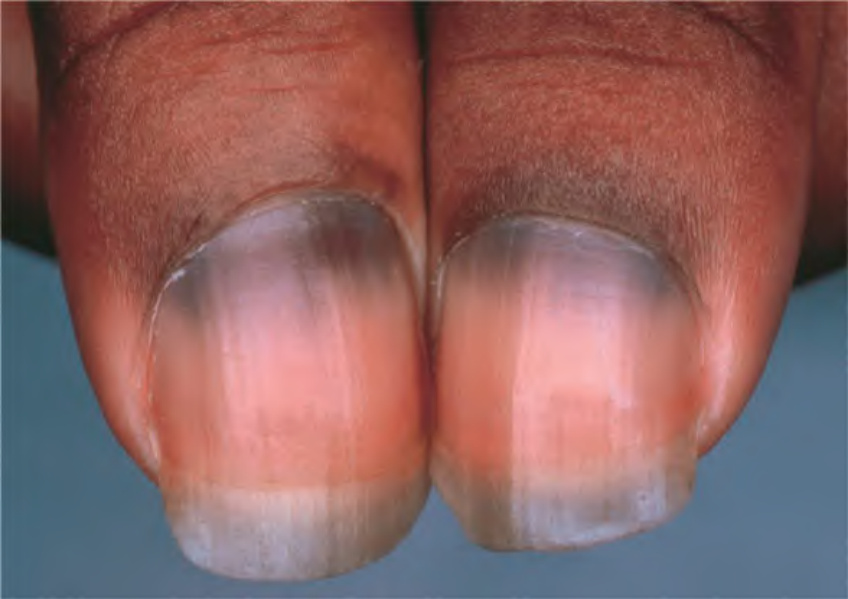
Fig. 78.15 Zidovudine-associated melanonychia. Patients receiving zidovudine may develop longitudinal streaks, horizontal bands, and diffuse hyperpigmentation.
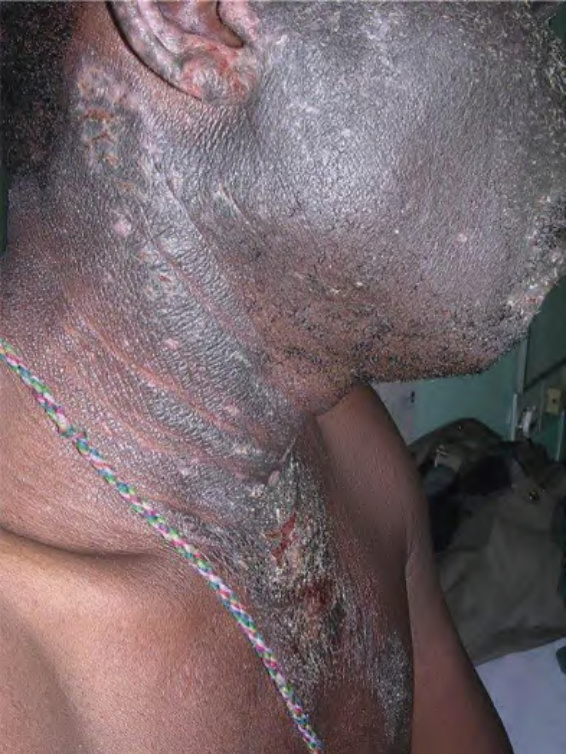
Fig. 78.16 Photolichenoid eruption in a patient with HIV.Courtesy Ncoza Dlova, MD.