THERAPY
General Considerations
There is currently no specific antiviral therapy available to cure HPV infection. Existing modalities focus primarily on the destruction or removal of visible lesions or induction of cytotoxicity against infected cells (Table 79.2). Because of the benign and self-limited nature of warts, treatments that cause scarring should be avoided. There is no evidence that aggressive treatment results in a better long-term outcome, and temporary interruption of therapy is an option. Common warts often regress spontaneously in children and therefore may not require treatment. A simplified algorithm for the approach to treatment of cutaneous warts is presented in Fig. 79.26.
Genital warts may be disfiguring and pose a significant psychological burden. HPV infection is typically widespread and multifocal throughout the anogenital tract, and subclinical lesions are often present. Thus, regardless of the applied therapeutic modality, reported recurrence rates are high (25%–65%) and it is unproven whether treatment reduces
transmission rates to new sexual partners. Limiting the number of partners remains the mainstay of decreasing transmission. Condom use may also be helpful, and it has promoted regression of flat penile lesions and CIN as well as clearance of HPV in couples infected with the same HPV type. Treatment is time-consuming, uncomfortable, and limited to visible warts and intraepithelial neoplasias with a high risk of progression. A simplified treatment algorithm is shown in Fig. 79.27. Current therapies for genital warts are summarized in Table 79.2 and include destructive, antiproliferative, and immunomodulatory modalities.
Local Destructive Therapy
Recommended destructive or ablative therapies for genital warts include cryotherapy, trichloroacetic acid (TCA) or bichloroacetic acid (BCA), electrosurgery, scissor or shave excision, curettage, laser vaporization, or excisional surgery. When anesthesia is required, topical application or injection of a local agent is usually sufficient (see Ch. 143), although general anesthesia may be indicated for surgical debulking of large lesions and occasionally in children. Ablative laser therapy is also useful for vaginal, vulvar, or anal intraepithelial neoplasias. Precautions should be taken to avoid inhalation of virus particles in the aerosol plume when laser or electrosurgical procedures are performed. Application of TCA 80%–90% solution is a commonly utilized office-applied therapy that results in local tissue destruction. Although scarring may occur following dermal injury, TCA has the advantage of a complete lack of systemic toxicity and it can be used during pregnancy.
Cryotherapy with liquid nitrogen is inexpensive, effective, safe during pregnancy, and usually does not require anesthesia; as a result, it is often used as a first-line in-office therapy for genital warts followed by patient-applied podophyllotoxin or imiquimod (see Table 79.2). Liquid nitrogen is applied with a cotton swab, spray gun, or closed system cryoprobe (see Ch. 138). Two freeze–thaw cycles, the extent of which is visually controlled, lead to wart necrosis and sometimes blistering. Multiple treatment sessions result in remission rates of 75% to 85%, with recurrences in 20%–40% of patients.
Cutaneous warts may be treated by daily application of salicylic acid/lactic acid/collodion (1 : 1 : 4), if possible with occlusion and after removing the thickened stratum corneum, or other salicylic acid preparations for 3–4 months; this results in regression in two-thirds of patients. Application of petrolatum to the surrounding normal skin protects against the corrosive effect of the concentrated acid. Weight pressure causes deep inward growth of plantar warts (myrmecia), and the resulting pain can be reduced by repeated shaving of the hyperkeratotic surface to a level at which capillary bleeding occurs. Cryotherapy with liquid nitrogen (see above) may be utilized for persistent or recurrent verrucae, including periungual lesions, with cure rates similar to or better than salicylic acid preparations in randomized controlled studies. Other in-office or at-home freezing products (e.g. those containing dimethyl ether and propane) are less effective. Either cryotherapy that does not include a rim of surrounding skin or topical application of the blistering agent cantharidin (0.7% or 1%) may produce a “doughnut wart” due to clearance in the center but not at the periphery of the lesion. Additional destructive modalities include curettage or scissor excision (especially for filiform warts and other exophytic lesions), electrosurgery (see Ch. 140), and laser treatment (e.g. with CO, Nd:YAG, or pulsed dye lasers). Combination therapy with the application of topical agents following destruction may reduce the rate of recurrence.
Topical and Intralesional Cytotoxic Therapy
Podophyllin is a crude resin extract from the roots of the May apple Podophyllum peltatum (North America) or Podophyllum emodi
(Far East) that has been used since the early 1940s for the treatment of genital warts. Systemic toxicity can occur when applied in large volumes, and death, intrauterine demise, and teratogenicity have been reported. Because of low efficacy and potential toxicity, podophyllin use is no longer recommended. Podophyllotoxin has been identified as the most active constituent of podophyllin. A regimen of patient self-applied podophyllotoxin 0.5% solution or gel twice a day for 3 days repeated in weekly cycles was shown to be effective and without evidence of systemic absorption and toxicity (see Table 79.2). Erythema and erosions are the most common side effects. In a recent network meta-analysis, podophyllotoxin 0.5% solution was significantly more efficacious than imiquimod 5% cream in clearing genital warts in non-immunocompromised patients, but the former had more adverse side effects. Both podophyllin and podophyllotoxin are contraindicated during pregnancy.
Warts of the urethral meatus and urethra are difficult to manage, and stenosis and stricture due to therapy are potentially serious complications. 5-Fluorouracil (5-FU) 5% cream can be applied twice a week to treat intraurethral condylomata or, as an alternative to destructive treatments, intraepithelial neoplasias of the external genitalia. However, its use in the genital area is limited by inflammatory side effects. Successful treatment of cutaneous warts with 5-FU 5% cream applied daily under occlusion or together with salicylic acid has also been described in children and adults, and effective therapy with intralesional 5-FU has been reported.
Intralesional bleomycin is occasionally used to treat recalcitrant cutaneous warts, but injections are painful and may result in excessive cutaneous necrosis.
Topical Immunomodifiers
Imiquimod is an imidazoquinoline compound with immunomodulatory activities that has been approved by the US Food and Drug Administration (FDA) for the topical treatment of condylomata acuminata. Imiquimod has been shown to interact with Toll-like receptors 7 and (to a lesser degree) 8, resulting in activation of cytokine secretion from monocytes/macrophages (including interferon-α, inter-leukin-12, and tumor necrosis factor) as well as stimulation of antigenpresenting dendritic cells (see Ch. 128).
In an initial randomized, double-blind, placebo-controlled clinical trial, complete clearance of genital warts occurred in 50% of patients treated with imiquimod 5% cream compared to 11% of those treated with vehicle control; recurrence rates were low (<15%) in both groups. Response rates were higher for warts on mucosal sites (i.e. female and uncircumcised male patients) than for lesions on the penile shaft or suprapubic area, suggesting the importance of crossing the stratum corneum barrier for effective treatment. Later studies confirmed the therapeutic effect of imiquimod for anogenital warts and documented that this treatment resulted in a reduction of viral load, presumably
due to activation of cellular immune responses. A direct comparison of imiquimod and cryotherapy for genital warts found an earlier response with imiquimod, slightly higher efficacy with cryotherapy, and similar recurrence rates. In clinical practice, destruction of genital warts by the physician, followed by patient-applied imiquimod (often requiring several cycles) is favorable over either modality alone. Imiquimod has also been incorporated into suppositories and applied via anal tampons to prevent recurrence of anal condylomata following surgical ablation, or as primary treatment for anal condylomata and AIN in order to avoid the risk of scarring and stenosis of the anal canal associated with surgical procedures.
Therapeutic efficacy of imiquimod 5% cream has also been described for persistent cutaneous warts. In a controlled study (right versus left comparison) involving 14 immunosuppressed patients with recalcitrant warts on their hands and/or feet, a 36% response rate was observed for warts treated with imiquimod (three times weekly for 8 weeks, daily for 8 weeks, then daily with occlusion for 8 weeks) compared to 7% for untreated warts. Improvement of common and flat warts with imiquimod therapy (daily application; ± occlusion for common warts) has also been reported in uncontrolled studies in immunocompetent patients. Occlusion and/or concurrent use of salicylic acid or cryotherapy may increase imiquimod’s penetration through the stratum corneum, which is especially important in acral sites.
Side effects of imiquimod include application site reactions (inflammation, erosion) that may require treatment-free periods. Imiquimod therapy is often more costly than other treatment options.
Sinecatechins 15% ointment, which contains green tea leaf-derived catechins thought to have immunostimulatory and antiproliferative properties, is approved as a topical treatment for anogenital warts. In randomized double-blind clinical studies, application of this product three times daily for up to 16 weeks led to complete clearance of anogenital warts in ~55% of patients (with frequent local irritation), compared to 35% of those treated with a vehicle control.
Systemic Immunomodifiers
Interferons have been used topically, intralesionally, and systemically for genital warts in controlled trials and have failed to demonstrate consistent efficacy. Systemic therapy, which is expensive and causes dose-related toxic side effects, is therefore not recommended for routine clinical use. However, interferons may be helpful as an adjunct or salvage therapy in selected patients. More recently, low-dose pomalidomide was reported to clear or improve HPV-associated anal HSIL.
Immunotherapy
Increasing evidence that cellular immune responses play a critical role in wart clearance has inspired the development of topical and intralesional immunotherapy regimens for patients with multiple and/or recalcitrant warts. In a large uncontrolled study, 154 children and adults with recalcitrant palmoplantar warts underwent successful topical sensitization with 2% diphenylcyclopropenone (DPCP) followed by at least six applications of 0.5%–4% DPCP to their warts at 3-week intervals. An 88% complete clearance rate was observed after an average of 6 months, with only local side effects (pruritus, blistering, eczematous reactions). Similar clearance rates have been reported for other contact sensitizers such as squaric acid dibutyl ester (SADBE), with application frequencies ranging from daily to monthly (often twice weekly), and regression of distant untreated warts has also been described.
Intralesional injection of Candida, Trichophyton, and/or mumps skin test antigens represents another approach to immunotherapy for warts in immunocompetent adults and children. In a randomized controlled clinical trial, a significantly higher clearance rate for treated as well as distant untreated common warts was observed in patients receiving intralesional antigen as compared to placebo at 3-week intervals for a total of up to five treatments (60% versus 22%, and 41% versus 19%, respectively). Effective treatment of flat warts and anogenital warts with topical and intralesional immunotherapy has also been described.
Antiviral Agents
Cidofovir is an acyclic nucleoside phosphonate with broad-spectrum activity against DNA viruses, including HSV and molluscum contagiosum, and it is approved for the systemic treatment of cytomegalovirus retinitis in AIDS patients. Although limited by the potential for renal toxicity, systemic treatment with cidofovir has shown efficacy in patients with HPV-associated lesions, including extensive cutaneous warts and severe RRP with pulmonary involvement. Intralesional injection of cidofovir (15 mg/ml saline) and topical application of 1%–3% cidofovir incorporated into an ointment, cream, or gel base have been successfully used in multiple case series of immunocompetent or immunosuppressed (e.g. HIV-infected) patients with cutaneous warts, condylomata acuminata, intraepithelial neoplasias, or RRP.
Retinoids
The effects of retinoids on keratinocyte differentiation and proliferation may lead to inhibition of HPV replication and assembly. Reduction in the bulk of extensive cutaneous or genital warts with oral retinoid therapy (e.g. acitretin, isotretinoin) has been reported in immunocompetent and immunosuppressed patients. Successful treatment of flat warts with topical tretinoin or tazarotene has also been described.
Anti-PD-1/PD-L1 Antibodies
The aggressive nature of HPV-associated carcinomas is in part due to their ability to evade immunosurveillance via the expression of immune checkpoint molecules such as programmed cell death-ligand 1 (PD-L1), which interacts with its receptor (PD-1) on tumor-specific T cells and limits the latter’s antitumor activity (Fig. 128.9). Increased levels of PD-L1 have been found in HPV-related cervical and head and neck SCCs and may play a critical role in the growth, progression, and metastases of these tumors. For example, expression of PD-L1 has been reported in 35%–95% of cervical carcinomas. In several clinical trials of cervical or head and neck SCCs treated with anti-PD-1/PD-L1 antibodies, increased objective response rates and progression-free survival were observed when patients were stratified for HPV status and PD-L1 expression. As a result, the FDA approved pembrolizumab in combination with chemotherapy for persistent, recurrent, or metastatic cervical cancer whose tumors express PD-L1. Pembrolizumab is also approved as a single agent for metastatic or unresectable recurrent head and neck SCCs that express PD-L1.
Special Considerations, Including Intraepithelial Neoplasias and Pregnancy
Early diagnosis of Buschke–Löwenstein tumor and other verrucous carcinomas is important to allow wide excision with clear resection margins. Surgery is the only established treatment that may cure the disease, although recurrence rates are high and the tumor can ultimately result in death. Cytotoxic chemotherapy and injections of interferon-α have led to remissions or cure in individual patients. Whether anti-PD-1/PD-L1 antibodies could play a therapeutic role remains to be determined.
In transplant recipients and HIV-infected patients, skin and genital warts tend to resist standard treatment modalities. A surgical approach followed by non-invasive treatment of recurrent warts may be appropriate. In placebo-controlled studies, local application of imiquimod reduced genital wart area by more than 50% in 38% of HIV-infected patients. Imiquimod cream has also been used for VIN while imiquimod incorporated into suppositories or applied via anal tampons has been used for AIN, supporting a role for cellular immune enhancement for treatment of HPV-induced neoplasia.
During pregnancy, genital warts can increase in size and destructive procedures including surgery, cryotherapy, TCA application, and laser treatments are appropriate for removing lesions, which may theoretically reduce the risk for the newborn to acquire RRP. However, this assumption is not proven and the presence of condylomata is not an indication for delivery by cesarean section. Podophyllin and podophyllotoxin are teratogenic and thus must not be used in pregnant women.
The treatment of intraepithelial neoplasias (bowenoid papulosis, erythroplasia of Queyrat, Bowen disease) is generally more aggressive than that of benign condylomata. Prior to therapy, an aiming biopsy (e.g. colposcopically directed) is always required to exclude (micro) invasion histologically. For patients with bowenoid papulosis and erythroplasia who are younger than 45 years of age, superficial destruction of lesions (e.g. with cryotherapy or laser vaporization) may be appropriate to avoid mutilation. In immunocompetent patients less than 35 years of age, bowenoid papulosis is regarded as a benign and self-limited disease. Nevertheless, prolonged observation appears mandatory to detect recurrences.
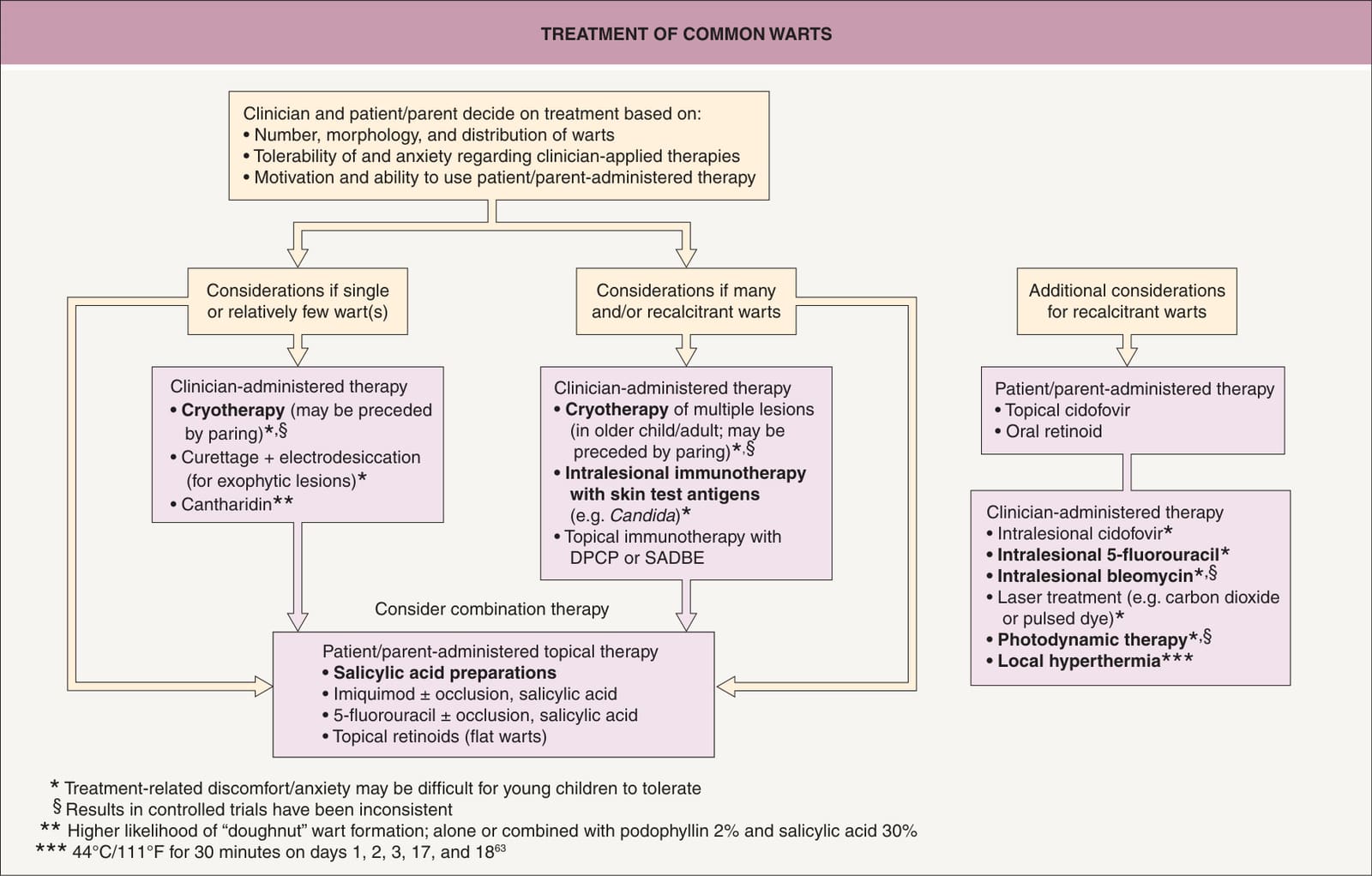
Fig. 79.26 Treatment of common warts. Therapies found to be effective in controlled trials are in bold. While still employed by some clinicians, three double-blind, placebo-controlled trials failed to confirm efficacy of cimetidine therapy for recalcitrant common warts. Topically, cidofovir is incorporated into an ointment, cream, or gel base at 1%–3% and intralesional cidofovir is diluted to 15 mg/ml saline. DPCP, diphenylcyclopropenone; SADBE, squaric acid dibutyl ester.
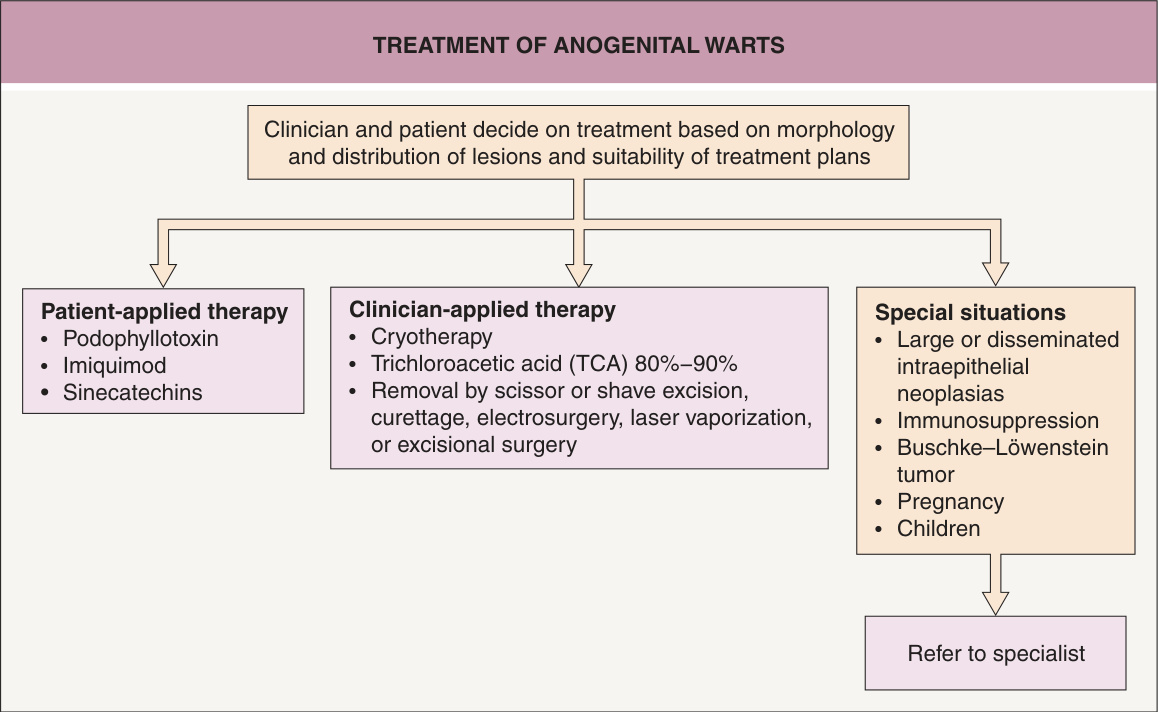
Fig. 79.27 Treatment of anogenital warts. See Table 79.2 for details of patient-applied therapies. TCA, trichloroacetic acid.
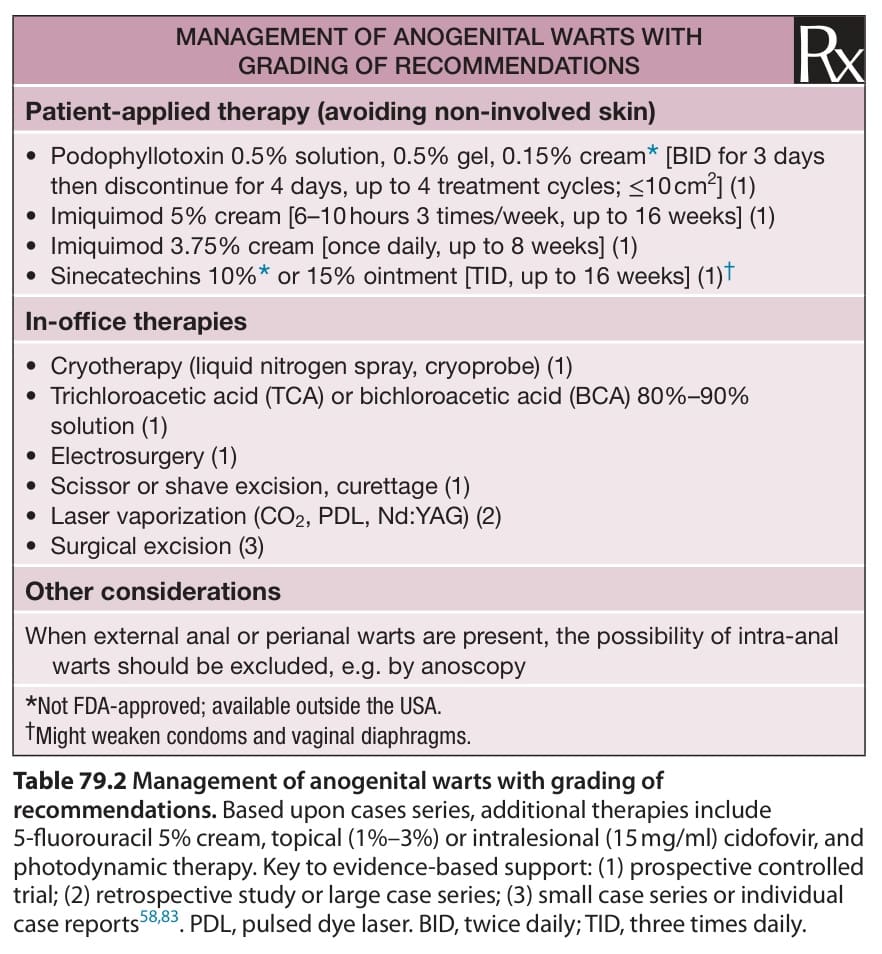
Table 79.2 Management of anogenital warts with grading of recommendations. Based upon cases series, additional therapies include 5-fluorouracil 5% cream, topical (1%–3%) or intralesional (15 mg/ml) cidofovir, and photodynamic therapy. Key to evidence-based support: (1) prospective controlled trial; (2) retrospective study or large case series; (3) small case series or individual case reports. PDL, pulsed dye laser. BID, twice daily; TID, three times daily.