MEASLES
Synonym: Rubeola
Key features
Incidence greatly decreased with vaccination
Prodrome of cough, coryza, conjunctivitis, and Koplik spots
Cephalocaudad spread of exanthema
Introduction and History
The incidence of measles has markedly decreased since the introduction of the live vaccine in 1963. Despite high vaccination coverage, measles outbreaks continue to occur in both high-income and low-income countries, and the disease is still regarded as a major health burden. Use of the vaccine is estimated to have reduced global measles morbidity and mortality by 75% and 85%, respectively, compared with the prevaccine era.
Epidemiology
The incubation period of measles, which is highly contagious and spread via respiratory droplets, is 10–14 days. In the prevaccine era, measles was endemic throughout the year in heavily populated areas, without regard to age or sex. During the 1989–1990 epidemic, reported measles cases in the US increased six- to ninefold over the mean of 3000 cases diagnosed annually between 1985 and 1988. Target populations during that epidemic were unvaccinated children younger than 5 years of age and vaccinated school-aged children who failed to develop immunity against the virus. The latter highlighted the need for more than one dose of vaccine; as a result, a two-dose measles vaccine schedule was recommended in 1989, which greatly decreased the incidence of measles in the US. Although the median number of cases of measles diagnosed annually in the US is now ~100, outbreaks still occur. For example, >1250 measles cases were confirmed in the US in 2019, ~75% of which occurred in Orthodox Jewish communities in New York with low vaccination rates. Such observations underscore the importance of sustained efforts at universal vaccination against measles.
Pathogenesis
Measles is caused by an RNA virus in the Paramyxoviridae family, and humans are the natural host and reservoir of infection. The disease starts with replication of the virus within the epithelial cells of the respiratory tract, with subsequent spread to the lymphoid tissue and blood, resulting in viremia. The virus can then disseminate to internal organs, including the lungs, liver, and gastrointestinal tract.
Clinical Features and Differential Diagnosis
Measles classically presents with a prodrome of fever, cough, nasal congestion, and rhinoconjunctivitis. A pathognomonic enanthem, Koplik spots, appears during the prodrome and is composed of gray–white papules on the buccal mucosa. The exanthem develops over 2–4 days
and consists of erythematous macules and papules that begin on the forehead, hairline, and behind the ears and then spread in a cephalocaudad direction (Fig. 81.5). On the fifth day, the exanthem starts to fade in the same order as it appeared.
Morbilliform (“measles-like”) eruptions can result from other viral infections, e.g. with enteroviruses, EBV, parvovirus B19, and human herpesvirus-6 (HHV-6). The differential diagnosis may also include a drug eruption and Kawasaki disease (see Fig. 81.2).
Atypical measles due to infection with wild-type virus in the setting of partial immunity has been reported in several groups, including recipients of killed measles vaccine (used from 1963 to 1968), those who failed vaccination, and immunocompromised individuals. It is characterized by high fevers, cough, and pulmonary infiltrates that reflect immune complex deposition related to non-protective, complementfixing antibodies. Coryza and conjunctivitis are generally absent, and the exanthem is variable, potentially including vesicles, petechiae, purpura, and acral edema.
Complications of measles include otitis, pneumonia, encephalitis, and myocarditis. Subacute sclerosing panencephalitis is a delayed neurodegenerative disorder that can occur as a complication of measles many years after the acute disease. It is characterized by seizures, personality changes, coma, and death. Laboratory diagnosis of measles can be accomplished by virus isolation or detection via RT-PCR in nasopharyngeal secretions or urine, as well as serologic assays for measles-specific antibodies (IgM or IgG).
Pathology
The histopathologic findings are nonspecific, including a superficial perivascular lymphocytic infiltrate together with variable spongiosis and dyskeratosis.
Treatment
There is no specific antiviral therapy for measles. Because low serum vitamin A levels are associated with increased measles-related morbidity and mortality, the World Health Organization (WHO) recommends that all children with acute measles receive vitamin A once daily for 2 days at the following doses: 200 000 IU if age ≥12 months; 100 000 IU if age 6–11 months; or 50 000 IU if age <6 months.
Prevention of measles by vaccination is the most effective way to reduce measles morbidity and mortality. The current recommendation for measles immunization is an initial vaccine dose at 12–15 months of age and a second dose at 4–6 years of age. For unvaccinated individuals exposed to measles, administration of the vaccine within 3 days or intramuscular or intravenous immunoglobulin (IM/IVIg) within 6 days of the exposure may provide some protection.
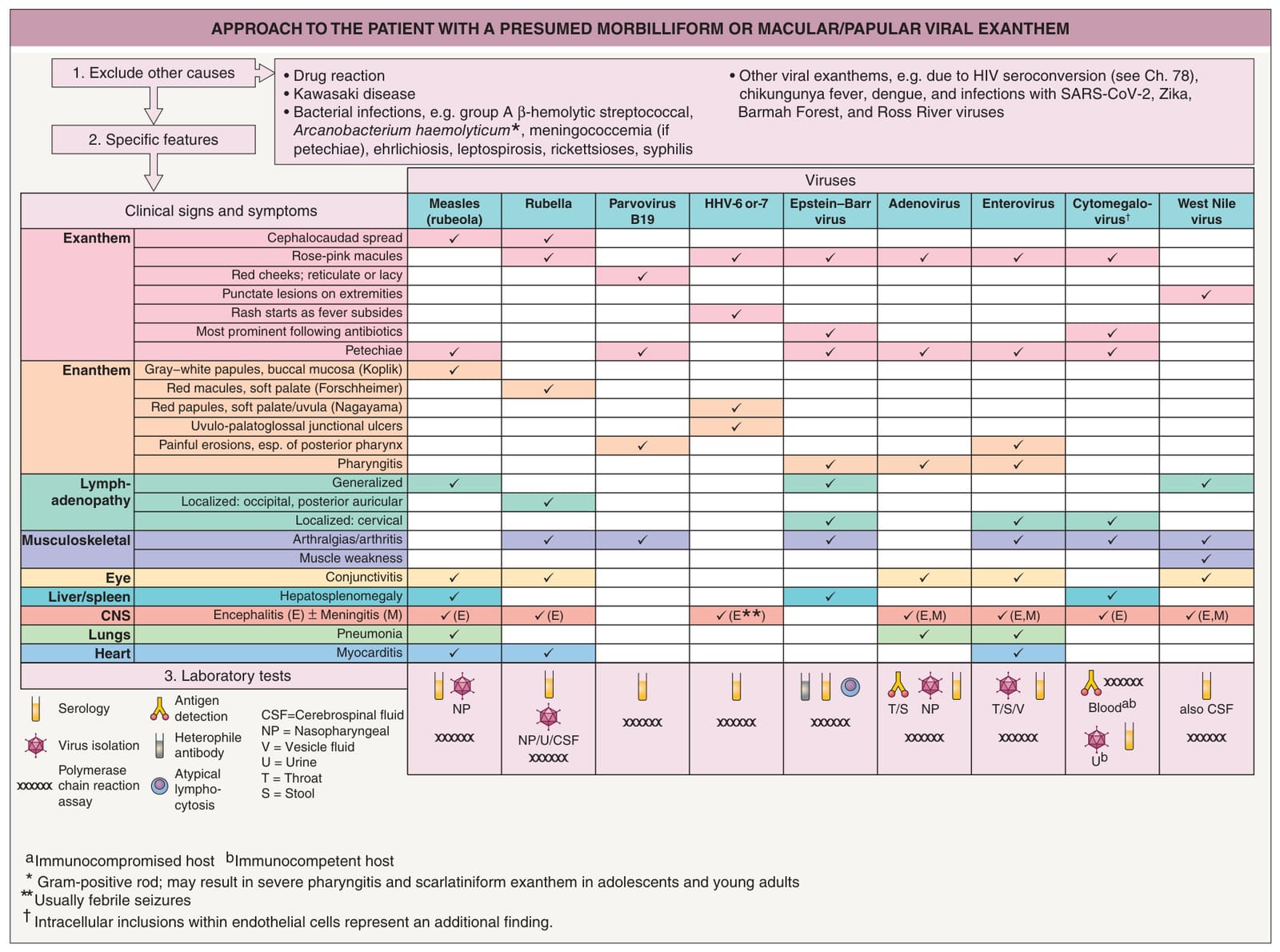
Fig. 81.2 Approach to the patient with a presumed morbilliform or macular/papular viral exanthem.
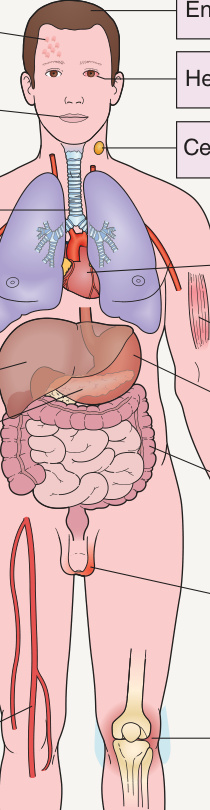
Fig. 81.3 Clinical manifestations of enterovirus infection.
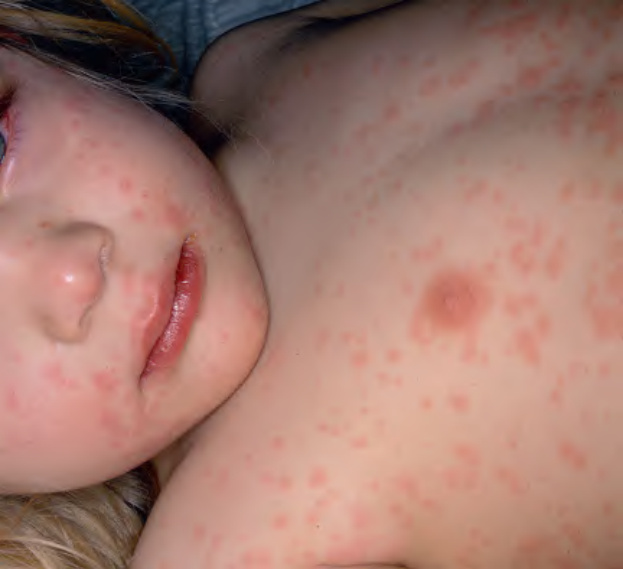
Fig. 81.5 Measles.