WORMS (HELMINTHS)
Medically important worms, or helminths, belong to two different phyla: Nematoda (roundworms) and Platyhelminthes (flatworms). The roundworms include free-living species as well as parasitic ones; they are unsegmented, and each species has two different sexes, a body cavity, and a digestive tract. The flatworms are primarily parasitic worms that do not have a body cavity; they can be segmented or unsegmented, and most species are hermaphroditic. Flatworms can be further subdivided into two different classes: trematodes or flukes (the cause of schistosomiasis) and cestodes or tapeworms (the cause of cysticercosis and echinococcosis). Several helminthic infections have been chosen for more detailed discussion in the remainder of the chapter, and additional disorders are outlined in Table 83.10.
Of note, an alternative way of classifying worms is by their life cycle. This schema divides associated infections into four classes: (1) soil-transmitted infections, including those due to hookworms (e.g. ancylostomiasis, cutaneous larva migrans) and other nematodes (e.g. strongyloidiasis; Figs. 83.21 & 83.22); (2) infections transmitted mainly by insects, including onchocerciasis, filariasis, and loiasis (Fig. 83.23); (3) infections due to trematodes (flukes) whose life cycle involves snails, such as fascioliasis and schistosomiasis (Fig. 83.24); and (4) infections acquired via ingestion, such as gnathostomiasis, cysticercosis, and echinococcosis, enterobiasis, trichinosis, and toxocariasis (Figs. 83.25 & 83.26).
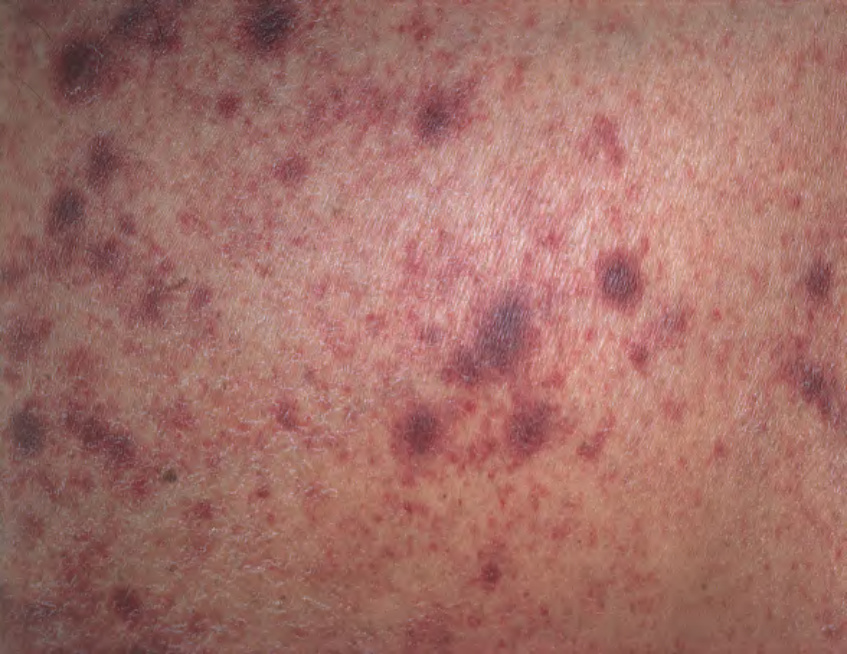
Fig. 83.21 Strongyloidiasis hyperinfection. Multiple purpuric lesions (sometimes referred to as “thumbprint” purpura) on the abdomen of an immunocompromised patient. Courtesy Jean L. Bolognia, MD.
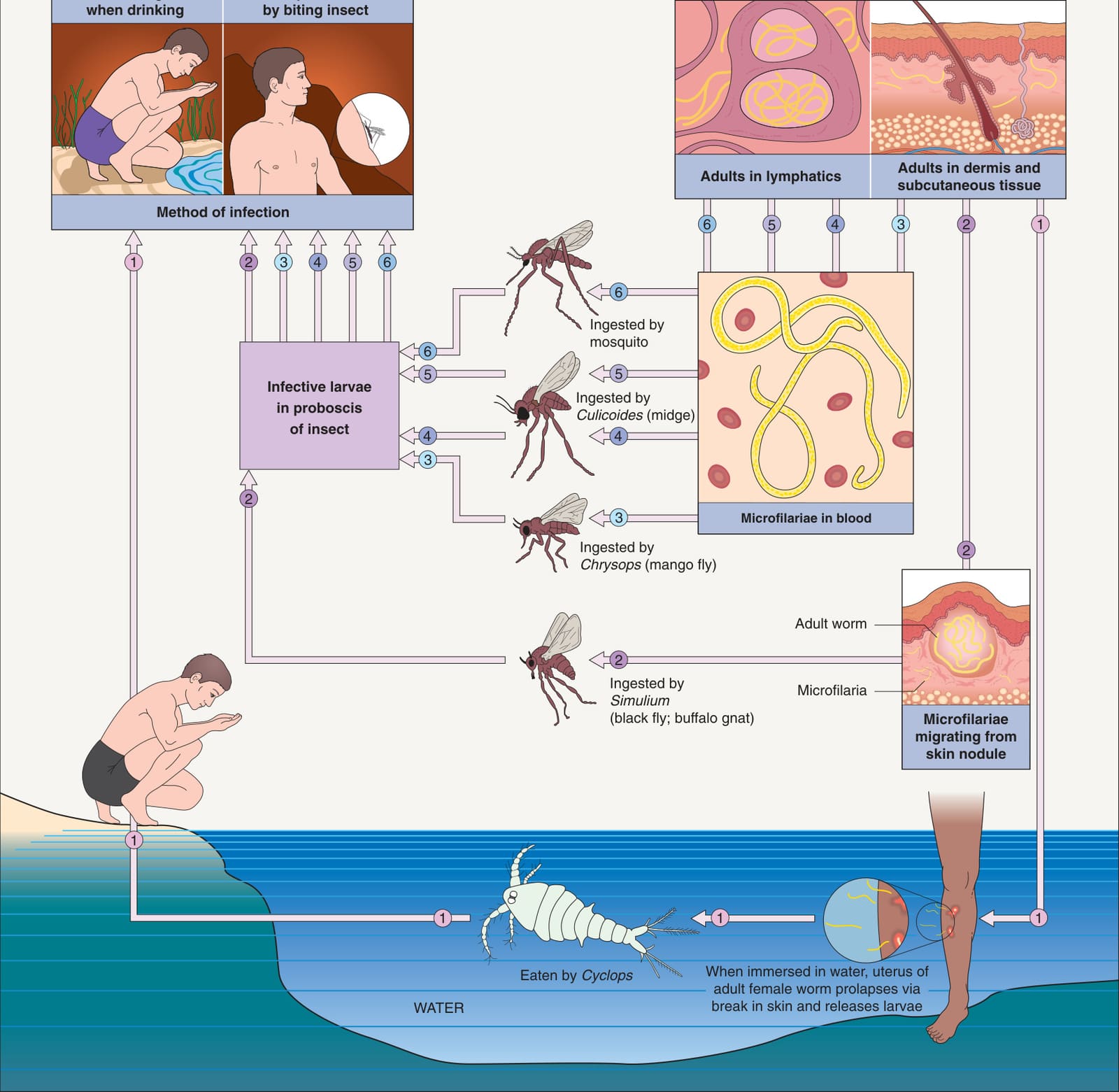
Fig. 83.23 Life cycles of important human roundworms: adults living in tissues.With permission from Cross JH. Helminths. In Cohen J, Powderly W (eds). Infectious Diseases, 2nd edition. London: Mosby, 2004.
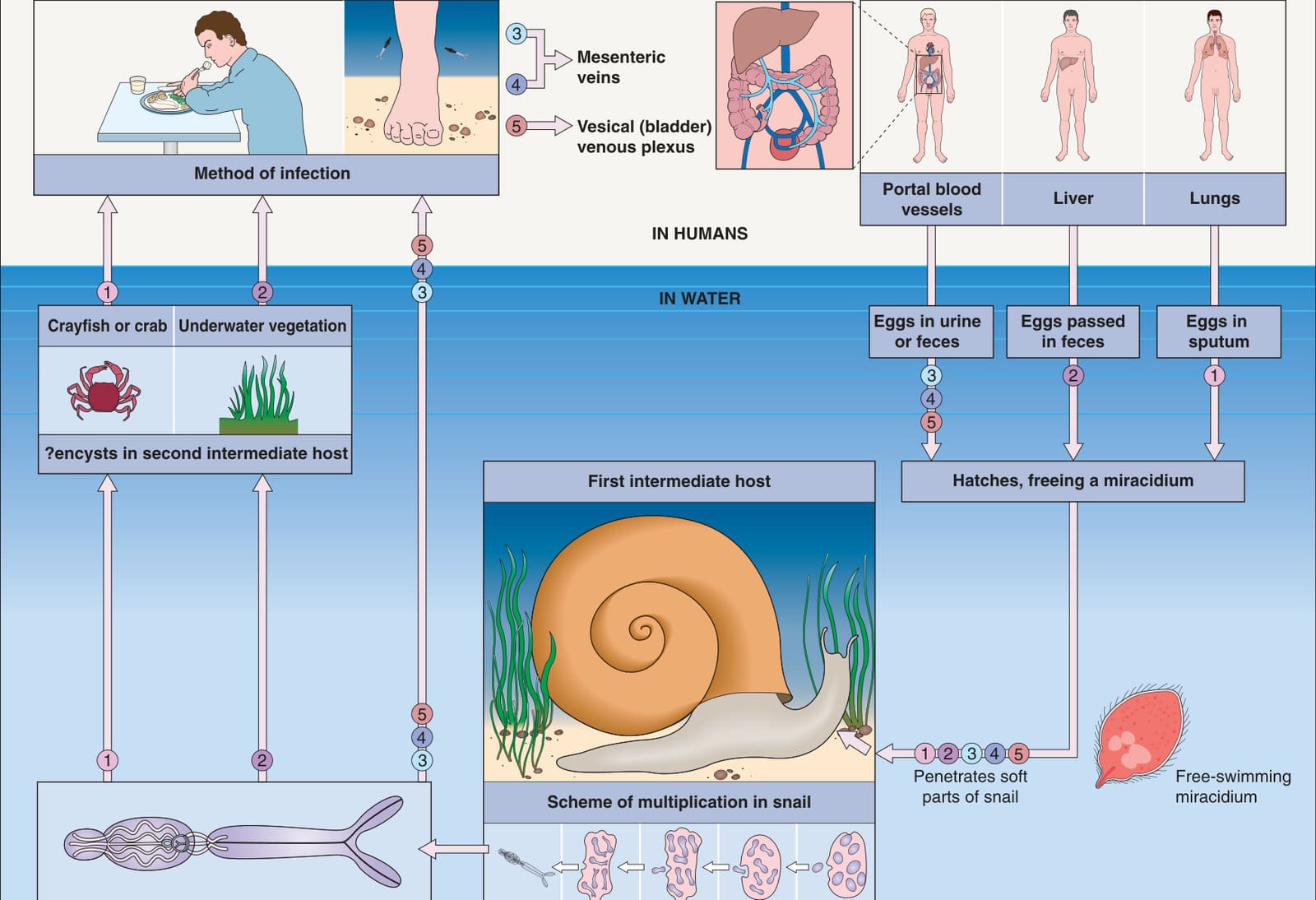
Fig. 83.24 Life cycles of important human flukes: adults living in the liver, lungs, and blood.Adapted with permission from Cross JH. Helminths. In Cohen J, Powderly W (eds). Infectious Diseases, 2nd edition. London: Mosby, 2004.
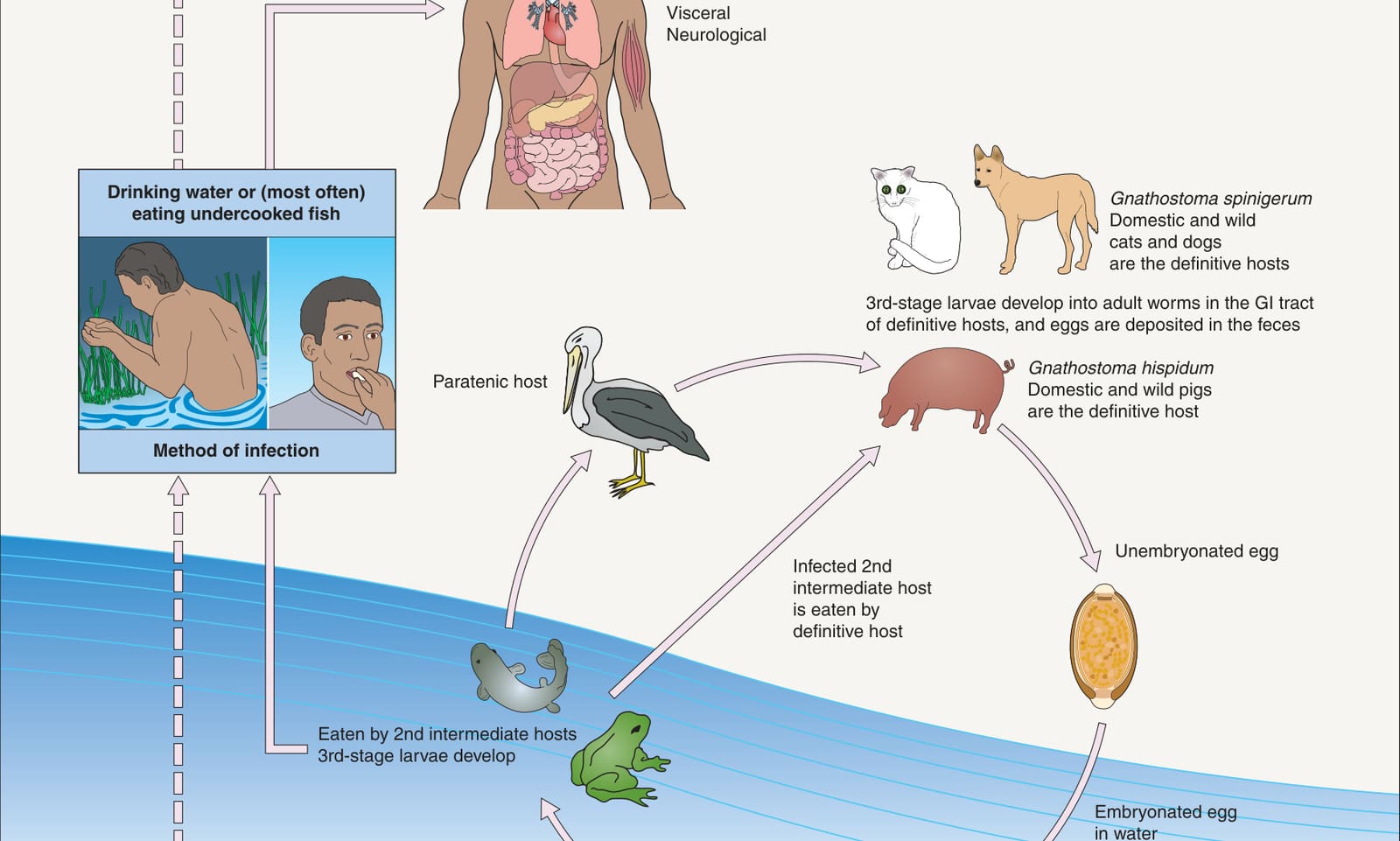
Fig. 83.25 Life cycle of Gnathostoma species. Transmission to humans via copepods in drinking water has been postulated but not confirmed. Modified from www.cdc. gov/parasites/gnathostoma/biology.html.
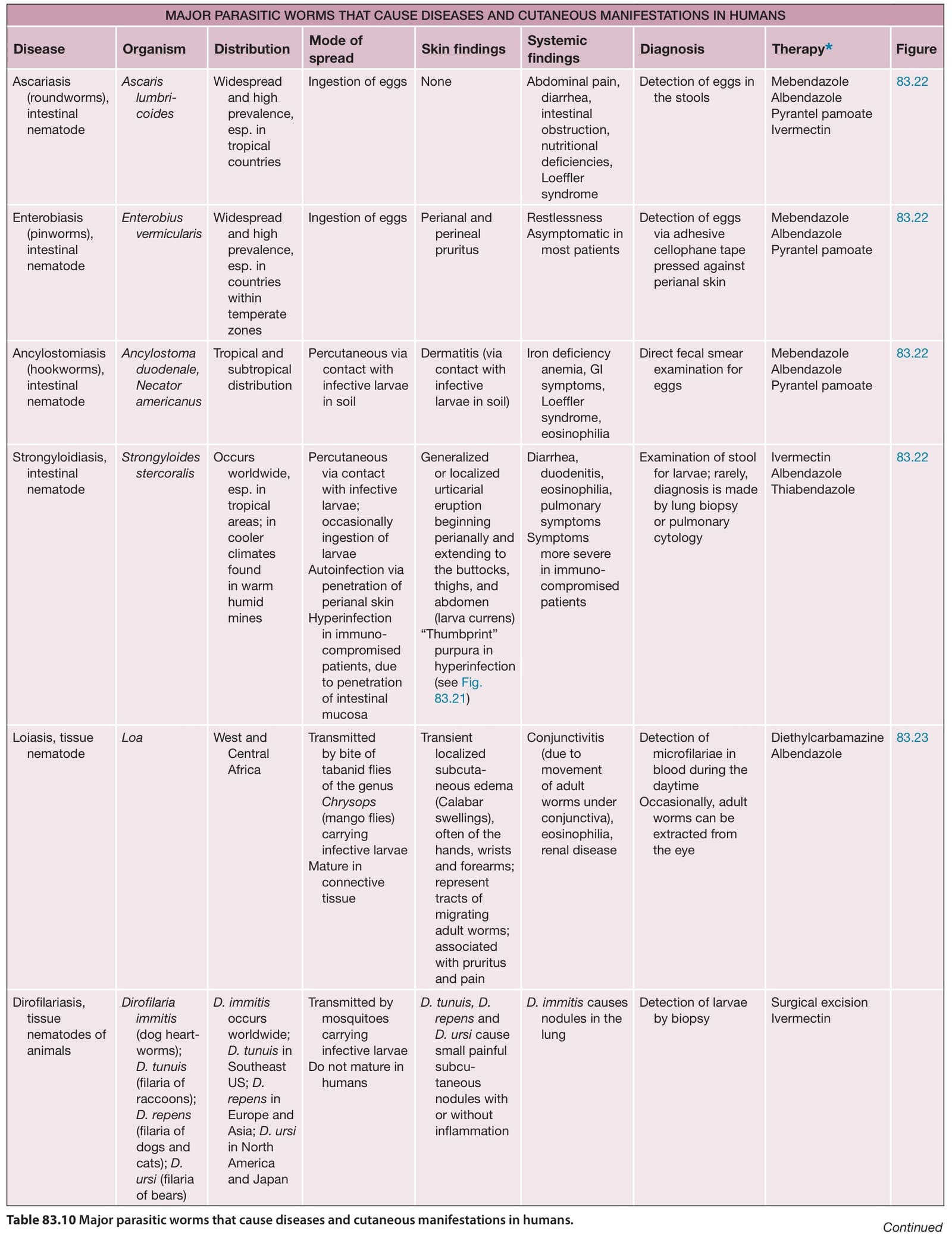
Table 83.10 Major parasitic worms that cause diseases and cutaneous manifestations in humans. Continued