DOG AND CAT BITES
Key features
Bites may be unprovoked, especially with dogs
Infection is common and pathogens include Pasteurella spp. and
Capnocytophaga canimorsus
Antibiotic treatment is generally considered mandatory
Introduction
Cat bites are commonly provoked, whereas dog bites are often unprovoked. Dog bites are particularly common in children, and the dog is usually a family pet or a neighbor’s dog.
Rabies still occurs almost everywhere in the world, with exceptions including New Zealand, parts of Europe, parts of South America, and isolated Pacific islands. Rabies associated with dog bites remains a problem in low-income countries. Fortunately, because of vaccination programs, rabies related to dog bites is rare in high-income countries, where most human rabies is associated with bat exposure. In the US, rabies is carried primarily by bats, raccoons, and skunks. Although unvaccinated dogs occasionally acquire rabies from wild animals, the canine rabies virus variant that is responsible for dog-to-dog transmission has not been detected in the US since 2004. Oral rabies vaccination programs using bait to target gray foxes and coyotes in Texas and raccoons in the eastern US have helped to decrease the spread of rabies.
Local health authorities should be contacted to report a dog or cat bite and (if necessary) to arrange for quarantine. Latex agglutination testing of dog saliva for rabies antigen is 95% sensitive compared to fluorescent antibody testing on brain smears. A scalp biopsy from the hairy area on the nape of the neck can be sent for PCR or fluorescent antibody testing.
Clinical features
Common pathogens associated with bite wounds include streptococci, staphylococci, Pasteurella spp., Capnocytophaga canimorsus, and anaerobes. Breast implant infection and lung abscesses due to Pasteurella multocida have been linked to cat exposure, and staphylococcal endocarditis has been reported after a cat bite (without a preceding local infection); brain abscess formation has been observed following a dog bite. In immunocompromised patients, there is a significant risk of Pasteurella or Capnocytophaga sepsis.
Capnocytophaga canimorsus sepsis has a high mortality rate and has been associated with purpura fulminans. Human bites have a higher likelihood of infections with Staphylococcus aureus and Eikenella corrodens. The most common pathogens associated with bite wound infections are listed in Table 85.9.
Treatment
A combination of a β-lactam antibiotic and a β-lactamase inhibitor (e.g. amoxicillin/clavulanic acid) provides good coverage for most organisms associated with dog and cat bites. Alternatives include: (1) second-generation cephalosporins with anaerobic activity (e.g. cefoxitin, cefotetan); (2) penicillin plus a first-generation cephalosporin; or (3) clindamycin plus a fluoroquinolone. The need for hospitalization of patients with Pasteurella-infected animal bite wounds is strongly associated with initial use of suboptimal antibiotic therapy. A 3- to 5-day course of preemptive antimicrobial therapy is recommended for patients with immunocompromise, asplenia, advanced liver disease, or edema of the affected area (preexisting or resultant) as well as for injuries that are moderate to severe (especially of the hand or face) or penetrate the periosteum or joint capsule. In addition to appropriate antibiotic therapy, early primary repair is typically indicated for dog bites to the face but is generally not recommended for other body sites.
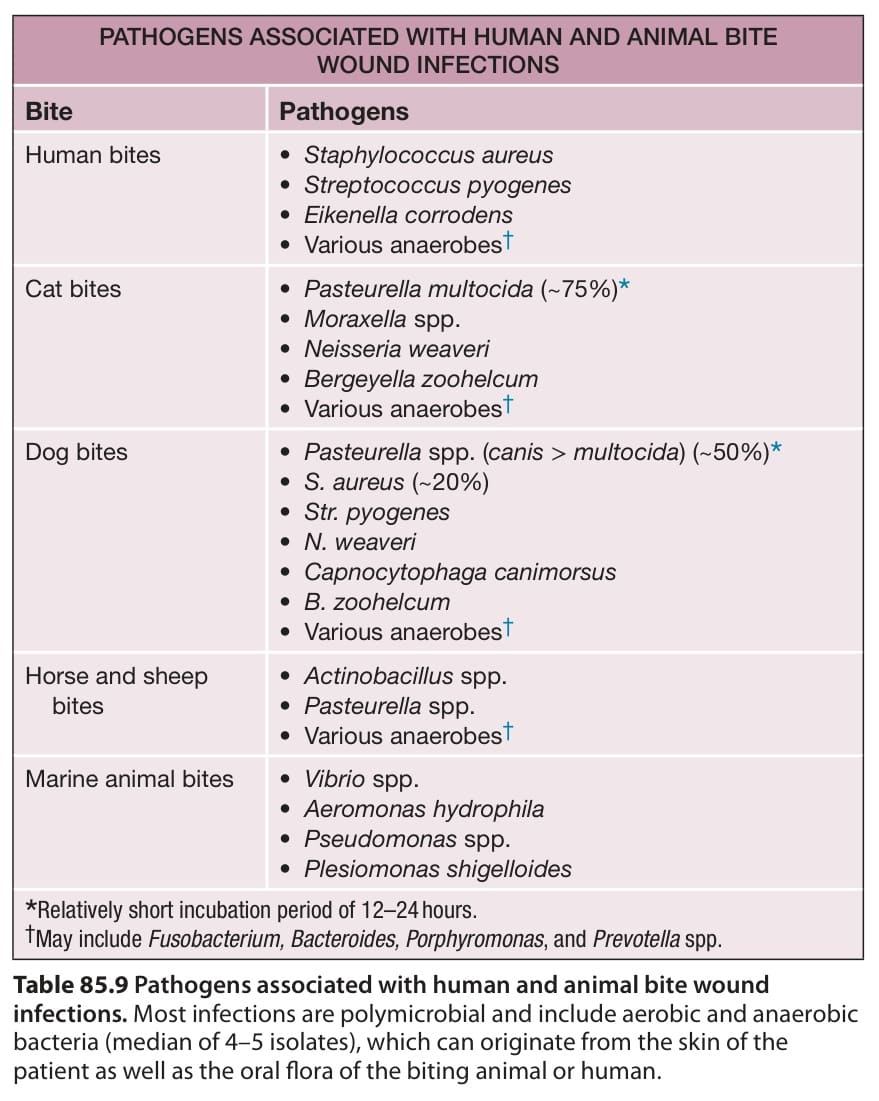
Table 85.9 Pathogens associated with human and animal bite wound infections. Most infections are polymicrobial and include aerobic and anaerobic bacteria (median of 4–5 isolates), which can originate from the skin of the patient as well as the oral flora of the biting animal or human.