LEECHES
Key features
Found in fresh water
Purpura and bleeding
Introduction
Leech attachments occur after contact with bodies of fresh water such as ponds or rivers.
Pathogenesis
Leeches prevent blood coagulation, partly through interference with platelet aggregation. Medical leeches have been associated with Aeromonas hydrophila wound infection.
Clinical features
Leech attachment sites often become purpuric and may bleed freely when the leech is removed. Leeches can attach to the tonsils (resulting in hemoptysis) or inside the nose (causing epistaxis). Disordered coagulation associated with massive bleeding and anemia has been reported after a leech bite.
Treatment
Leech removal is often complicated by bleeding or infection. Saturated salt solutions have been used to facilitate leech removal.
Leech therapy
Medical leeches and hyperbaric oxygen have been used together to enhance the survival of skin flaps subjected to venous occlusion. Sated leeches can be induced to continue feeding from the flap by posterior crop (stomach) incision and immersion in a serotonin solution.
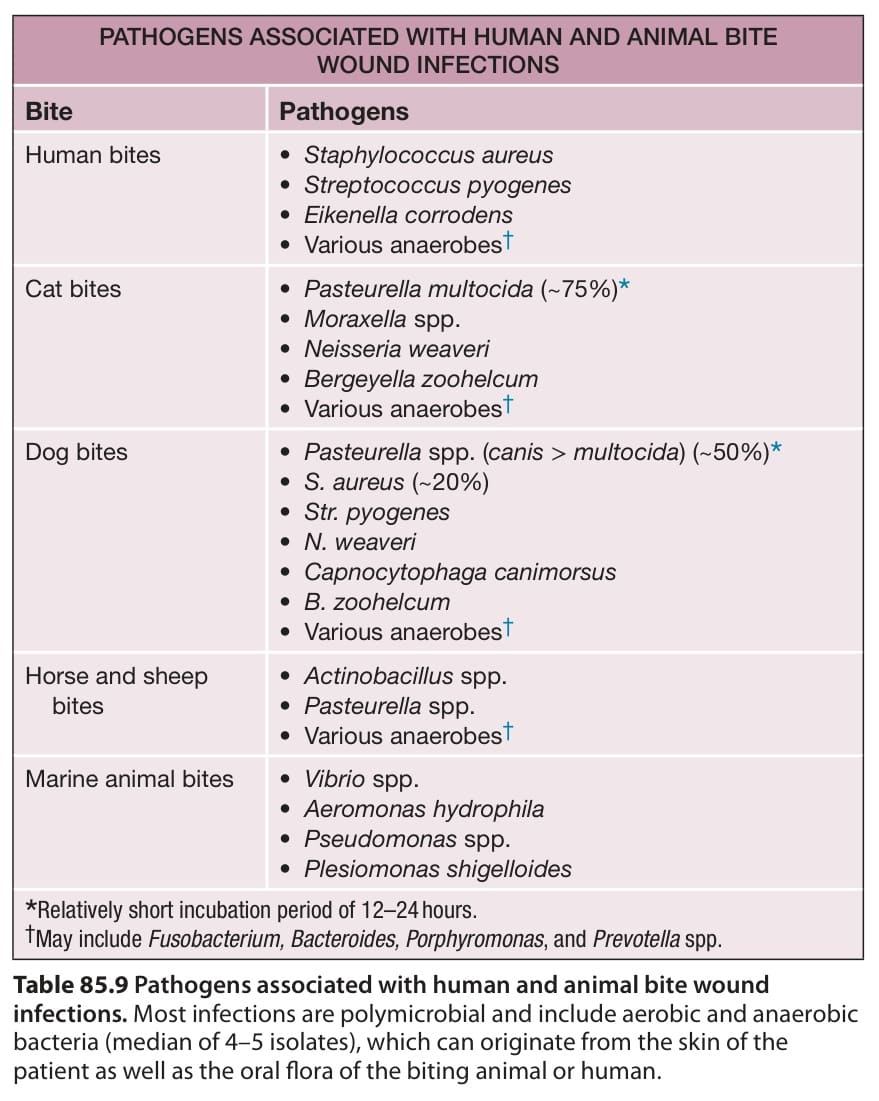
Table 85.9 Pathogens associated with human and animal bite wound infections. Most infections are polymicrobial and include aerobic and anaerobic bacteria (median of 4–5 isolates), which can originate from the skin of the patient as well as the oral flora of the biting animal or human.