UV-INDUCED MUTATIONS
Many of the previously discussed forms of UV-induced DNA damage can result in mutations. The principal mechanism by which DNA damage results in a base substitution mutation is via mispairing during DNA replication in the S phase of the cell cycle. Because mutations in several specific genes are usually required for a normal cell to undergo malignant transformation and these mutations are quite unlikely to occur in a single cell, genetic instability (a mutator phenotype) is thought to be required for the development of cancer, including skin cancer. XP serves as an example of an inherited genetic instability. While the amount of DNA damage formed in the skin following UV exposure is the same as in normal individuals, deficient repair of this damage results in many more mutations at sites of DNA damage as compared to repair-intact individuals.
Most of the TP53 mutations in cutaneous SCCs and their precursors are C→T single base transition mutations at dipyrimidine sites. Tandem CC→TT transition mutations are found in 10% of cutaneous SCCs. This spectrum of TP53 mutations is very different from TP53 mutations found in malignancies of internal organs; the latter do not have the preponderance of C→T mutations nor do they have any CC→TT mutations. This, together with the fact that pyrimidine dimers most commonly cause C→T and some CC→TT mutations, provides convincing evidence for a crucial role of pyrimidine dimers in photocarcinogenesis. Therefore, C→T, and especially CC→TT mutations, have been termed “signature mutations” for UV-induced mutagenesis (Fig. 86.15). However, to date, studies have not found an increased risk of skin cancer in patients with skin disorders treated with standard regimens of UVA1, UVB, or NB-UVB.
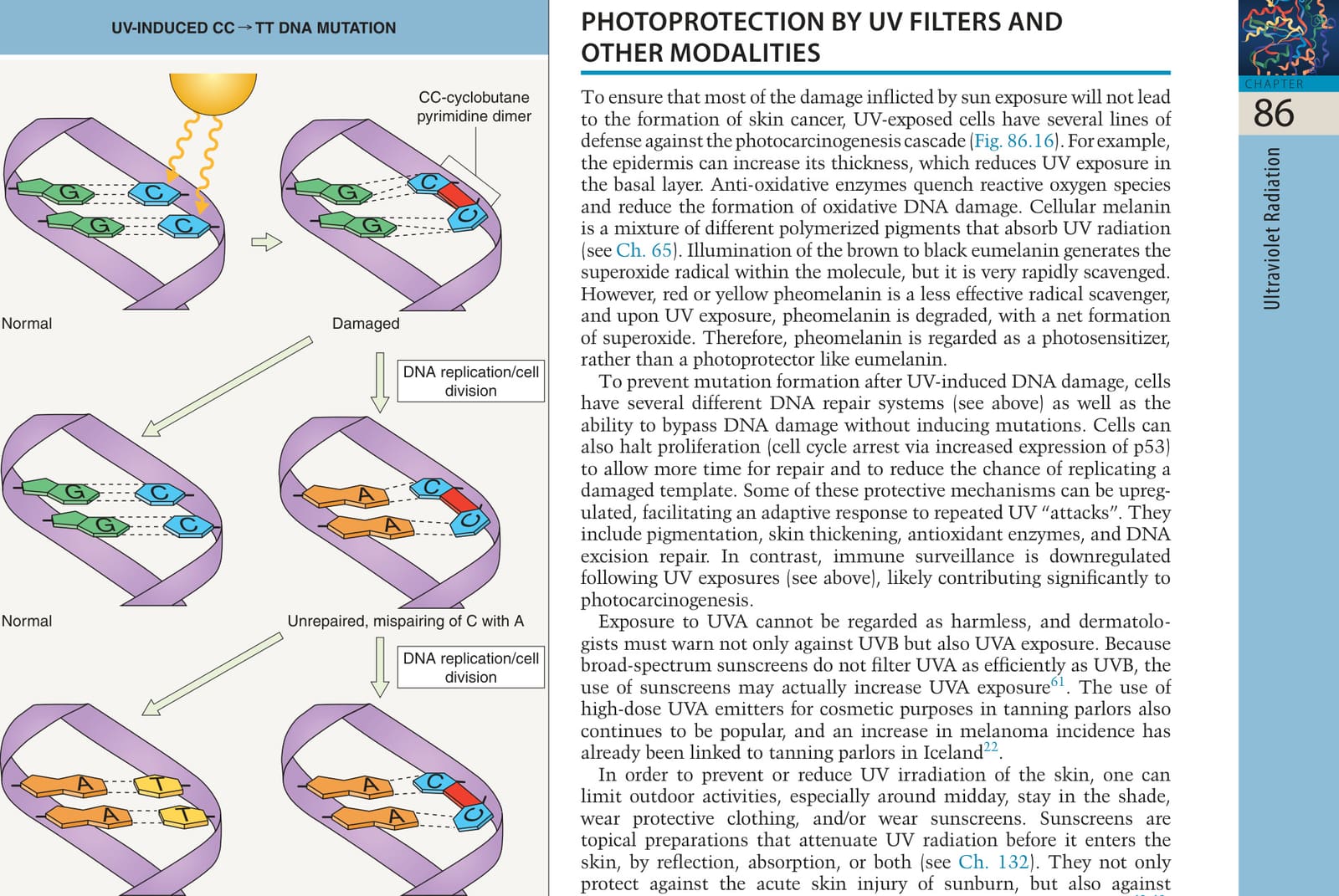
*Fig. 86.15 UV-induced CC→TT DNA mutation. Following formation of a pyrimidine dimer between two adjacent cytosines and subsequent cell division, a CC→TT mutation results. This represents a UV-signature mutation. May give rise to more C→T mutations.