INTRODUCTION
All skin phototypes react to sunlight because the skin contains molecules (chromophores) capable of absorbing ultraviolet radiation (UVR) or visible light. This absorbed energy is then either re-emitted harmlessly as biologically inactive radiation or diverted to driving thermochemical reactions, leading to molecular, cellular, tissue, and clinical changes. These alterations are either subsequently repaired or result in permanent changes. Nucleic acids are the most ubiquitous chromophores and can initiate UVR-induced changes. In melanocytes, opsin-3 may play a role as a sensor for visible light although opsin-3 appears to be a negative regulator of melanin production.
Photodermatoses result from either abnormal tissue responses following absorption of photons by endogenous molecules or expected responses to absorption by porphyrins or photosensitizing drugs or chemicals (Table 87.1). Clues to the diagnosis of specific photodermatoses are provided in Fig. 87.1.
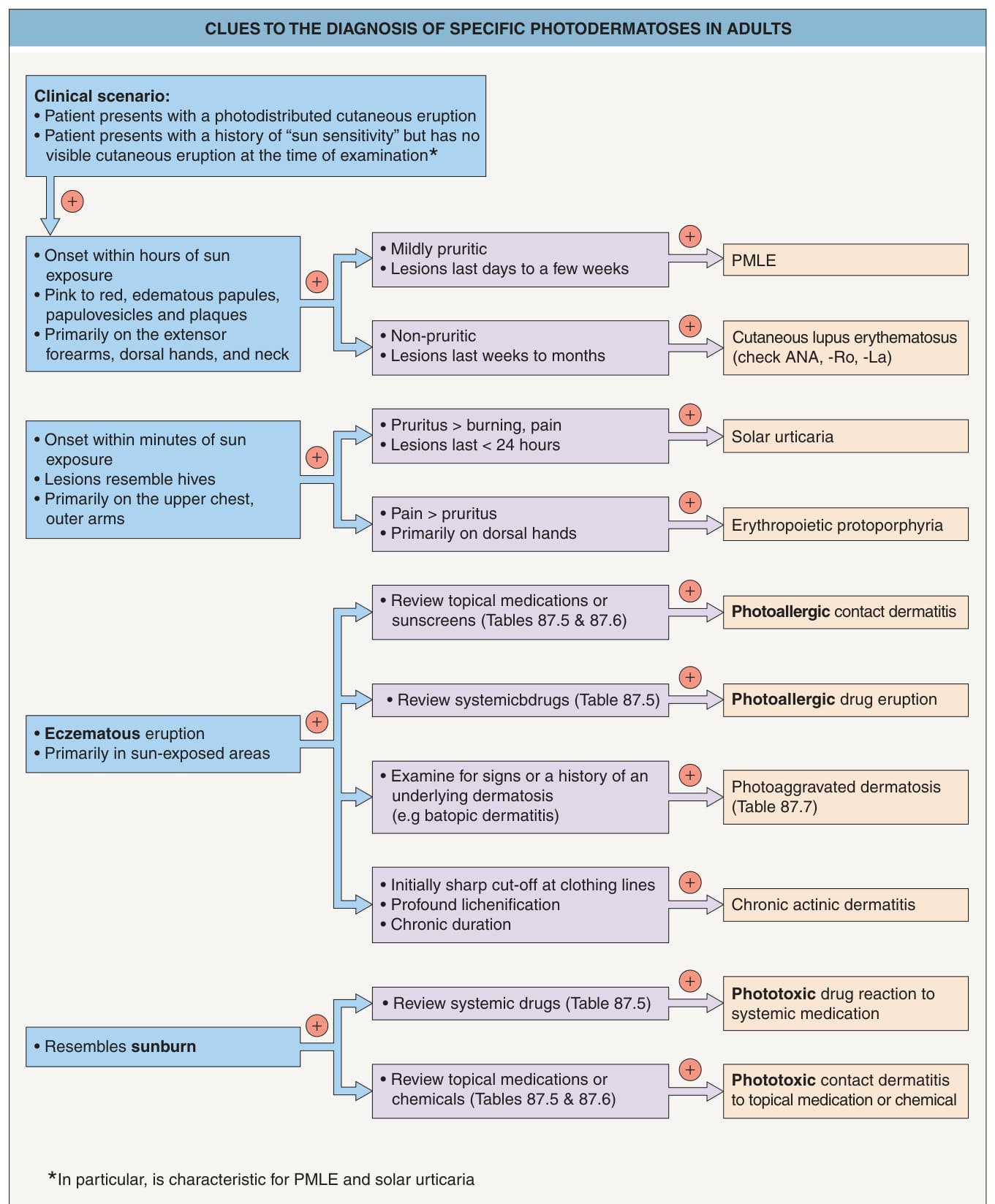
Fig. 87.1 Clues to the diagnosis of specific photodermatoses in adults. PMLE, polymorphous light eruption.
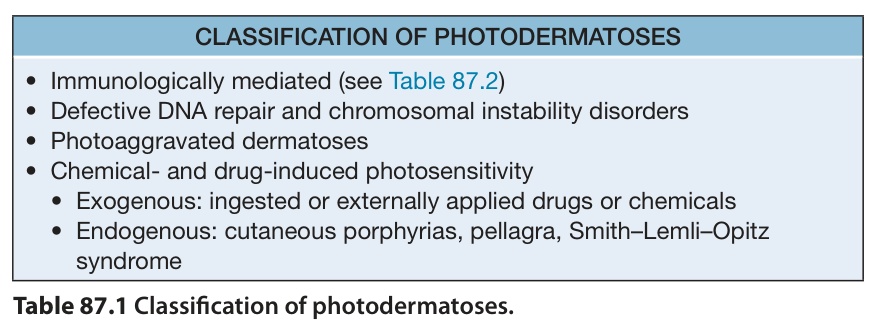
Table 87.1 Classification of photodermatoses.