INTRODUCTION
The 2013 Diagnostic and Statistical Manual of Mental Disorders, 5th Edition (DSM-5) defines substance use disorder as “a cluster of cognitive, behavioral, and physiological symptoms indicating that the individual continues using the substance despite significant substancerelated problems” (Table 89.1). The disorder encompasses ten classes of drugs: alcohol; caffeine; cannabis; hallucinogens; inhalants; opioids; sedatives, hypnotics or anxiolytics; stimulants; tobacco, and other (or unknown) substances. Any one of these drugs can result in changes in brain physiology and pathologic behavior. Prior to DSM-5, substance use disorder was subdivided into substance abuse and substance dependence. While this distinction may still be used clinically, substance use disorder represents the overarching and currently preferred term.
A wide range of cutaneous findings are associated with substance use disorders and they can serve as a clue to the diagnosis. The skin is reportedly the tissue most evidently affected by intravenous drug addiction. Complications may be local or systemic and can be due to the drug itself, adulterants, or contaminants including infectious agents.
Alcohol
Drinking alcohol can lead to euphoria and a lowering of inhibitions as well as impaired functioning. In the US, alcohol use disorder has a 12-month prevalence of 8.5% amongst adults. Acutely, ingestion of alcohol may lead to transient flushing, especially in individuals (e.g. East Asians) with variants in alcohol metabolizing enzymes. Trauma-induced ecchymoses secondary to falls due to ataxia or vehicular accidents may point to alcohol-induced impairment. Cutaneous findings such as spider telangiectasias, palmar erythema, and jaundice can develop in patients with alcoholic hepatitis and cirrhosis (see Ch. 53). Porphyria cutanea tarda and rosacea are examples of disorders that may be exacerbated by alcohol.
Stimulants
Stimulants include amphetamines (e.g. dextroamphetamine), cocaine (“coke”, “blow” [powder form]; “crack” [freebase crystallized form]), methamphetamine (“meth”), methylphenidate, and cathinones (e.g. khat, mephedrone, “bath salts”). Routes of administration include oral ingestion, snorting, inhalation via smoking, and intravenous injection. While many of these stimulants represent illicit drugs, dextroamphetamine and methylphenidate are prescribed for narcolepsy and attention deficit hyperactivity disorder. Stimulants lead to a feeling of euphoria and confidence, with reduced appetite, restlessness, insomnia, and increased or distorted sensations. Patients can also develop tachycardia and hypertension, as well as flushing, sweating, uncontrollable movements, and seizures.
Stimulants, in particular crystallized methamphetamine (“crystal meth”), are highly addictive and high-intensity or chronic abusers can develop xerostomia, xerosis, pruritus, acne excoriée and formication, along with dental caries and loss of teeth (“meth mouth”). Cocaine use has also been associated with Raynaud phenomenon, cutaneous small vessel vasculitis, necrotizing granulomatous vasculitis, acute generalized exanthematous pustulosis, and Stevens–Johnson syndrome. Ventricular arrhythmias and myocardial or cerebrovascular infarctions are additional side effects. When cocaine is adulterated with levamisole, neutropenia, pyoderma gangrenosum, and ischemic vasculopathy with necrotizing purpura and ulcerations may develop (see below).
Hallucinogens
Hallucinogens include phencyclidine (PCP; “angel dust”), ergolines (e.g. lysergic acid diethylamide [LSD; “acid”], lysergic acid amide from morning glory seeds), and phenylalkylamines (e.g. mescaline). Ketamine is a dissociative anesthetic that also has some hallucinogenic effects while 3,4-methylenedioxy-methamphetamine (MDMA; “ecstasy”, “molly”, “E”, “X”) is both a stimulant and hallucinogen. Psilocybin-containing mushrooms (“magic mushrooms”), dimethyl tryptamine-containing Amazonian plants, Salvia divinorum, and Datura stramonium (jimsonweed) are additional natural sources of hallucinogens.
Hallucinogens may be ingested orally, smoked, snorted, or injected. They can produce alterations in mood, cognition, and perception, including visual pseudohallucinations. Side effects of PCP include sweating, sialorrhea, combative behavior, tachycardia, and hypertension; higher doses can lead to seizures, hypotension, and coma. Hyperthermia with rhabdomyolysis and renal failure can result from high doses of MDMA.
Opioids (Includes Opiates)
Opioids may be synthesized or extracted from opium poppies (Papaver somniferum L.). They are prescribed primarily for pain control, including morphine, hydrocodone, oxycodone, oxymorphone, and fentanyl. Methadone is also used to treat chronic pain in addition to opioid use disorder related to heroin (diacetylmorphine) and prescription opioids. In opioid use disorder, there is compulsive, prolonged, self-administration of opioids either without a legitimate medical purpose or in doses that exceed those required for a particular medical condition.
Opioids may be taken orally, snorted, smoked, or injected intravenously or subcutaneously. With lipid-soluble opioids such as heroin that quickly cross the blood–brain barrier, there can be a “rush” of euphoria immediately. Associated side effects include dry mouth/nose, flushing, decreased gastrointestinal motility, pupillary constriction, pruritus, and altered mental function. Overdose-related respiratory depression can be fatal and the exponential increase in the use of fentanyl as well as fentanyl- and carfentanil-laced drugs has led to an epidemic of overdose deaths.
Opioids may also contain additives that result in significant cutaneous disease. For example, desomorphine (“krokodil”) is a fast-acting morphine derivative that is ten times more potent than morphine. The drug can be synthesized by combining red phosphorus from match strikers with codeine and iodine derived from over-thecounter medications; unfortunately, it is frequently contaminated with these and other agents. Injection of this “flesh-eating drug” can cause serious damage to the skin, blood vessels, bone, and muscles, leading to limb amputation in long-term users. Of note, the tissue injury is due to iodine, phosphorus, and other toxic substances that remain after synthesis, not the opioid itself.
Gamma-Hydroxybutyrate
Gamma-hydroxybutyrate (GHB; “liquid X”, “liquid ecstasy”, “liquid G”) and its precursors, gamma-butyrolactone (GBL) and 1.4-butanediol (BDO), are rapid-acting CNS depressants popular among revelers for its relaxant, euphoric, and purported aphrodisiac properties. GHB can lead to a loss of consciousness as well as induce amnesia, and like flunitrazepam (Rohypnol® [“roofie”]), it is used as a “rape drug”. Because it reportedly promotes muscle mass and has been shown to elevate human growth hormone in vivo, GHB is also misused by bodybuilders.
Benzodiazepines
Benzodiazepines are among the most frequently prescribed medications in the US and the UK, where surveys indicate that ~10% of the population uses benzodiazepine sedatives/anxiolytics regularly. Although they are only mild euphoriants, benzodiazepines, in particular flunitrazepam (Rohypnol®; “roofies”), are commonly misused by polydrug addicts, alcoholics, and recreational drug users. Benzodiazepines are ingested (often with alcohol), snorted, or occasionally injected. They can lead to a decrease in alertness and a lack of coordination. Other side effects of benzodiazepines include disinhibition, anterograde amnesia, depression, and confusion, and with an overdose or intravenous use, hypotension and hypoventilation.
Cannabis
Cannabis (“marijuana”, “pot”, “grass”, “herb”, “weed”) is a mixture of dried shredded leaves and flowers of the Cannabis sativa plant, which contains the chemical delta-9-tetrahydrocannabinol (THC). Medical marijuana is currently legal in over 39 states in the US and recreational use is legal in 21 states. It is usually smoked as a cigarette or through a pipe or bong. Marijuana cigarettes may be laced with other drugs, such as crack or heroin. The minimal amount of THC required to produce a perceptible psychoactive effect is ~10 mcg/kg body weight. Altered perception may be accompanied by an impairment of concentration, psychomotor coordination, and/ or short-term memory. Arteritis has also been reported, and it may represent a particular form of Buerger disease, with cannabis acting as a cofactor in young smokers.
In many countries, including the US, there has been an increase in the use of synthetic cannabinoids (“K2”, “Spice”, “Black Mamba”), which also bind the THC receptor, but may have increased vasoactive and psychoactive effects, including psychosis. Cannabinoids can be sprayed onto dried plants or inhaled via vaporizer electronic cigarettes.
Anabolic Steroids
Anabolic steroids promote the growth of skeletal muscle and the development of male sexual characteristics. They are ingested (e.g. oxandrolone, oxymetholone, stanozolol) or injected intramuscularly (e.g. nandrolone, testosterone, boldenone) to increase muscle mass and boost physical performance. Their use can lead to androgenetic alopecia and acne (Table 89.2). Complications of anabolic steroid misuse include cardiovascular disease, hepatic disorders (e.g. peliosis hepatis, hepatic adenomas), acute and potentially chronic kidney injury, and mood disorders.
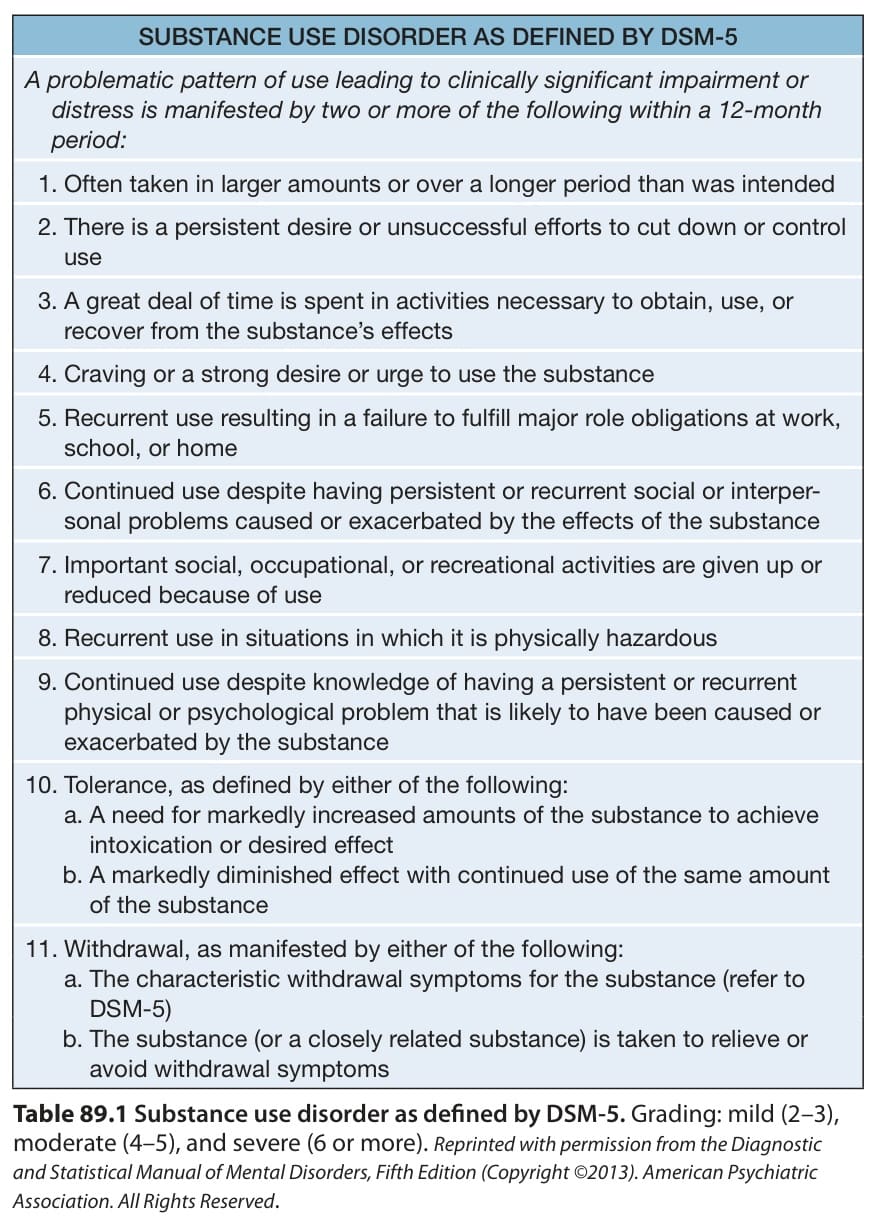
Table 89.1 Substance use disorder as defined by DSM-5. Grading: mild (2–3), moderate (4–5), and severe (6 or more). Reprinted with permission from the Diagnostic and Statistical Manual of Mental Disorders, Fifth Edition (Copyright ©2013). American Psychiatric Association. All Rights Reserved.
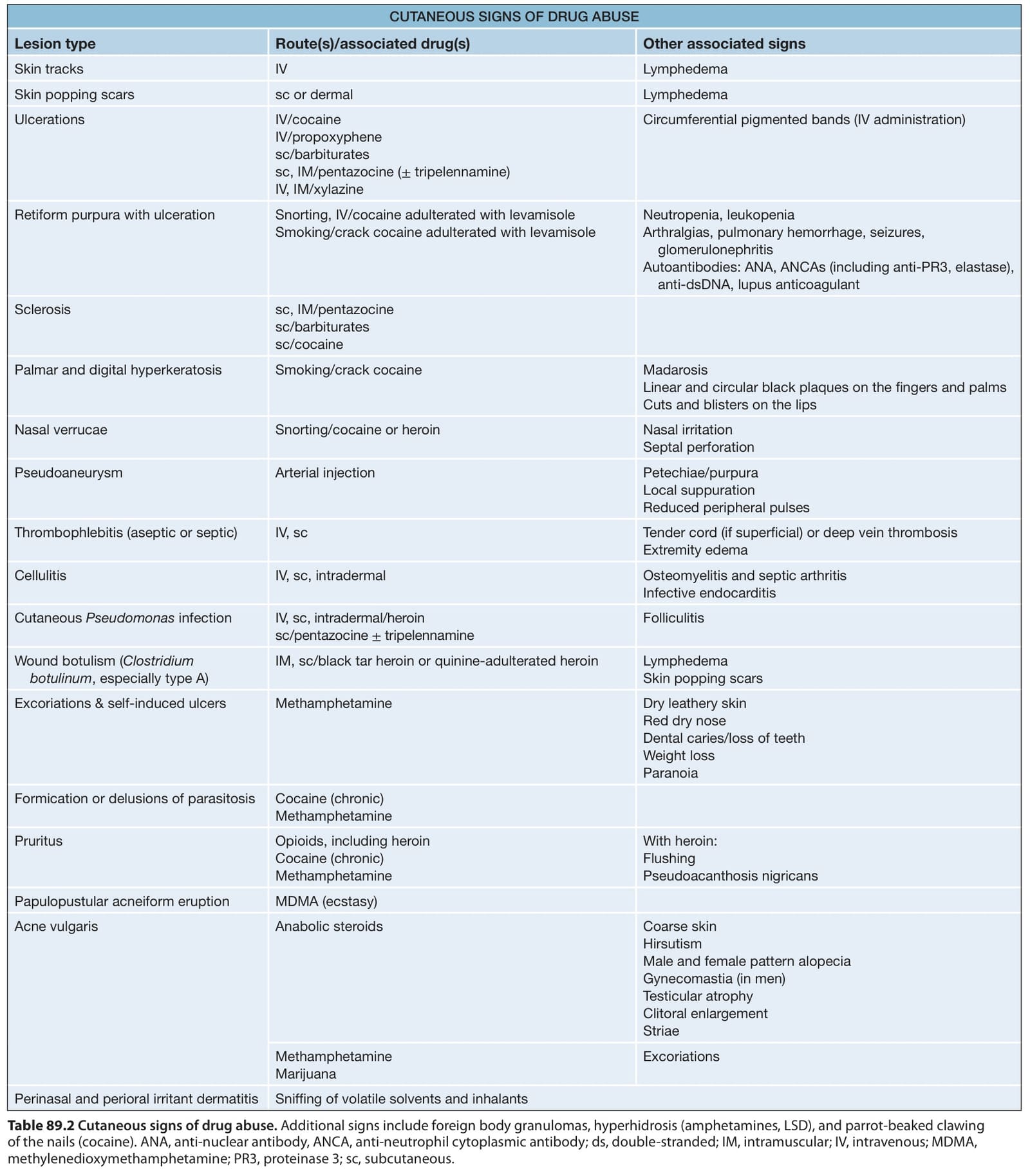
Table 89.2 Cutaneous signs of drug abuse. Additional signs include foreign body granulomas, hyperhidrosis (amphetamines, LSD), and parrot-beaked clawing of the nails (cocaine). ANA, anti-nuclear antibody, ANCA, anti-neutrophil cytoplasmic antibody; ds, double-stranded; IM, intramuscular; IV, intravenous; MDMA, methylenedioxymethamphetamine; PR3, proteinase 3; sc, subcutaneous.