TREATMENT
The treatment of xanthomas associated with hyperlipidemia requires the identification of the underlying lipoprotein disorder and other possible exacerbating factors. In addition to dietary measures, there are several medications available for lowering lipid levels in patients with primary and secondary hyperlipidemia. Table 92.5 outlines their mechanisms of action, clinical effects, and side effects. Correction of the underlying lipid disorder leads to the eventual resolution of the xanthomas in many patients. Xanthomas that have grown slowly over years, such as tendinous and tuberous xanthomas, are often slow to regress, whereas eruptive xanthomas may disappear within weeks of aggressive therapy.
Dietary measures are an important component of lipid-lowering therapy, in addition to oral medications (see Table 92.5). Decreasing total caloric intake and the achievement of ideal body weight alone can make a significant impact on lipid levels in some patients. Dietary fat restriction to <30% of total caloric intake should be attempted. Mono-unsaturated fats such as olive oil should comprise the majority of the fat intake. Alcohol avoidance is essential, especially in patients with hypertriglyceridemia.
Xanthomas, particularly xanthelasma, can be treated surgically by excision or destructive methods. When xanthelasma excision is performed, it may be followed by suture or second intention healing. Reported destructive methods for xanthelasma include laser surgery (e.g. CO, pulsed dye, erbium:YAG), chemical agents such as trichloroacetic acid, and cryosurgery. Despite the initial success of the chosen method, the lesions often recur. Surgical excision has also been employed in the management of tendinous xanthomas. This can be technically difficult, however, as the lipid deposits may be intertwined with the involved tendon. Application of topical lovastatin/cholesterol ointment has led to improvement of the cutaneous lesions in CHILD syndrome (see Ch. 57).
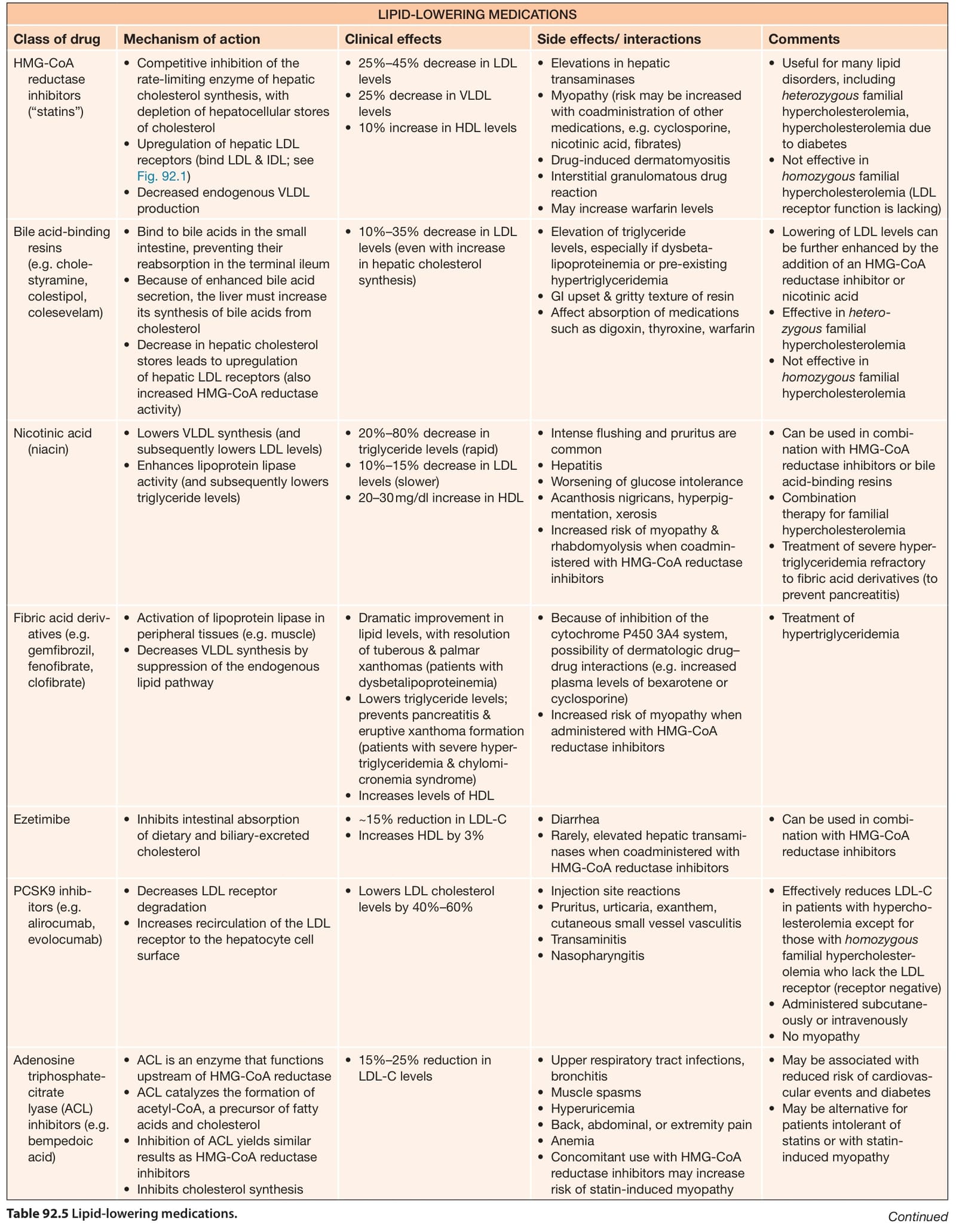
Table 92.5 Lipid-lowering medications. Continued
The author wishes to acknowledge the late Lee T. Nesbitt Jr, MD, for his valuable contribution to this chapter in the previous editions, and Erica Ann Grilletta, MD, and Caroline Savoie, MD, for their help in researching and editing this chapter.
Additional figures and table on Laboratory evaluation of suspected hyperlipidemia, available in our eBook (see inside front cover for access code).