引言(INTRODUCTION)
慢性傷口(chronic wound)的定義為未能依循正常、有序且及時的修復程序進展的傷口,或雖走完修復過程卻未恢復功能性結果的傷口。皮膚潰瘍(cutaneous ulcer)是伴隨表皮與真皮組織兩者喪失的傷口。慢性潰瘍源於各種全身性與/或局部因子,對皮膚科醫師而言可構成診斷與治療上的雙重挑戰。多數潰瘍發生於下肢,且大多與靜脈功能不全/靜脈高壓、周邊動脈疾病或周邊神經病變有關(表 105.1)。較不常見的原因概述於圖 105.1,且腿部以外的部位亦可能受侵犯(例如壓力誘發的潰瘍)。
隨著創新敷料與技術的問世,傷口治療在過去數十年已有長足進展,但慢性潰瘍處置的關鍵因子仍在於適當的病人評估,以及在潛在病因被辨識出來時加以矯正。
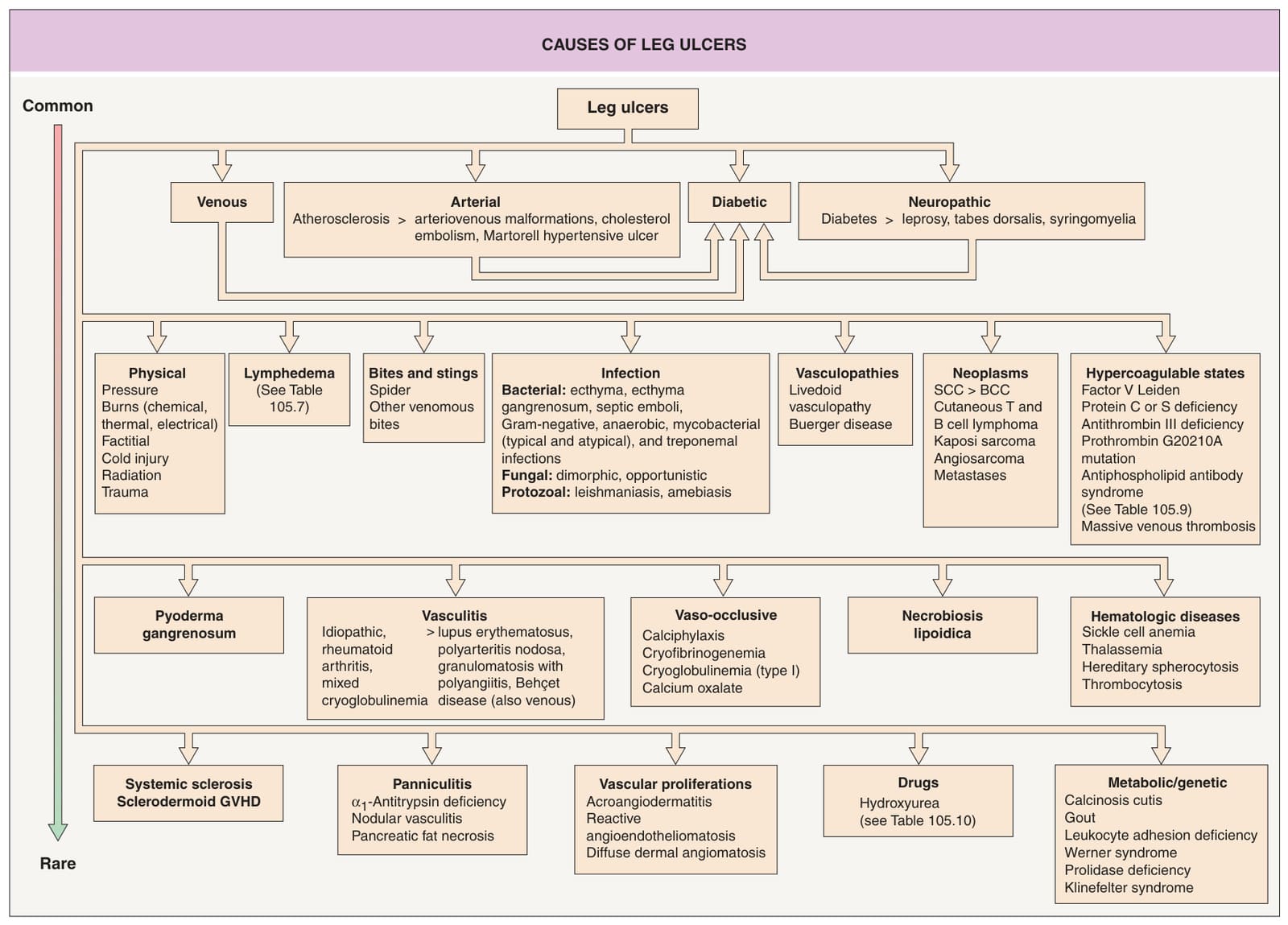
圖 105-1:腿部潰瘍的成因。Behçet 病的病人因血管炎與/或與深部靜脈栓塞有關的靜脈功能不全而發生下肢潰瘍,且偶爾 erosive pustular dermatosis 亦為腿部潰瘍的成因。Hydroxyurea 誘發的腿部潰瘍常位於踝部或脛骨嵴,極度疼痛,且周圍有萎縮的皮膚。其他與潰瘍相關的遺傳症候群列於表 105.10。GVHD,graft-versus-host disease。
Fig. 105.1 Causes of leg ulcers. Patients with Behçet disease develop lower extremity ulcers due to vasculitis and/or venous insufficiency related to deep vein thromboses, and, occasionally, erosive pustular dermatosis is a cause of leg ulcers. Hydroxyurea-induced leg ulcers are often on the malleolus or tibial crest, exceedingly painful, and surrounded by atrophic skin. Additional genetic syndromes associated with ulceration are listed in Table 105.10. GVHD, graft-versus-host disease.
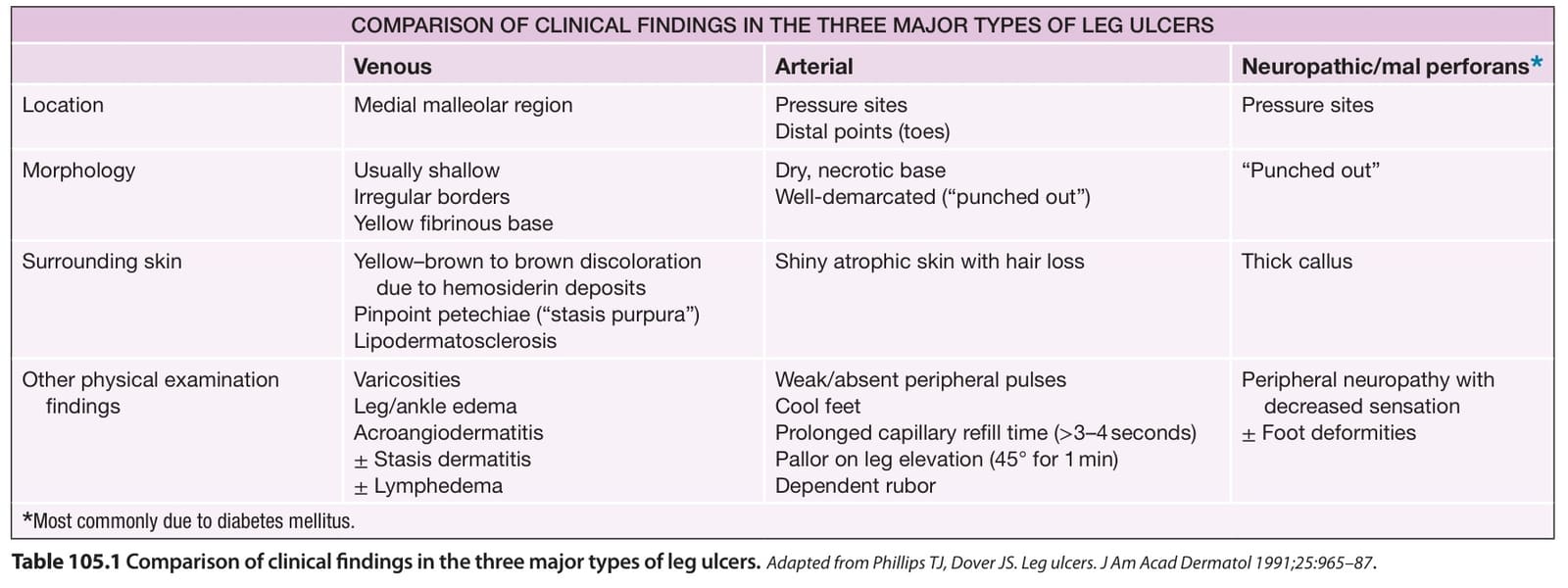
表 105-1:三大類腿部潰瘍臨床發現的比較。
Table 105.1 Comparison of clinical findings in the three major types of leg ulcers.