致病機轉(PATHOGENESIS)
AIDS 由 HIV-1 所引起,較少由 HIV-2 引起。兩者皆為 Retroviridae 科中具外套膜的單股 RNA 慢病毒(lentiviruses)。它們為人畜共通,源自感染非洲靈長類的猿猴免疫缺乏病毒(simian immunodeficiency viruses, SIVs):HIV-1 來自黑猩猩,HIV-2 來自白頂白眉猴(sooty mangabeys)。HIV-1 有四個不同的譜系,各自源自獨立的跨物種傳播事件;group M 造成約 99% 的大流行 HIV 疾病,而 groups N、O 與 P 則局限於西非。HIV-2 同樣大致局限於西非,其整體盛行率正在下降。與 HIV-1 相比,HIV-2 的傳播力與毒性較低,導致較低的病毒量且較少進展至 AIDS。HIV 因其反轉錄酶容易出錯的性質以及受感染個體中極快速的病毒複製,而展現相當大的基因變異性。
在 HIV-1 感染期間,病毒外套膜蛋白 gp120 與 gp41 最初與 CD4 分子交互作用,接著與趨化激素受體(通常為 CCR5 或 CXCR4)進行第二次交互作用(圖 78.2)。
這些受體見於活化的 CD4+ T 細胞、單核球-巨噬細胞與樹突細胞。CXCR5 是大多數 HIV 傳播中主要的融合輔因子;然而,不依賴 CD4 的腎細胞與星形膠細胞感染,會導致慢性腎臟疾病與神經認知疾患。結合之後,構型的改變誘導病毒外套膜與細胞膜融合,病毒顆粒因而被內化。RNA 基因體被反轉錄酶轉錄,該酵素產生 HIV RNA 的 DNA 複本。此病毒 DNA 複本經由整合酶(integrase)的作用嵌入宿主 DNA。病毒 DNA 轉錄成 RNA,產生新病毒顆粒的基因體材料,或可被轉譯為病毒蛋白。後者被蛋白酶(proteases)切割成病毒的結構成分。接著產生完整的病毒,而宿主細胞被破壞。
由傳播/始祖病毒(transmitted/founder virus)所致的感染之後,HIV 複製迅速增加(圖 78.3)。約 6 個月後,病毒量降至一個設定點,該設定點由宿主的先天自然殺手(natural killer, NK)細胞反應加上 CD8+ 細胞與中和抗體的適應性免疫反應所決定。初始抗體反應在傳播後 1–3 個月內產生,且具有株別特異性。此抗體反應驅動病毒逃脫,而在 80% 的病人中病毒突變株變得對中和作用具抗性。然而,在 20% 的病人中,傳播/始祖病毒的變異株演化並誘發具相當廣泛中和能力的抗體。針對 HIV 的 CD8+ 細胞毒性 T 細胞在暴露後 10 天內開始運作,與急性反轉錄病毒症候群期間病毒血症的減少相關;這些細胞在整個病程中也協助控制 HIV。
初始感染導致循環中 CD4+ T 細胞減少,隨後恢復至接近正常水平,繼而以每年約 50 至 100 cells/mm 的速度緩慢下降(見圖 78.3)。相對地,位於胃腸道內的 CD4+ T 細胞在早期即迅速被耗竭。CD4+ T 細胞的進行性耗竭,是直接感染所致的殺傷、合胞體(syncytia)形成的旁觀者效應、慢性免疫活化、淋巴組織損傷以及衰老(senescence)的結果。
HIV 疾病所具特徵的顯著慢性免疫活化,被認為與低度的 HIV 複製、免疫反應
在 HIV 感染者中,AIDS 定義為 CD4+ 細胞計數 <200/mm 或 CD4+ T 細胞 <14%,及/或存在一項 AIDS 定義病症(見表 78.1)。HIV 疾病的自然史差異相當大,CD4+ T 細胞下降的速率與病毒負荷量相關。在未治療的情況下,進展至 AIDS 的中位時間約為 10 年。然而,約 10%–15% 的未治療病人(歷史上稱為「長期不進展者 long-term non-progressors」)帶著 HIV 存活 ≥8 年而無症狀,且 CD4+ T 細胞計數 >500 cells/mm;此外,<0.5% 的病人為「菁英控制者(elite controllers)」,即使沒有 ART 也無病毒血症的證據。ART 抑制病毒複製並使 CD4+ T 細胞得以重建的能力,對病程有巨大影響。ART 所致的免疫再活化可造成各種發炎後遺症,統稱為 IRIS,範圍從感染或腫瘤的顯露(unmasking)或矛盾性「惡化」,到發炎性疾患的加劇(見下文)。
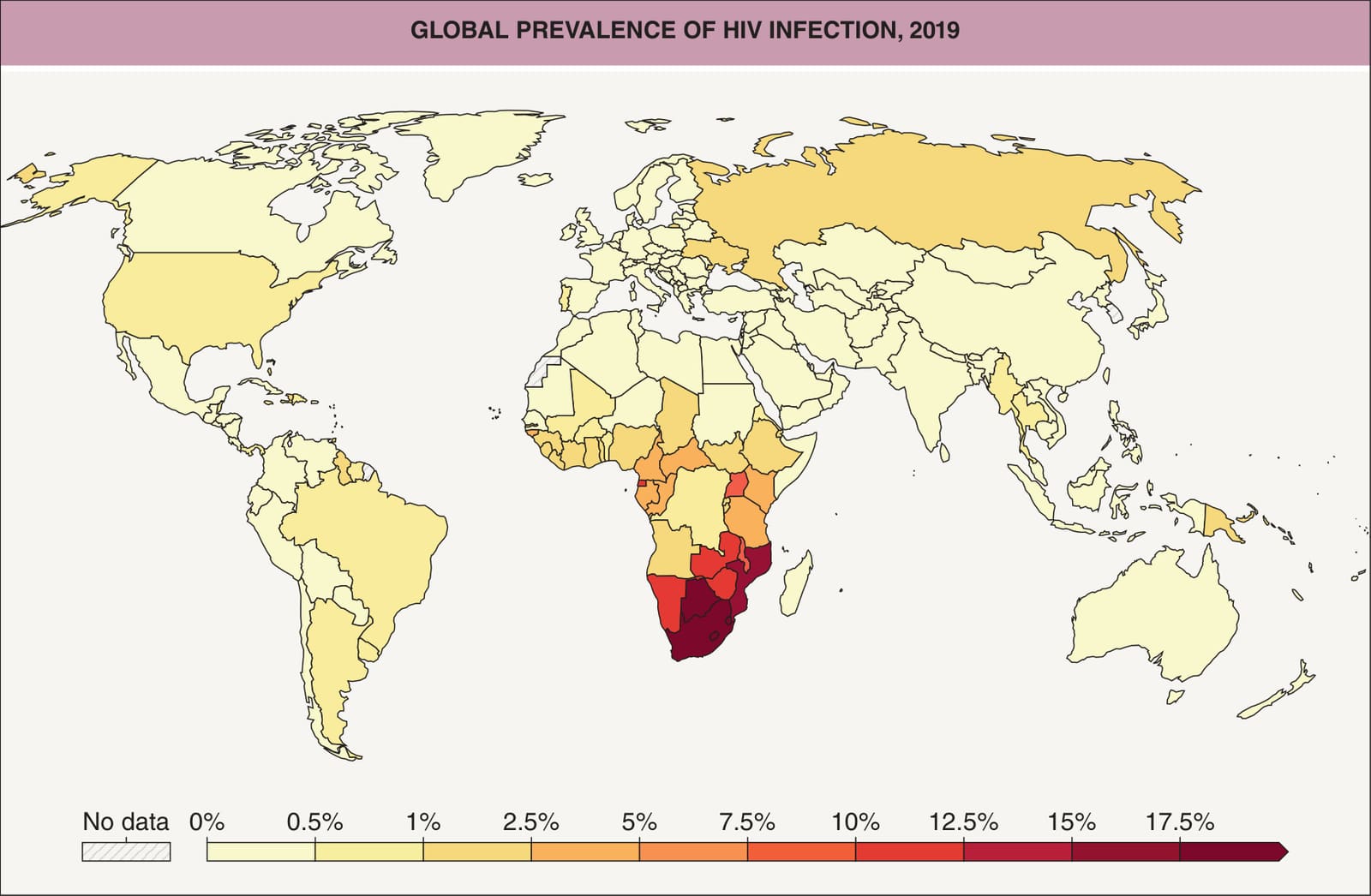
圖 78-1:2019 年 HIV 感染的全球盛行率。2021 年全世界 HIV 感染人數估計為 3840 萬人,代表整體盛行率接近 0.5%。
Fig. 78.1 Global prevalence of HIV infection, 2019. The worldwide estimate of the number of people living with HIV was 38.4 million in 2021, representing an overall prevalence of almost 0.5%. From the Institute for Health Metrics and Evaluation (IHME) 2019 Global Burden of Disease.
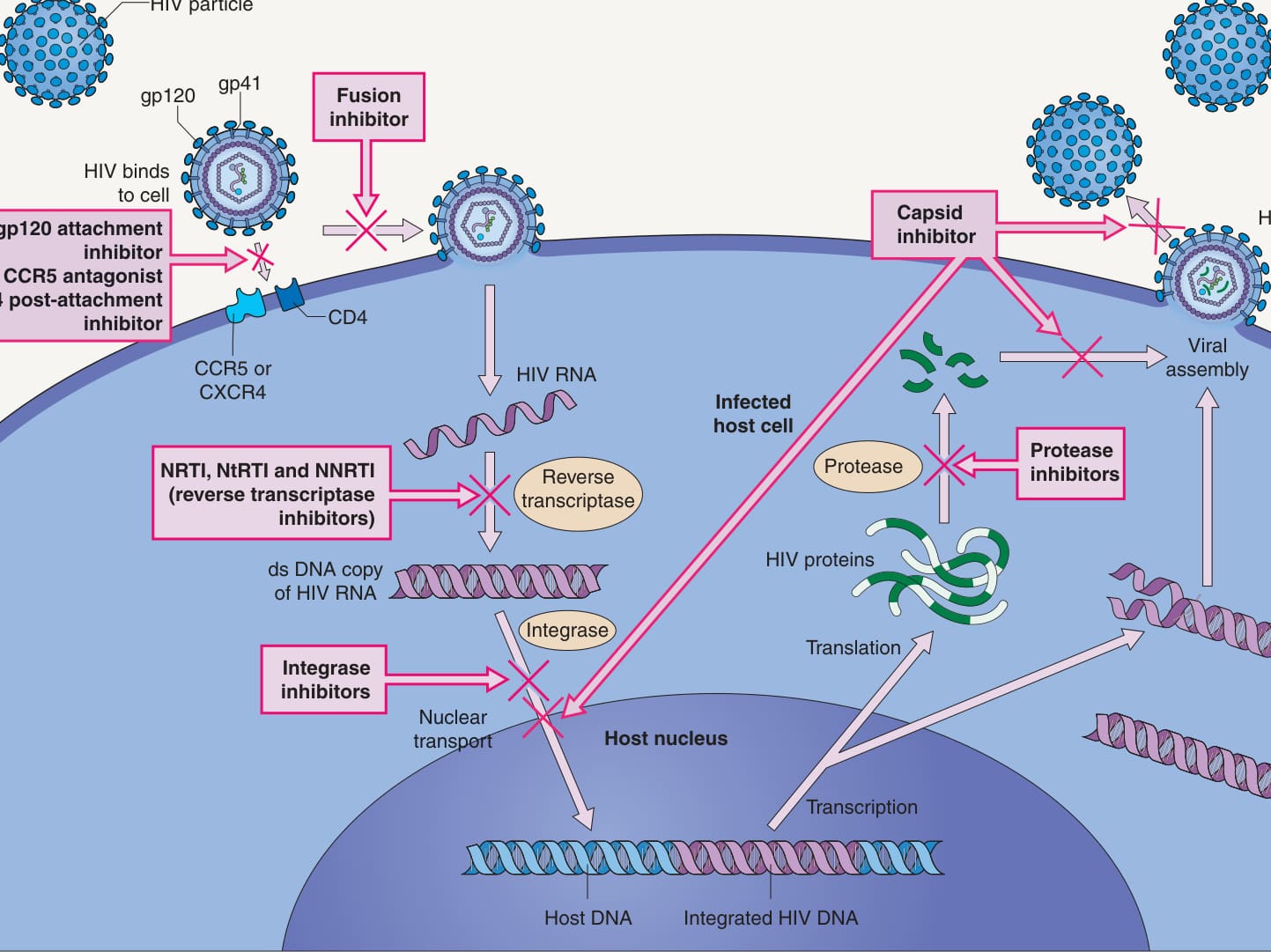
圖 78-2:HIV 在 CD4+ 淋巴球內的複製與抗反轉錄病毒藥物的標的部位。CCR5,CC-趨化激素受體 5;NRTI,核苷反轉錄酶抑制劑;NtRTI,核苷酸反轉錄酶抑制劑;NNRTI,非核苷反轉錄酶抑制劑。
Fig. 78.2 Replication of HIV within CD4+ lymphocyte and target sites of antiretroviral drugs. CCR5, CC-chemokine receptor 5; NRTI, nucleoside reverse transcriptase inhibitor; NtRTI, nucleotide reverse transcriptase inhibitor; NNRTI, non-nucleoside reverse transcriptase inhibitor. Information on FDA-approved antiretroviral drugs is available at https://hivinfo.nih.gov/understanding-hiv/fact-sheets/fda-approved-hiv-medicines to HIV, reactivated infections, loss of mucosal integrity with consequent microbial translocation, and increased production of proinflammatory molecules. In patients receiving ART, increased levels of markers of inflammation have been associated with higher mortality rates and risk of cancer as well as cardiovascular, neurologic, and liver disease.
(承前段)……針對 HIV 的免疫反應、再活化的感染、黏膜完整性喪失並隨之發生微生物移位(microbial translocation),以及促發炎分子產生增加有關。在接受 ART 的病人中,發炎標記濃度上升與較高的死亡率以及癌症、心血管、神經與肝臟疾病的風險相關。
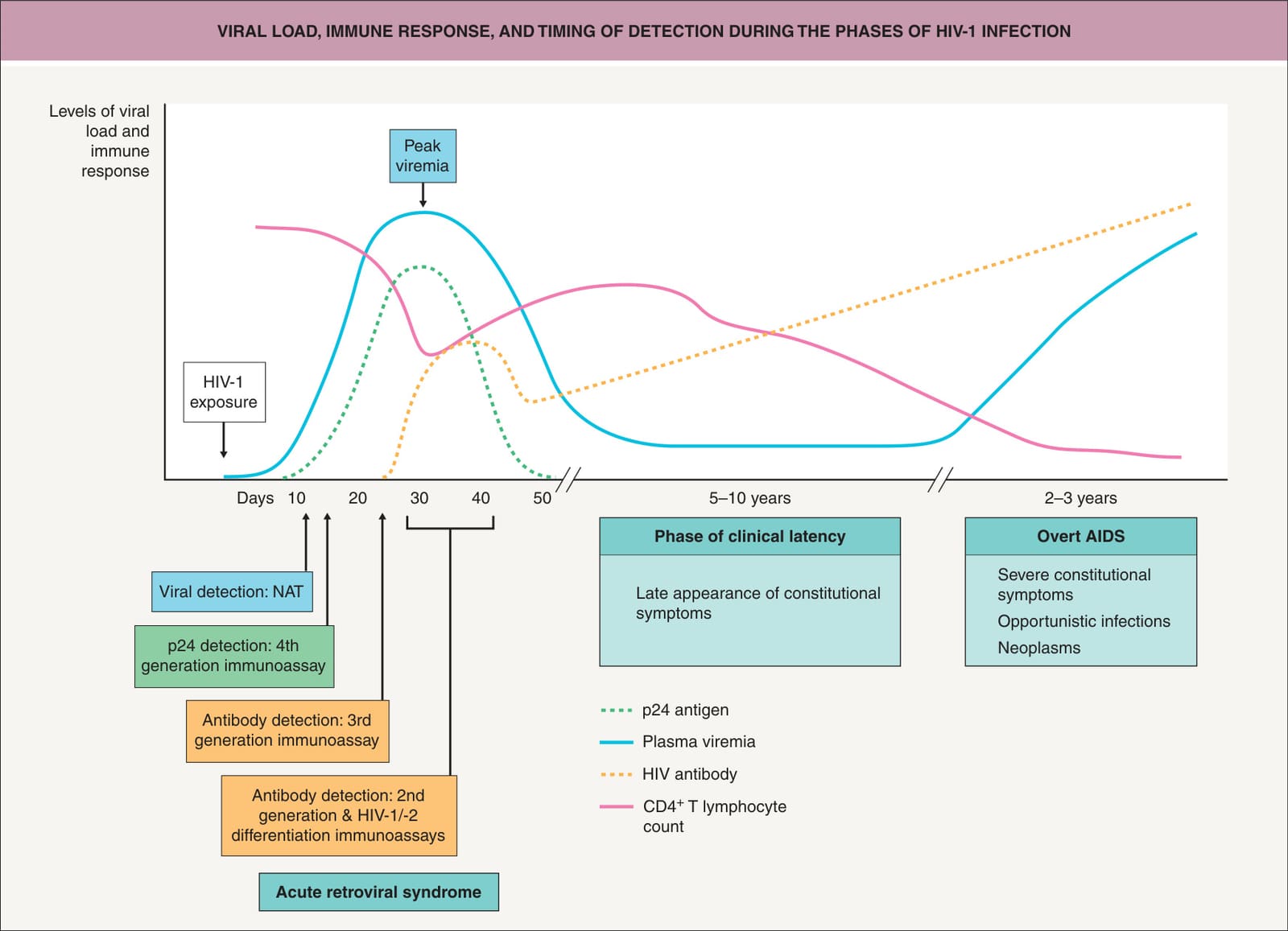
圖 78-3:HIV-1 感染各階段的病毒量、免疫反應與偵測時機。HIV-1 暴露後,最初的病毒複製與擴散發生於淋巴器官,而 HIV-1 的全身性播散反映於血漿病毒血症的高峰。在高達 80% 的 HIV-1 感染者中,此原發性 HIV-1 感染階段伴隨嚴重度不一的臨床症候群。從原發期過渡到早期慢性期時病毒血症的下調,與 HIV-1 特異性細胞毒性 T 淋巴球的出現以及臨床症候群的逐步消退同時發生。長期的臨床潛伏期伴隨活躍的病毒複製,特別是在淋巴組織中。在臨床潛伏期間,CD4+ T 淋巴球計數緩慢下降,HIV-1 特異性免疫反應亦然。當 CD4+ T 淋巴球計數降至 200 cells/ml 以下(即發生明顯的 AIDS 時),臨床表現的特徵為嚴重的全身症狀以及可能發生的伺機性感染及/或腫瘤。
Fig. 78.3 Viral load, immune response, and timing of detection during the phases of HIV-1 infection. After HIV-1 exposure, initial virus replication and spread occur in the lymphoid organs, and systemic dissemination of HIV-1 is reflected by the peak of plasma viremia. A clinical syndrome of varying severity is associated with this phase of primary HIV-1 infection in up to 80% of HIV-1-infected persons. Downregulation of viremia during the transition from the primary to the early chronic phase coincides with the appearance of HIV-1-specific cytotoxic T lymphocytes and with the progressive resolution of the clinical syndrome. The long phase of clinical latency is associated with active virus replication, particularly in the lymphoid tissue. During the clinically latent period, CD4+ T lymphocyte counts slowly decrease, as does the HIV-1-specific immune response. When CD4+ T lymphocyte counts decrease below 200 cells/ml (i.e. when overt AIDS occurs), the clinical picture is characterized by severe constitutional symptoms and by the possible development of opportunistic infections and/or neoplasms. Adapted from Bart PA, Pantaleo G. The immunopathogenesis of HIV-1 infection. In: Cohen J, Powderly WG. Infectious Diseases. Edinburgh: Mosby, 2004:1236.
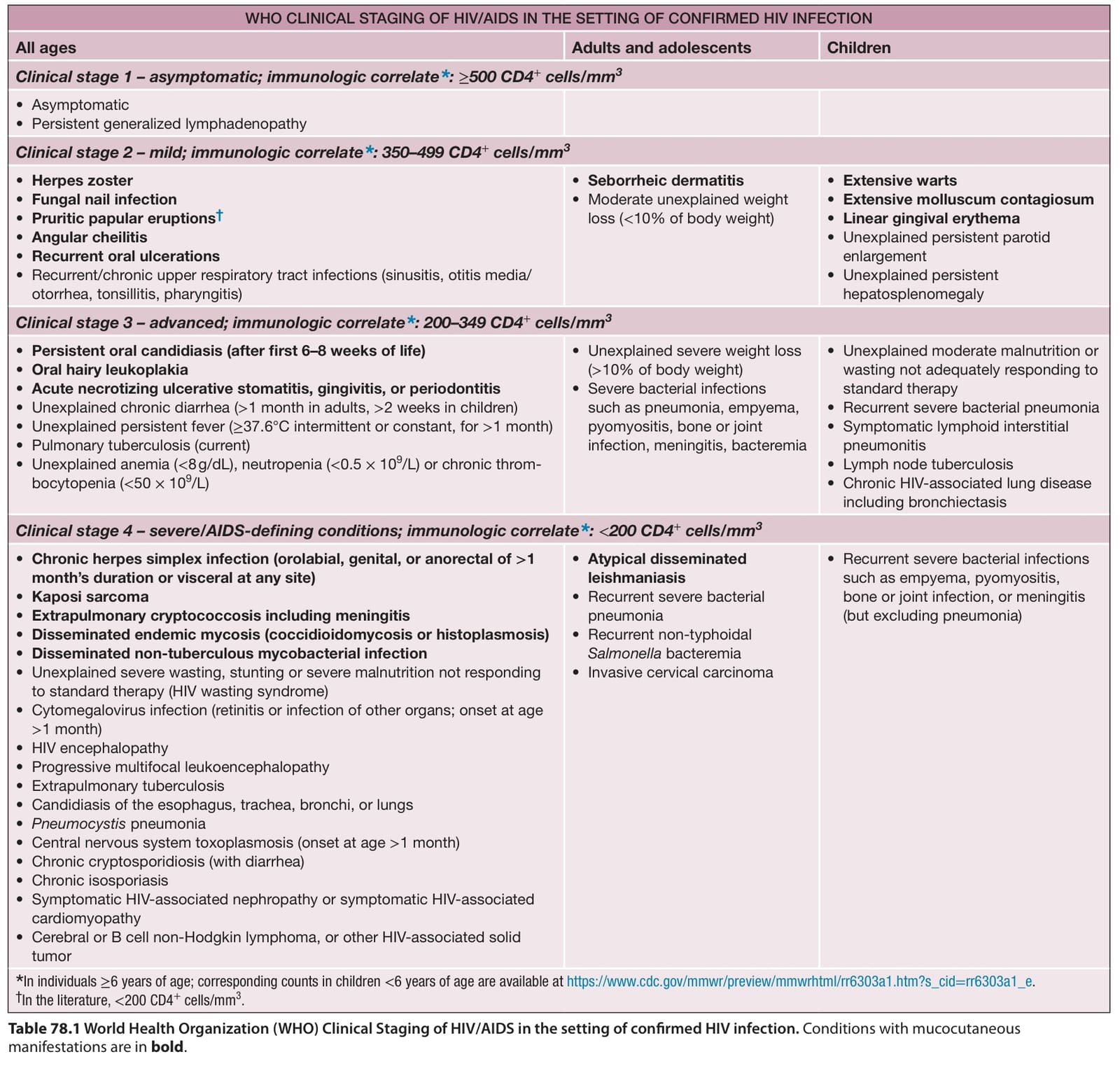
表 78-1:確診 HIV 感染情境下的世界衛生組織(WHO)HIV/AIDS 臨床分期。具皮膚黏膜表現的病症以粗體標示。
Table 78.1 World Health Organization (WHO) Clinical Staging of HIV/AIDS in the setting of confirmed HIV infection. Conditions with mucocutaneous manifestations are in bold.
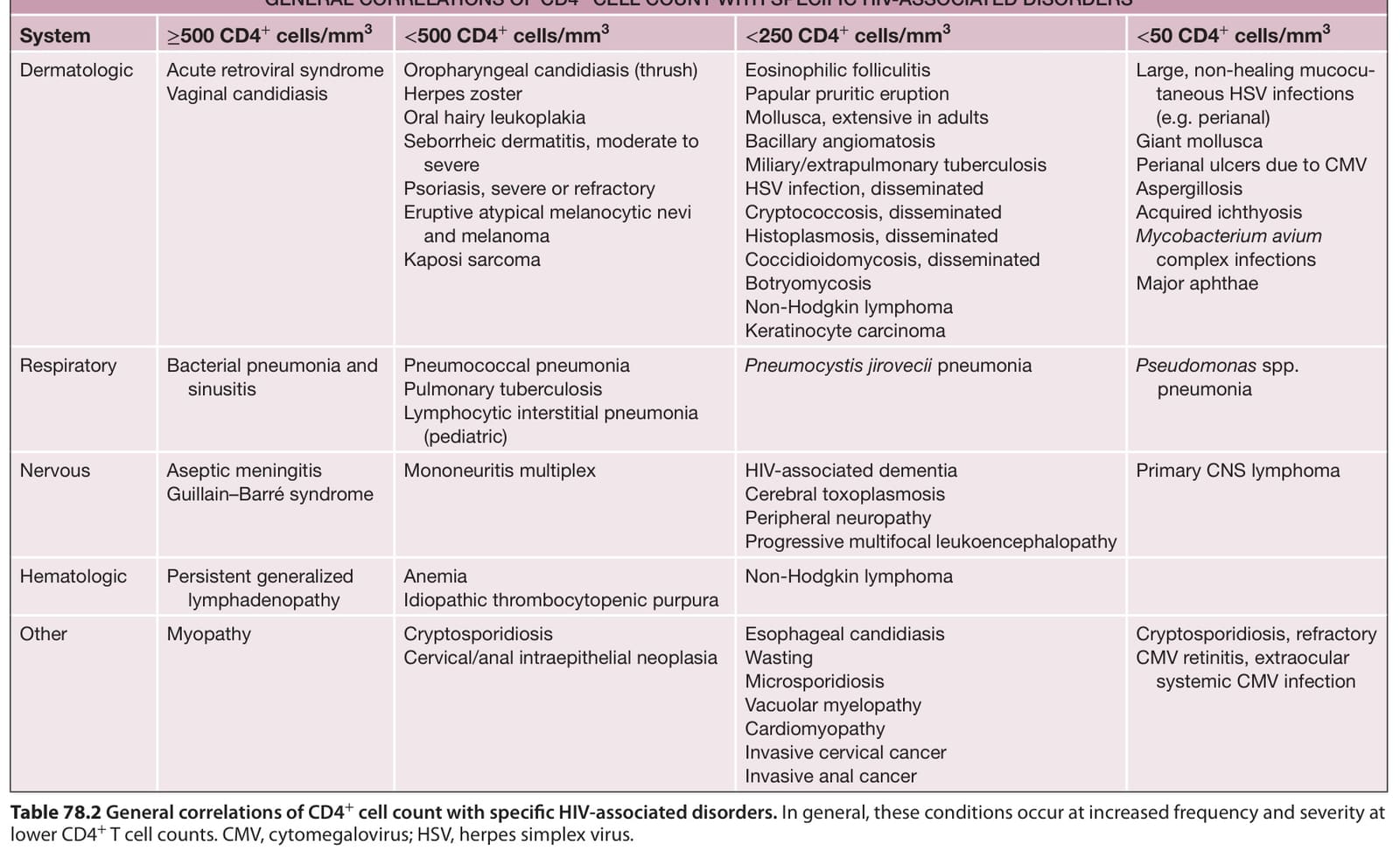
表 78-2:CD4+ 細胞計數與特定 HIV 相關疾患的一般相關性。一般而言,這些病症在較低的 CD4+ T 細胞計數時發生頻率增加且較嚴重。CMV,巨細胞病毒;HSV,單純疱疹病毒。
Table 78.2 General correlations of CD4+ cell count with specific HIV-associated disorders. In general, these conditions occur at increased frequency and severity at lower CD4+ T cell counts. CMV, cytomegalovirus; HSV, herpes simplex virus.