Conradi–Hünermann–Happle syndrome(X 染色體連鎖顯性點狀軟骨發育不良)(Conradi–Hünermann–Happle Syndrome [X-Linked Dominant Chondrodysplasia Punctata])
此罕見的 X 染色體連鎖顯性疾病,於女性新生兒以魚鱗癬樣紅皮症(ichthyosiform erythroderma)表現,其特徵為沿 Blaschko 線分布的羽毛狀、附著性鱗屑(見第 57 章)。特徵性的皮膚外表現包括近端肢體不對稱縮短併骨骺點狀鈣化(epiphyseal stippling,即 chondrodysplasia punctata),以及眼部異常如白內障與小眼症。病人常有渦紋狀的瘢痕性禿髮(cicatricial alopecia)以及粗糙、無光澤的毛髮。嬰兒期之後,皮膚變化演變為毛囊性萎縮性皮膚(follicular atrophoderma)。Conradi–Hünermann–Happle syndrome 是由 emopamil binding protein(EBP)基因的突變所引起;該基因位於 X 染色體上、緊鄰 PORCN,編碼一種膽固醇生合成所必需的異構酶(isomerase)。主要的生化異常為血漿中 8(9)-cholestenol 與 8-dehydrocholesterol 的增加。
CHILD syndrome(先天性半側發育不良合併魚鱗癬樣紅皮症〔或痣〕與肢體缺陷,Congenital Hemidysplasia With Ichthyosiform Erythroderma [or Nevus] and Limb Defects)
CHILD syndrome 是一種罕見的 X 染色體連鎖顯性疾病,表現為單側骨骼發育不全(範圍從無肢畸形 amelia 到輕微的遠端
缺陷)、點狀軟骨發育不良,偶爾亦有內臟器官的缺陷(見第 57 章)。紅斑性、增厚且帶黃色鱗屑的皮膚,可能呈現顯著的單側分布並有明確的中線分界、沿 Blaschko 線分布,和/或好發於皮膚皺褶處。隨著時間推移,脂質堆積,病灶發展出疣狀黃瘤(verruciform xanthoma)的特徵。CHILD syndrome 源自位於 Xq28 的 NSDHL 突變,該基因編碼一種參與膽固醇生合成的 3β-hydroxysteroid dehydrogenase 酵素。以致病機轉為基礎、使用 lovastatin 或 simvastatin 加上膽固醇的外用療法極為有益。
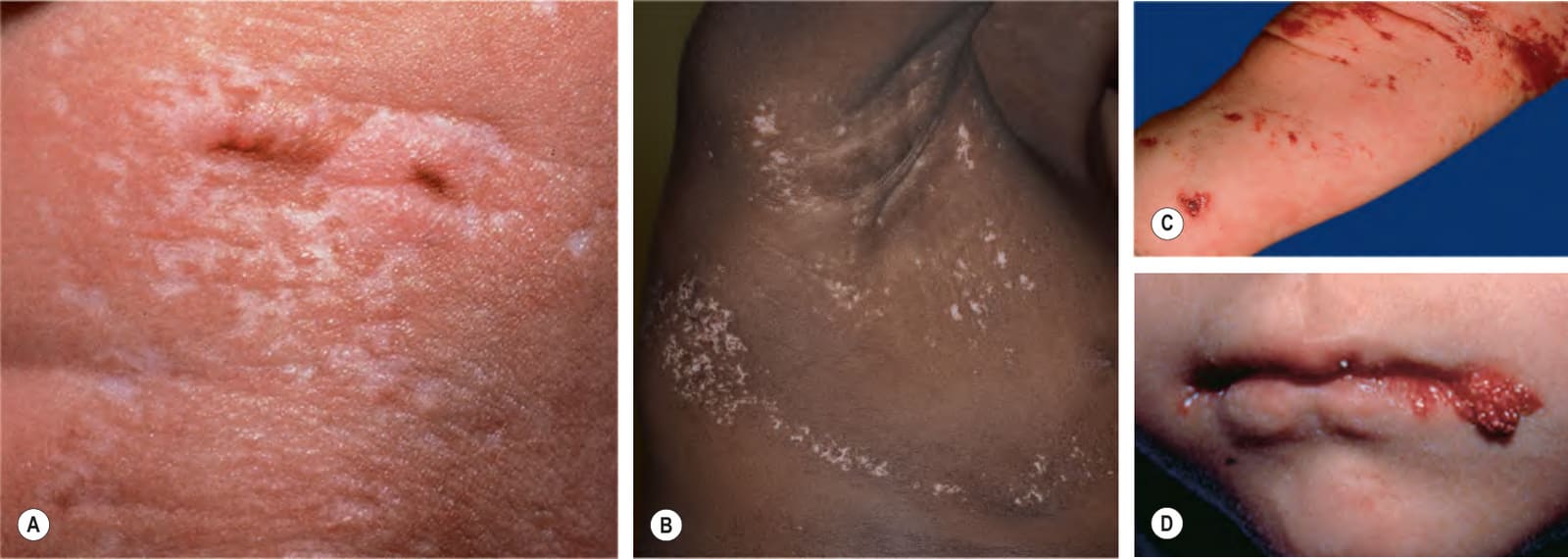
圖 62-6:Goltz syndrome(局部性真皮發育不全)。A, B 蟲蝕樣萎縮的色素減少條紋;注意脂肪疝出 (A)。C 腿部的微血管擴張條紋加上糜爛。D 唇部數個紅斑性、覆盆子樣丘疹;最顯著的病灶位於口角。類似病灶可發生於肛門生殖器區域,並可能與疣混淆。D,由 Celia Moss, MBBS, MA, DM 提供。
Fig. 62.6 Goltz syndrome (focal dermal hypoplasia).A, B Hypopigmented streaks of vermiculate atrophy. Note the fat herniation (A). C Streaks of telangiectasias plus erosions on the leg. D Several erythematous, raspberry-like papules on the lips. The most prominent lesion is at the angle of the mouth. Similar lesions can occur in the anogenital region and may be confused with warts. D, Courtesy Celia Moss, MBBS, MA, DM.